
We Speak Filmmakers
Filmmaker Shashwat Brahmbhatt Releases New Short Film “Act Three,” A Story of Reinvention, Resilience and Rediscovering an Artist’s Voice

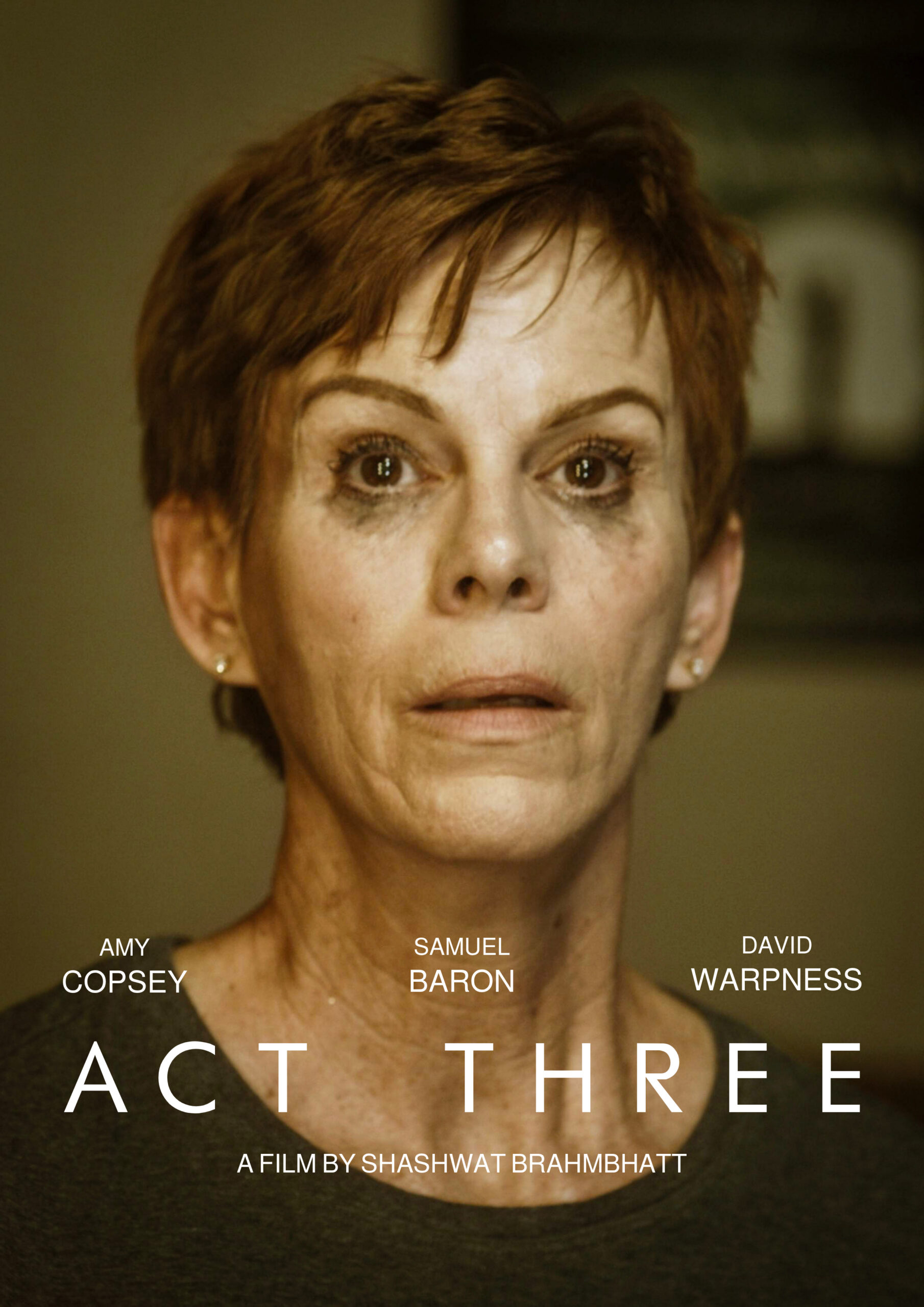
Los Angeles-based filmmaker and production designer Shashwat Brahmbhatt presents a powerful drama about a former film star who finds a second act on the theatre stage
Filmmaker and production designer Shashwat Brahmbhatt releases his new short film “Act Three,” an emotional story about rediscovering one’s identity, rebuilding confidence and finding artistic purpose when the spotlight begins to fade.
The film follows Celia, a hugely successful actress who rose to fame two decades earlier. Now in her 50s, Celia finds herself struggling to secure major film roles as the industry increasingly overlooks actresses her age. Once celebrated for her talent, she has gradually lost confidence not only in herself as an actress, but also in who she is outside of her former success.
Looking for a way back to the artist she once was, Celia returns to her roots in theatre. She auditions for a play and unexpectedly lands the lead role. But she soon discovers that her famous name played a major part in her casting. Her audition was not as strong as she had hoped, and she realizes that earning back the respect she once commanded will require more than her reputation.
With an opportunity to prove herself once again, Celia commits to rediscovering her craft. Along the way, she must navigate a difficult and initially arrogant director who does not see her as the accomplished actress she believes herself to be. Their relationship gradually evolves as the director begins to coach and challenge Celia, helping her reconnect with her abilities and push herself further as a performer.
As opening night approaches, Celia discovers that her journey is not simply about proving something to the world. It is about remembering who she is as an artist.
The culmination of the film sees Celia stepping onto the stage and delivering the performance she has been working toward, finally receiving the love, recognition and appreciation she has been yearning for.
At its heart, “Act Three” explores the idea that an artist’s story does not end when their biggest years of fame are behind them. Instead, another chapter can begin when they are willing to return to their craft, confront their doubts and give themselves permission to grow.
An Award-Winning Festival Run
“Act Three” has already received recognition from film festivals and independent film organizations, including:
Thilsri International Film Festival — Best International Short Film, Winner
Golden Lion International Film Festival — Best International Film, Winner
Athvikvaruni International Film Festival — Best International Film, Winner
Kodaikanal International Film Festival — Winner
Heart of Europe International Season Film Festival — Winner
Iconic Indie Awards — Best Short Film, Nomination
Critics Society Film Festival — Narrative Short, Finalist
Anatolia International Film Festival — Best American Film, Finalist
Filmmaker Sessions Volume 8 — Nomination
Peshawar International Film Festival — Nomination
WinterSun International Film Festival — Nomination
New York International Film Awards — Finalist
Indie Film LA — Nomination
17th Underground Cinema International Film Festival — Nomination
Mei International Film Festival — Finalist
With “Act Three,” Brahmbhatt brings together his experience as a director, filmmaker and production designer to tell a character-driven story about an artist confronting self-doubt and discovering that it is never too late to reclaim your voice.
About Shashwat Brahmbhatt
Shashwat Brahmbhatt is a filmmaker and production designer from India, currently based in Los Angeles. After beginning his filmmaking journey with the short film “Radha” in 2021, he transitioned from Civil Engineering into the film industry, working as an Assistant Director, Art AD and Production Designer in India before pursuing an MFA in Filmmaking at the New York Film Academy in Los Angeles. Today, he works professionally in Los Angeles as a production designer while continuing to develop his work as a filmmaker and director.


We Speak Entertainment
Angelica Figueroa Brings Period Filmmaking to Life Through the Art of Visual Storytelling

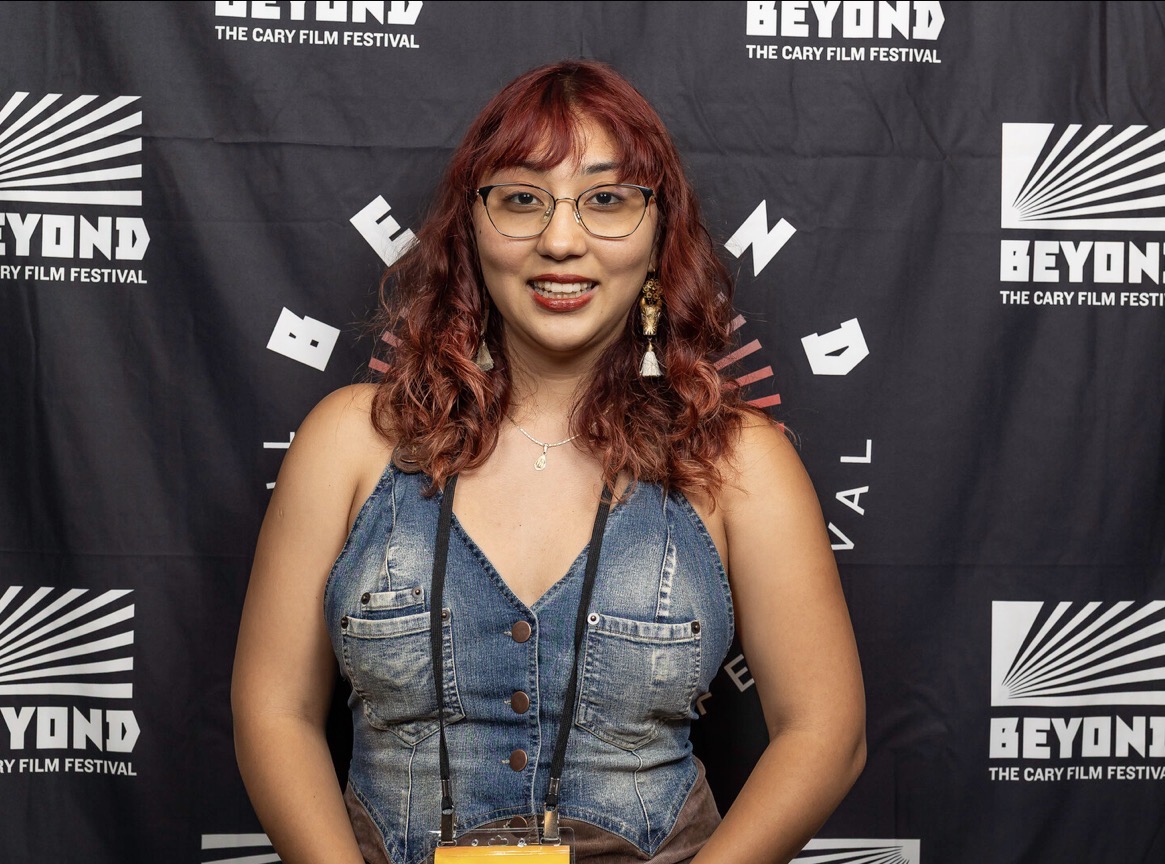
Los Angeles Art Director and Production Designer Angelica Figueroa is building a career around one of filmmaking’s most essential crafts: creating the worlds audiences see on screen.
There are performances that define a film, and then there is the world surrounding those performances.
For Angelica Figueroa, that world is where storytelling begins.

The Los Angeles-based Art Department professional has developed her craft across Production Design, Art Direction, Set Dressing and Prop Master roles, creating environments designed not simply to look convincing on camera, but to reveal something about the characters who inhabit them.
Originally from Morelos, Mexico, Figueroa earned a BFA in Filmmaking from the New York Film Academy before continuing to build her career within the Los Angeles production community.
Her growing portfolio encompasses narrative filmmaking, music-related productions, promotional work and independent cinema, but one project in particular demonstrates the detailed work involved in creating a believable cinematic world.

Figueroa served as Art Director on Sunrise Boulevard, a period short film set in 1955.
Period filmmaking presents a unique challenge for an Art Department. Every visible object has the potential to either strengthen the illusion or break it. Furniture, decorations, props, materials and background details must work together to convince an audience that the characters truly occupy another time.
On Sunrise Boulevard, Figueroa contributed to the film’s period-specific visual world through art direction, set dressing, props and sourcing, helping create environments appropriate to its 1955 setting.
The film went on to become an official selection at the Burbank International Film Festival and received a nomination in the festival’s Production Design / Art Direction category, with Figueroa credited as the film’s Art Director.

For an artist increasingly focused on visual storytelling, the recognition marked an important milestone in Figueroa’s developing career.
Production Design is sometimes mistaken for simply making a movie look attractive. In practice, its role goes much deeper.
A successful environment can communicate information about a story before an audience consciously realizes it. The condition of a room, the objects a character keeps nearby, the furniture surrounding them and even seemingly insignificant background pieces can suggest history, personality, economic circumstances and emotional state.
That philosophy is central to Figueroa’s approach to Art Department work. Research, sourcing and attention to detail become tools for storytelling rather than decoration for its own sake.
Her experience as a Prop Master has further strengthened that attention to detail.
On Oroboros, Figueroa worked with story-specific and actor-handled props, sourcing, practical elements and breakable pieces. Prop work requires both creative judgment and technical problem-solving because an object may need to perform a specific function while remaining completely believable within the world of the film.
Figueroa’s Art Department experience also extends beyond traditional narrative filmmaking.
She has worked as a Set Dresser on a Willow Smith performance video, a promotional production for Wild ’N Out, and the “Tell Me” project by OneRepublic and Karan Aujla.
Those productions called for a different visual vocabulary from a period film such as Sunrise Boulevard, demonstrating the versatility required of Art Department professionals working across contemporary entertainment.

Her additional Art Department credits include Canta Santiago, Ikigai and Rebel Flower(s).
Figueroa has also continued expanding her work as a Production Designer.
She served as Production Designer on What a Valentine, starring veteran actor Jim Beaver, and Tamales, starring Virginia Novello.
In Production Design, Figueroa’s responsibilities extend beyond individual objects or portions of a set. The role requires thinking about the entire physical environment of a film and developing a cohesive visual language that supports its characters and story.
Audiences may never see Angelica Figueroa standing in front of the camera, but they see the results of her decisions throughout the worlds created behind it.
That is the unusual power of Production Design and Art Direction.
When the work succeeds, a room stops feeling like a set. A prop stops feeling like something selected for a movie. The environment simply becomes part of the character’s reality.
Figueroa’s journey from Morelos to film school and ultimately to Art Departments in Los Angeles has placed her in a profession where artistic instinct must coexist with research, logistics, budgets, deadlines and constant problem-solving.
Her work on Sunrise Boulevard and its subsequent festival recognition provide one example of where that combination can lead. Her expanding Production Design credits point toward the next stage of a career increasingly centered on creating memorable visual environments for the screen.
For Angelica Figueroa, the objective remains deceptively simple: build the world so the audience can believe the story.
-
We Speak Music1 week ago
Mel D makes bittersweetness glow with magnetic new single ‘ORANGE’
-

 We Speak Music1 week ago
Kazimi Shines In New Single ‘Errant Nodes’
-

 We Speak Music1 week ago
Karabo Unleashes New Single ‘Only 4 U’
-
We Speak Music1 week ago
The Falling Doves release ‘Blinded By Your Love’ ahead of UK, Europe & US tour