
We Speak Horses
How a $7 Million Breeders’ Cup Purse Really Splits: What Sovereignty’s Owner, Trainer and Jockey Took Home


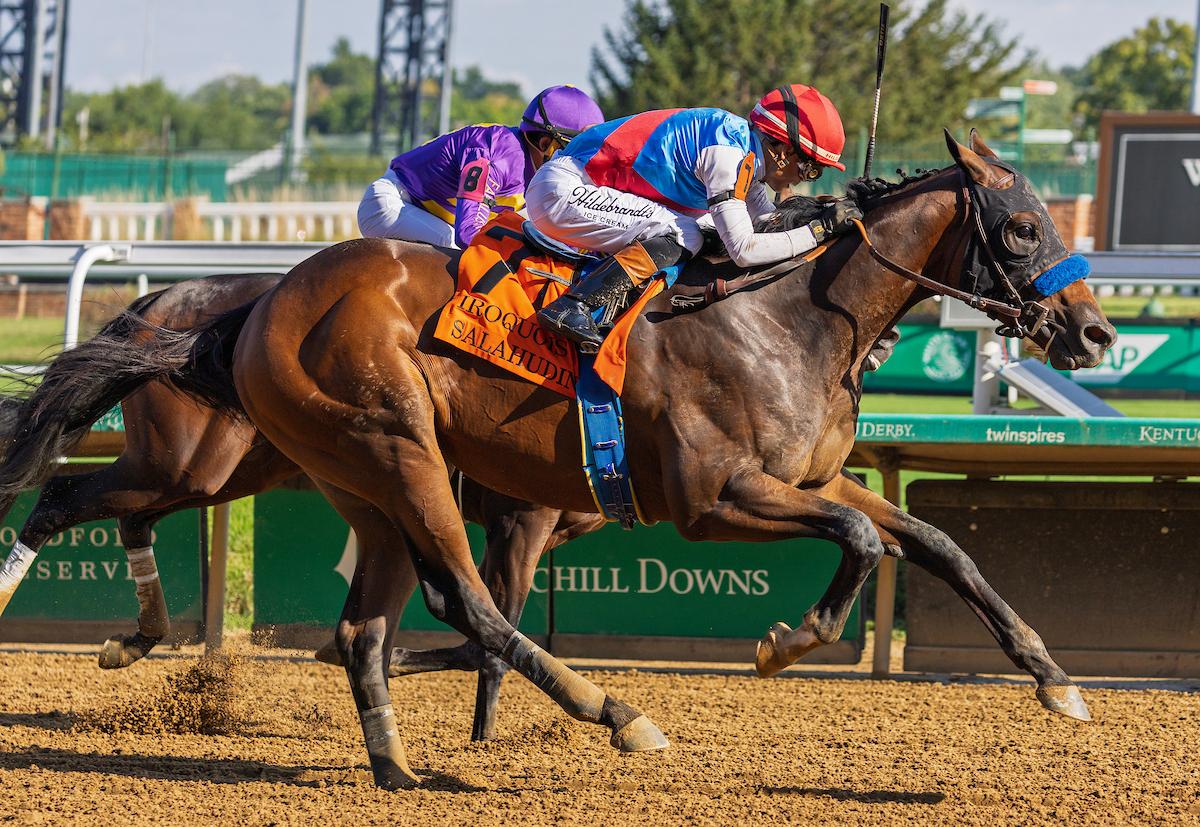
Sovereignty won the Breeders’ Cup Classic at Keeneland on Saturday, October 31, and the win was worth $3,640,000 to his owner, Godolphin. That is the number that made the headlines. It is not the number Godolphin kept. By the time trainer Bill Mott and jockey Junior Alvarado take their standard cuts, the owner is left with about $2,912,000, and that is before taxes and the cost of keeping a horse in training. Here is how the richest race of the weekend really pays out.
The headline purse is not all finish money
The Classic carried a guaranteed purse of $7,000,000, on a weekend when Breeders’ Cup paid out more than $34 million in purses and awards across its 14 championship races, according to NBC Sports. But the $7 million figure includes money that never reaches the finishers. Under the published distribution reported by NBC Sports and printed in the official Equibase race conditions, 8 percent of the purse funds travel awards: a flat payment of $10,000 to every starter based outside Kentucky but within North America, and $40,000 to every starter based outside North America. The remaining money is what the horses actually race for, and it is split by finishing position.
The finish split
Breeders’ Cup pays the first ten finishers. The winner receives 52 percent of the purse. Second place receives 17 percent, third place 9 percent, fourth 5 percent, fifth 3 percent, sixth 2 percent, and seventh through tenth 1 percent each. The 2026 Classic drew a record small field of only seven horses, so the money stopped at seventh place:
First: Sovereignty, $3,640,000
Second: The Puma, $1,190,000
Third: Knightsbridge, $630,000
Fourth: T O Password, $350,000
Fifth: Forever Young, $210,000
Sixth: Golden Tempo, $140,000
Seventh: Napoleon Solo, $70,000
Because no horses finished eighth, ninth or tenth, those three shares of $70,000 each went back to Breeders’ Cup Limited, to be rolled into future purses and programs.
What the winning team takes off the top
The purse check is written to the owner, and the owner pays the team. Breeders’ Cup writes no rule for this part. Each owner, trainer and jockey works under a private agreement. The long standing industry standard, as NBC Sports explains it, is simple: the owner or ownership group typically keeps about 80 percent of what the horse earns, and the remaining 20 percent is split between the trainer and the jockey, which works out to the standard 10 percent each.
Run the standard math on Sovereignty. Ten percent of $3,640,000 is $364,000 to trainer Bill Mott. Another $364,000 goes to jockey Junior Alvarado. Alvarado does not keep all of his share either. A winning rider pays his agent and his valet out of his own cut, so the money spreads further before anyone calls it take home pay.
What about the groom and the stable staff
There is no official percentage for the groom or the stable staff in the Breeders’ Cup conditions, and no line in the published distribution pays them directly. When the staff behind a big winner receive a bonus, it comes out of the trainer share or the owner share by the custom of the barn, not by rule. It is one more reason the headline purse and the money any one person keeps are two very different numbers.
What it cost just to run
Getting into the Classic is expensive before the gates open. For a nominated horse, the official 2026 conditions charged $75,000 to pre enter and another $75,000 to enter, a total of $150,000 paid before the race is run, and those fees are not refunded if the horse loses. Sovereignty and his connections caught a break on this line. He earned his place through the Breeders’ Cup Challenge series by winning the Whitney, and Challenge winners have their pre entry and entry fees waived. A horse that was never nominated as a foal has to be nominated later under the horses of racing age program before it can enter at all, and that late nomination carries its own substantial fee on top of the entry fees.
The bottom line
So here is the honest version of the $7 million race. The purse was $7,000,000. The winner share was $3,640,000. The standard trainer and jockey cuts take that down to $2,912,000 for the owner. Sovereignty is a Godolphin homebred, so no outside ownership partnership was waiting for a split of what remained. A typical owner in the same spot, paying the full entry fees, would be closer to $2,762,000 before a single tax bill or training invoice arrives. The Classic is still the richest payday in American racing. It is simply not the payday the headline describes.
Read Next
Sovereignty Caps His Career With Breeders’ Cup Classic Win at Keeneland
Breeders’ Cup 2026 Preview: Fields Set for Two Championship Days at Keeneland
From the Track to the Sales Ring: Keeneland’s November Sale Follows the Breeders’ Cup Spotlight
 The Jockey Club Opens Paid Internships and College Scholarships for the Thoroughbred World
 Becher Chase Day Takes On The Grand National Fences At Aintree
 Betfair Chase Day Opens The Grade 1 Jumps Season At Haydock Park
 Grand Slam Smile Defends Her Betty Grable Crown at Del Mar as Sunday’s Millionaire Favorite
 Molly Curnow Talks ‘Klara and the Sun’, Working with Jenna Ortega and Finding Her Confidence on Set
 Ovrkast Brings the Still Striking Tour to The Echo in Los Angeles on December 1
 Ragin’ Cajuns Basketball Takes Over the Cajundome With Nine Men’s Home Dates and Eleven Women’s Home Dates
 Coastal Carolina Comes to Our Lady of Lourdes Stadium for the Ragin’ Cajuns Home Finale on November 21



We Speak Horses
The Jockey Club Opens Paid Internships and College Scholarships for the Thoroughbred World
For students who want a way into Thoroughbred racing, The Jockey Club has opened two doors at once. Its paid summer internship in Lexington and its academic scholarships for the 2027-2028 year are both taking applications now, with a January 8, 2027 deadline for each.
Applications for The Jockey Club’s paid internship program for college students and recent college graduates and its academic scholarships open today.
The internship program will accommodate up to three interns. Interns will gain exposure to all companies and departments within the organization, and they will have the opportunity to spend additional time in areas that they find to be of particular interest. The program will last eight weeks during the summer of 2027.
The internships will take place in The Jockey Club’s office located in Lexington, Ky. For more information and to view the application, interested candidates should visit bit.ly/tjcinternships. Applications are being accepted through January 8, 2027. Selected interns will be notified in March 2027.
The Jockey Club scholarships will apply to the 2027-2028 academic year and are as follows:
- The Jockey Club Scholarships ($20,000; $10,000 per semester) are for those enrolled full time as an undergraduate or graduate student at a college or university in academic pursuit of majors for future employment in the equine industry. Open to any equine breed or discipline; preference will be given to candidates with the expressed desire to secure employment in the Thoroughbred industry. Three scholarships will be awarded.
- The Jockey Club Nancy C. Kelly Benevolence Scholarship ($15,000; $7,500 per semester) is a need-based award for Thoroughbred racing farm or backstretch workers and their families who have experienced financial hardship to enable attendance at a full-time program at a college, university, or trade program. Applicants are not required to be pursuing a career in the equine or Thoroughbred industries.
- The Jockey Club Jack Goodman Scholarship ($6,000; $3,000 per semester) is open to students enrolled in the University of Arizona’s Race Track Industry Program (RTIP). Goodman was a resident of Tucson, a longtime member of The Jockey Club, and one of three founders of the RTIP.
Applications for the scholarships are open through January 8, 2027. Click here (bit.ly/tjcscholarshipsapps) for more information and links to applications for the scholarships. The recipients of each scholarship will be announced in the spring of 2027 in advance of the initial distribution of funds for the fall 2027 semester.
The Jockey Club, founded in 1894 and dedicated to the improvement of Thoroughbred breeding and racing, is the breed registry for Thoroughbreds in the U.S., Canada, and Puerto Rico. In fulfillment of its mission, The Jockey Club provides support and leadership on a wide range of important industry initiatives, and directly or through subsidiaries, it serves the information and technology needs of the sport of Thoroughbred racing. Among its many supported initiatives are America’s Best Racing (americasbestracing.net), OwnerView (ownerview.com), and the Thoroughbred Incentive Program (tjctip.com). Additional information is available at jockeyclub.com.
Read Next
- Becher Chase Day Takes On The Grand National Fences At Aintree
- Betfair Chase Day Opens The Grade 1 Jumps Season At Haydock Park
- Grand Slam Smile Defends Her Betty Grable Crown at Del Mar as Sunday’s Millionaire Favorite
Becher Chase Day Takes On The Grand National Fences At AintreeBetfair Chase Day Opens The Grade 1 Jumps Season At Haydock ParkGrand Slam Smile Defends Her Betty Grable Crown at Del Mar as Sunday’s Millionaire Favorite Mr. Disrespectful Springs a 36-1 Wire-to-Wire Upset in The Chosen Vron at Del MarMolly Curnow Talks ‘Klara and the Sun’, Working with Jenna Ortega and Finding Her Confidence on SetOvrkast Brings the Still Striking Tour to The Echo in Los Angeles on December 1Ragin’ Cajuns Basketball Takes Over the Cajundome With Nine Men’s Home Dates and Eleven Women’s Home DatesCoastal Carolina Comes to Our Lady of Lourdes Stadium for the Ragin’ Cajuns Home Finale on November 21
-

 We Speak Golf2 days ago
Smotherman Chases A Third Straight Win And Teen Winner Blades Brown Headlines The Inaugural Austin Championship
-

 We Speak NBA1 day ago
NBA Roundup: Flagg Scores 43 as Mavericks Edge Pacers, Wembanyama Posts 40 and 8 Blocks in Spurs Rout
-

 We Speak Wellness & Self-Care13 hours ago
About 4,000 Steps a Day Linked to Better Thinking Scores in Older Adults
-

 We Speak Wellness & Self-Care13 hours ago
Walking More Is Linked to Lower Health Care Costs for Older Adults in Osaka Study