
We Speak Entertainment
E-Dee’s Young Legend Delivers 14 Tracks of Dancehall Energy and Global Ambition

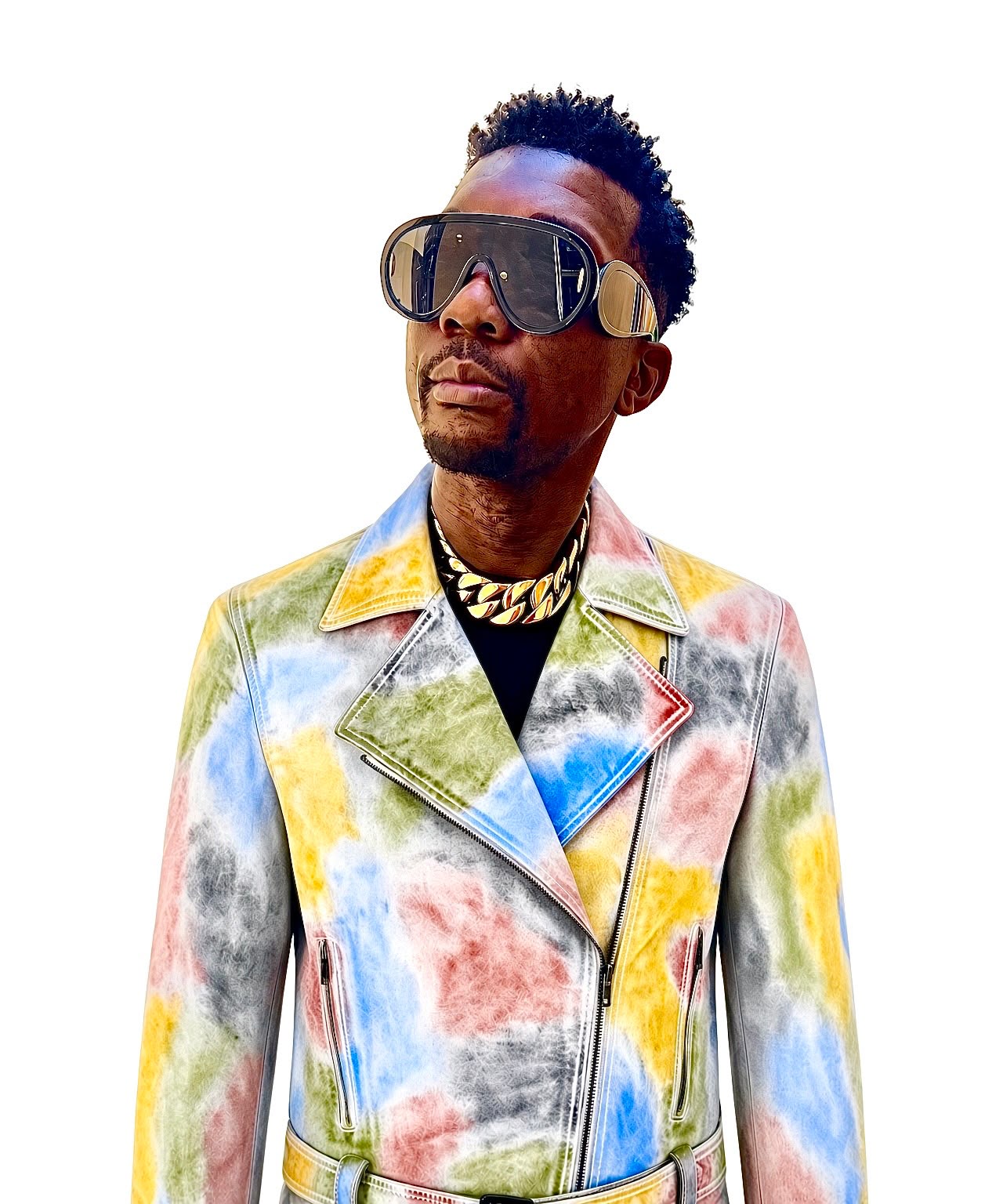
There are artists who release music, and there are artists who use every release to expand the story of who they are. Jamaican-born performer E-Dee (Everton “E-Dee” Dennis) belongs firmly in the second category. With his new 14-track album Young Legend, the celebrated Dancehall Celebrity brings together rhythm, culture, romance, ambition, and international influence in a project designed to represent both his roots and his remarkable evolution.
Released July 24, 2026, Young Legend is now available on major streaming platforms, including Spotify, Apple Music, Tidal, Amazon Music, and others. The album has already attracted attention on the reggae charts, recently reaching No. 9 on the iTunes Top 100 Reggae Albums chart, adding an impressive early milestone to an already extensive career.
An Album Designed to Keep Moving
From its opening energy to its final moments, Young Legend reflects E-Dee’s understanding of what makes dancehall connect with audiences. The album combines classic Jamaican influences with modern production, Afrobeats textures, melodic moments, and an unmistakable international edge.
The 14-track collection does not stay inside one musical lane. Instead, E-Dee explores different moods and perspectives, moving between energetic party-ready sounds, romantic storytelling, empowering themes, and songs celebrating Jamaican culture.
Among the project’s notable selections is “Zum Zum Zum,” produced by Grammy Award-winning producer Qmillion, bringing heavyweight production to E-Dee’s energetic performance style.
“Water Run,” also known as “Will Hit Like Water Run,” produced by Jahsee, provides another high-impact moment, while “She’s Loyal” and “Beautiful Woman” introduce a more melodic and relationship-centered dimension to the project.
The album is further strengthened by collaborations with Ginjah, Irie Love, Jazmin Akea, and Melissa Andromeda, giving Young Legend an expanded musical personality.
Celebrating the Culture While Looking Forward
E-Dee has always maintained a strong relationship with his Jamaican identity, and that connection remains central to Young Legend. Yet the album is not intended to look backward.
Instead, it demonstrates how Jamaican music continues to evolve, travel, and influence audiences around the world.
E-Dee combines dancehall’s rhythmic foundation with contemporary global sounds, creating a project capable of reaching listeners who may discover his music for the first time while still offering longtime fans the energy they expect.
For E-Dee, the album represents a larger purpose.
“Young Legend is more than an album — it’s a celebration of growth, legacy, and bridging Jamaica to the world stage,” said E-Dee. “We created something that hits the dancehall hard while speaking to the heart. This one is for the fans, the culture, and the next generation.”
A Soundtrack Already Connected to Hollywood
E-Dee’s relationship with entertainment extends deep into film and television. His recordings have earned more than 100 sync placements, allowing his music to become part of productions reaching audiences across multiple markets.
His music has been featured in projects including I Think I Love My Wife, How She Move, Greek, Housewives, Love & Hip Hop, and Blue Bloods.
That history helps explain the cinematic quality surrounding his creative work. E-Dee does not approach music as an isolated discipline; he has developed a career in which sound, performance, acting, and storytelling continuously influence one another.
An Artist With a Screen Career to Match
E-Dee’s screen credits further establish his versatility. He starred in Out the Gate, the 2011 biopic loosely inspired by aspects of his journey, and has appeared in projects including Gangland: The Musical featuring Tamar Braxton, Chocolate City 3: Live featuring Lisa Raye, Mother-in-Law with Vivica A. Fox, and Temperature Rising with Omar Gooding.
With additional film projects currently in development, E-Dee continues to build an entertainment career that crosses traditional boundaries.
His ability to move between recording studios and film sets gives his music an added storytelling dimension — something that has become increasingly important to his overall artistic identity.
The Journey Behind the Music
Born in Toll Gate, Clarendon, Jamaica, E-Dee grew up as the youngest of eight children before moving to Los Angeles in 2007 to pursue acting and expand his music career.
The transition from Jamaica to Hollywood became a defining part of his professional journey. Today, he is not only a recording artist and actor but also the CEO of Clarendon Records, continuing to develop his own creative platform.
Throughout his career, E-Dee has collaborated with respected artists including Wayne Wonder, Glen Washington, Future Fambo, I-Octane, and Seun Kuti, reflecting the breadth of his musical connections.
Building the Next Chapter
Young Legend arrives at a significant point in E-Dee’s career. With decades of cultural influence behind him and new opportunities ahead, the album provides a snapshot of an artist who refuses to remain in one category.
Its 14 tracks showcase E-Dee as a performer capable of delivering dancehall intensity while embracing romance, international sounds, collaboration, and cinematic storytelling.
The result is a project that feels both celebratory and forward-looking — an album honoring Jamaican heritage while positioning E-Dee for another chapter on the global stage.
For an artist who has successfully built bridges between Jamaica, Los Angeles, music, and film, Young Legend is more than a collection of songs. It is another declaration that E-Dee’s creative journey is still unfolding.
For interviews, bookings, sync licensing, and additional information:
Website: e-deeonline.com
Instagram: @realdancehallcelebrity


We Speak Actors
‘Five Nights at Freddy’s’ Actress Marta Svetek Stars in Savage Prey Following Its World Premiere at Popcorn Frights Film Festival

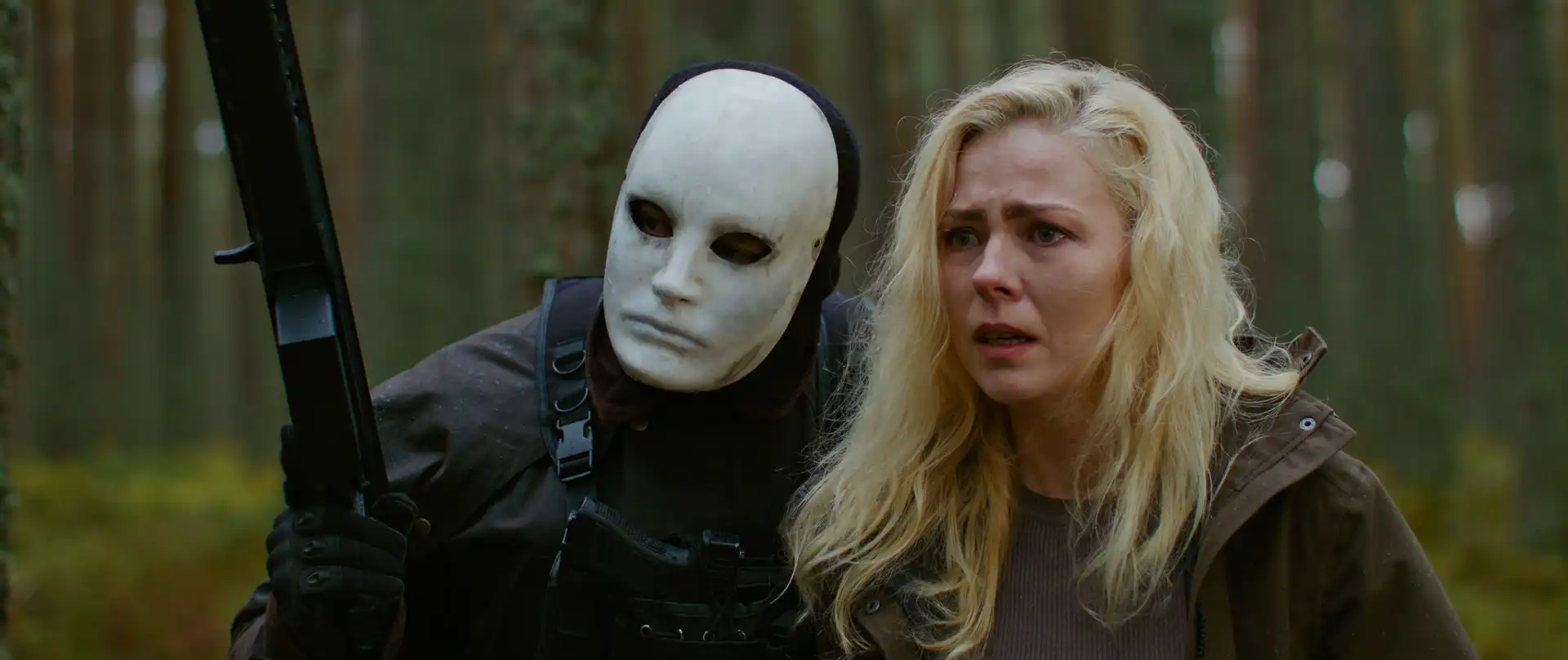
Known to audiences for her work across film, television and the video game industry—including major titles such as ‘Five Nights at Freddy’s’, ‘VALORANT’ and the ‘Battlefield’ franchise—actress Marta Svetek now takes centre stage as the lead in the British survival horror film Savage Prey. The independent feature has just celebrated its World Premiere at the acclaimed Popcorn Frights Film Festival, with audiences across the United States able to stream the film virtually on demand for 48 hours.
Alongside starring as Ava, Marta also served as Executive Producer, contributed to voice direction, and was involved in other areas of post-production, making her one of the key creative forces behind the film. Directed, written and edited by David Ryan Keith, ‘Savage Prey’ was filmed entirely in the breathtaking Scottish Highlands and promises an intense, character-driven survival thriller that combines emotional storytelling with relentless suspense.
Congratulations on ‘Savage Prey’ making its World Premiere at Popcorn Frights Film Festival on 9 August. What initially drew you to the project, and what can audiences expect from the film without giving too much away?
What drew me to the project, when I was sent the very first version of the script by David, was that it was a horror film that really took its time to establish the character. It made you emotionally invest in her, allowed you to relate to her feelings, and really care about her overcoming her obstacles. That’s really where a lot of movies have gone wrong in the past—you need the audience to care about what happens to the character and root for them to win to make going on the 90-plus-minute journey with them worth it. Even though a lot changed from that first draft I read in December 2024, we made sure to preserve that emotional core. It became even more important because so much of the movie focuses on Ava’s isolation and the very real danger she’s in. What also drew me in—and terrified me as an actor—was how little dialogue there is.
“I often play villains with the almost mandatory villain monologue, so this was a real change of pace.”
Without dialogue, you have nothing to hide behind. Every emotion has to be at the forefront because the audience needs to understand exactly what Ava is going through with very little exposition. It was a genuine test of my abilities and one of the most rewarding challenges I’ve ever had. Between Dave’s writing, direction and cinematography, the incredible crew, and my preparation for the role, I genuinely believe we’ve made a really good film.

The film was shot entirely in the Scottish Highlands, including the Cairngorms, with production even facing Storm Amy. What was that experience like?
It was honestly remarkable that during our 18-day shoot, we didn’t lose a single day of filming despite the constantly changing Highland weather. We were watching Storm Amy move across Scotland and hearing horror stories from other regions, so we were genuinely worried this might sink the production. Instead, the storm came overnight, knocked down scores of trees around us, yet somehow left our filming location untouched. Dave and I actually arrived at the location early the next day and dragged trees off the road ourselves so our production vehicles could follow. There is photo evidence on the ‘Savage Prey’ Instagram page! That’s the reality of independent filmmaking—everyone helps wherever they can.
You also served as Executive Producer and became heavily involved behind the scenes. What did you enjoy most about that experience?
From the moment I read the script, I wanted to help make this film happen. As production developed, I naturally became involved in areas beyond acting, from financing and post-production to marketing and distribution. I have a Master’s degree in Creative Industries and spent almost a decade working in tech before acting became my career, so I really enjoyed bringing those experiences together. This film has given me the filmmaking bug, and I’m already developing another script. Because I also work extensively in voice acting—including lead performances in ‘Five Nights at Freddy’s’, ‘VALORANT’ and the ‘Battlefield’ franchise—I have a professional recording studio at home. That allowed us to record much of the ADR there, helping the production save valuable resources while maintaining high quality. It also gave me an entirely new appreciation for post-production and everything that happens after filming wraps.
Director David Ryan Keith shot the film using classic 35mm, 50mm and 135mm lenses inspired by iconic cinema. How did that influence your performance?
I was honestly terrified when Dave first told me he’d be using 135mm lenses for many, many of the close-ups because they capture absolutely everything. Every tiny emotional shift is magnified, so there is nowhere to hide. That meant my preparation focused heavily on subtlety and truthfulness. I spoke a lot about it with my acting mentor, Tom Keegan, and I’m incredibly grateful we spent the time developing that approach before filming. The lenses also helped me understand exactly how each scene needed to be performed. If Dave shouted, “35!”, I knew there would probably be running involved! If he called, “135!”, I knew every expression had to be incredibly controlled. Eventually, we developed such a great rhythm together that I rarely watched playback. I completely trusted the process.

‘Savage Prey’ was created entirely without AI during production or post-production. Why was that important to you?
This film represents the dedication, creativity and craftsmanship of everyone involved. Every department relied on years of experience and practical skill to bring the story to life, and I think audiences will genuinely feel that. There is something special about that which work created with AI will never be able to replicate. I believe AI can absolutely be used ethically as a creative tool, for example, in helping artists in post-production automate repetitive technical tasks. At the same time, I’ve personally experienced the negative side of generative AI through the prolific use of unauthorised voice clones of my work. It is a complex issue.
“For me, the most important thing is that genuine human creativity remains at the heart of filmmaking.”
AI will never destroy the demand for handcrafted films created with passion, care and real collaboration. That’s exactly what ‘Savage Prey’ is, and I hope audiences connect with the skill and passion for filmmaking everyone poured into making it.
Featured photo credit: Unstable Films
-

 We Speak Actors7 days ago
‘Five Nights at Freddy’s’ Actress Marta Svetek Stars in Savage Prey Following Its World Premiere at Popcorn Frights Film Festival
-

 We Speak Music1 week ago
John Michael Ferrari Celebrates 30 Years of Music with Upcoming “LOVE IS” Anthology Vinyl Release
-

 We Speak Hip-Hop5 days ago
BigHxlq337 Stays True to His Roots on “Round Here”
-

 We Speak Music6 days ago
Riot Son’s Unveils New Single ‘Pulse’