Actress and filmmaker Adlih Alvarado has been steadily carving out a multifaceted career both in front of and behind the camera. Known for her on-screen work in television, including recent appearances in ‘All’s Fair’ and ‘This Is Us’, Alvarado has increasingly turned her focus toward telling her own stories as a writer and director. Her latest short film, ‘Espresso’ — which she wrote, directed, and stars in — has just been completed and is now preparing for its festival run.
Set in Los Angeles in 2015, ‘Espresso’ explores a pivotal moment in an actor’s life: a chemistry read for a major studio film, where professional ambition collides with unexpected emotional connection. Filmed over three days with a skeleton crew, the project reflects Alvarado’s hands-on, instinct-driven approach to filmmaking, as well as her interest in stories rooted in timing, emotion, and human connection.
Can you tell us how ‘Espresso’ came together as a project, and what first drew you to telling a story set around a chemistry read within the film industry?
‘Espresso’ came to be thanks to an interview of Andrew Garfield where he describes his experience of meeting Emma Stone and getting to work with her in the process. It was the way he spoke about her that made me think, man, I wish someone described me like that to other people.
There’s also a trending audio that comes from that interview — the snippet where he says “she was like a shot of espresso.”
“Being the hopeless romantic that I am, I couldn’t help but fantasize about what it must feel like to have that kind of chemistry and spark with someone who is also trying to get the job.”
The film is set in Los Angeles in 2015 and centres on ambition, connection, and a pivotal moment in an actor’s career. What themes were you interested in exploring through this particular moment in time?
When you’re auditioning, it’s hard not to think about the other actors who are also auditioning for the same role. Originally, I wanted to have several men in the story auditioning alongside Andrew, the main character, because I wanted to show that although they don’t look exactly alike, you can still understand why each of them is there.
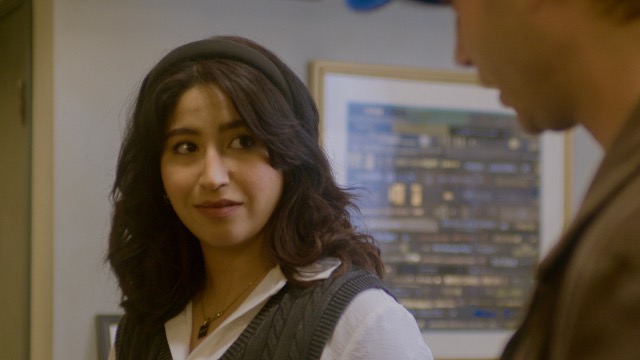
On the set of ‘Espresso’ short film
I was interested in exploring different reasons why people get auditions — the underdogs, the nepotism babies, and the classic “actor look.” I wanted to stay close to reality, but still keep some distance, which is why 2015 felt right. It was before COVID, before self-tapes became the primary audition method.
I personally dislike stories that are set too firmly in the present, because they become saturated with references to iPhones, social media, and current slang — it dates the story instantly. I even see that happening in big blockbusters, and it often pulls me out of the film.
You wrote, directed, and star in ‘Espresso’, which was filmed over a short schedule with a small crew. What was that process like for you creatively?
One thing about how I work is that if I don’t make something now, it may never get made. I sat on the outline for ‘Espresso’ longer than I’d planned — which turned into about two years. Then Sabrina Carpenter released her song ‘Espresso’, and I thought, okay, it’s game time.
Originally, I had someone else attached to direct, but they didn’t fully understand the story. It became very male-centred, and my character, Emily Davis, was starting to feel weak and misrepresented. I decided to step back into the director role, gathered a few friends who truly loved the concept, blocked out three days, and honestly just prayed until we wrapped.
‘Espresso’ blends romance with an inside look at the entertainment industry. How did you approach balancing the emotional storyline with the professional world the characters are navigating?
Balancing romance with the entertainment industry was a challenge in itself. You have to start from a place of loving the industry — I want to be working in it. I had to constantly ask myself what worked, what didn’t, and what would feel too cheesy.
Photo credit: James Pratt Photography
Interestingly, I find it easier to write from a male point of view, probably because it quiets my inner critic. It was important to keep the romance subtle — small moments, quiet looks, hints of possibility. The excitement comes from both loving the work you do and the person you might get to share it with.
Now that ‘Espresso’ is completed and preparing for festivals, how does this project reflect where you are creatively right now?
Now that ‘Espresso’ is finished, it’s helped clarify the kind of stories I want to tell. I joke that I’m the love child of Sofia Coppola and David Lynch — but there’s truth in that. I’m not interested in making commercial films or reboots. I want to make films about feelings, about the strange and the beautiful.
This project has encouraged me to expand my creative community and learn to lean on others. It feels like a step toward the kind of filmmaking life I want — one rooted in honesty, emotion, and curiosity.
Director and cinematographer Malhar Talwalkar presents Pink Trees, a compelling short film that takes an intimate and unflinching look at addiction, recovery, poverty, and survival in Los Angeles. Through the story of a recovering addict struggling to stay clean while living in a temporary housing motel, Talwalkar explores the difficult realities faced by individuals attempting to rebuild their lives in challenging circumstances.
Pink Trees follows Matthew “Job” Smith, a recovering addict battling for survival while living in a temporary housing motel surrounded by the harsh realities of urban poverty and crime. His journey reflects the instability and uncertainty that can accompany addiction recovery, particularly when individuals are attempting to overcome substance abuse without the security of stable housing and a supportive environment.
Rather than portraying recovery as a straightforward journey, Pink Trees examines the complicated circumstances that can influence an individual’s ability to remain sober. The film asks important questions about personal responsibility, environment, social institutions, and the systems that surround people struggling with addiction.
“With this film I tried to tackle the shaky and uncertain road of addiction recovery,” says Talwalkar. “My personal history with substance abuse and addiction made me keen to analyze how various individuals, based on their circumstances, deal with addiction and recovery and how much role institutions play in one’s goal to stay clean.”
Talwalkar’s personal connection to the subject matter brings an added layer of authenticity to Pink Trees. Instead of reducing addiction to a single cause or experience, the film considers the different circumstances that can shape an individual’s recovery and the challenges that can make staying clean an ongoing battle.
The short film has already earned recognition across the independent film festival circuit, receiving awards and honors from Indie Short Fest, Indie X Film Fest, LA Indies, New York International Film Awards™ (NYIFA), San Diego Movie Awards, Chicago Shorts, Latitude Film Awards, Independent Shorts Awards International Film Festival, Hollywood International Indie Film & Screenplay Awards, and Los Angeles Film Awards.
These accolades highlight the film’s growing impact within the independent filmmaking community and its ability to connect with festival audiences and industry professionals through its emotionally grounded storytelling.
At the center of Pink Trees is a question that extends beyond addiction itself: What does it really take for someone to stay clean when the circumstances around them make recovery so difficult? By placing Matthew “Job” Smith within an environment shaped by poverty, crime, and instability, Talwalkar invites audiences to look beyond stereotypes and consider the human and institutional factors that influence recovery.
Talwalkar is a Director and Cinematographer who graduated in the MFA Filmmaking Program at the New York Film Academy in Burbank, California. His work reflects a passion for telling meaningful stories that explore complex human experiences and socially relevant issues.
With Pink Trees, Talwalkar delivers more than a story about addiction. He creates a portrait of a person fighting to survive, recover, and find a path forward in an environment where simply staying clean can become a daily struggle.







 We Speak Music1 week ago
 We Speak Music1 week ago
 We Speak Music1 week ago
 We Speak Actors6 days ago