
We Speak Jiu Jitsu
From Defense to Domination: The Growth of Avery Armbruster

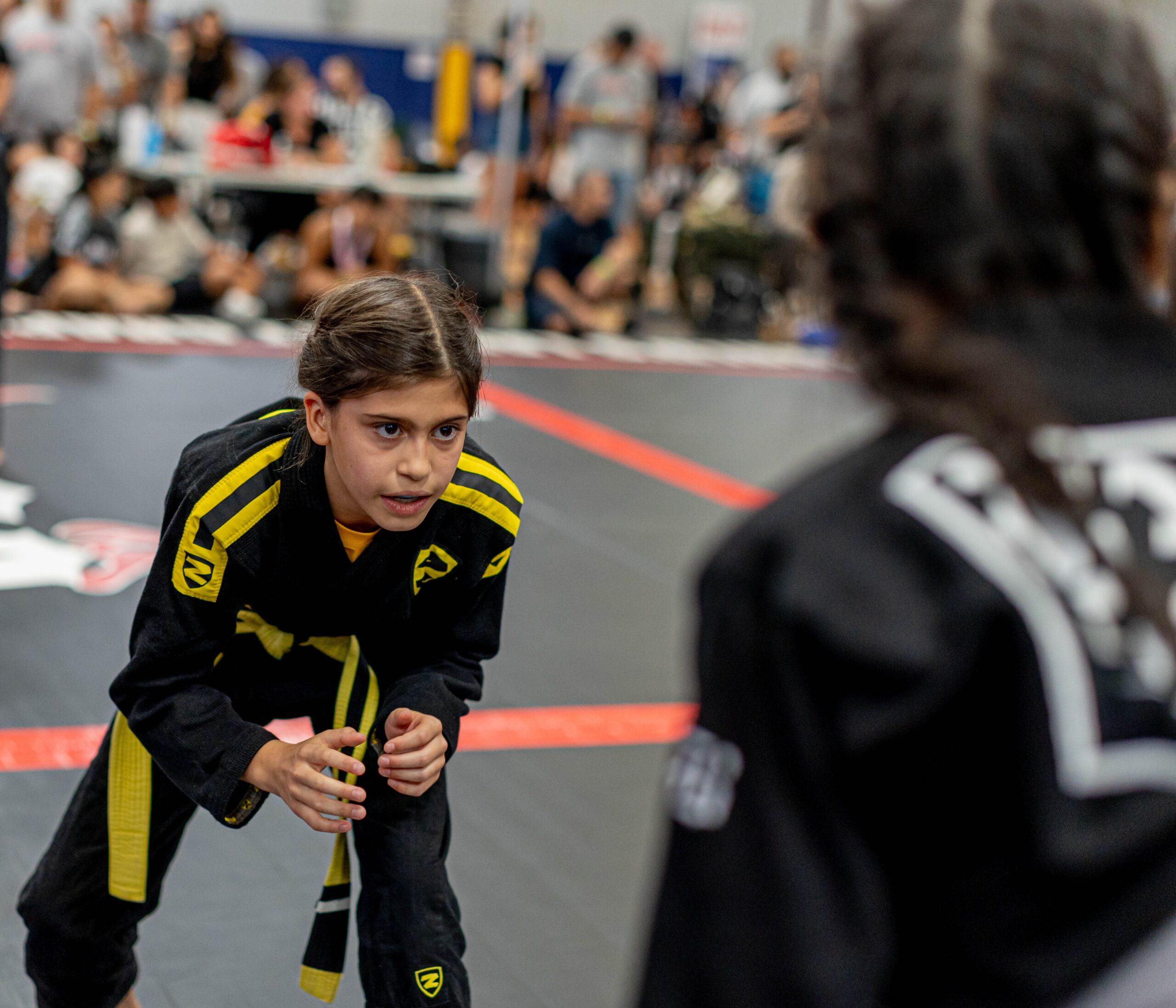
Avery Armbruster is a rising competitor in the world of jiu jitsu, known for her discipline, drive, and passion for the sport. Training out of Zenith Jiu Jitsu under the legendary Robert Drysdale, Avery continues to sharpen her skills in one of the most respected academies in the game. Competing in her weight class with a fierce love for the art, Avery channels her early start in kickboxing and her natural talent for grappling into a fighting style built on heart, technique, and purpose.

What inspired you to start training in combat sports?
My dad wanted to make sure I could protect and defend myself. From there, I learned how rewarding jiu jitsu was for me and how it could also help protect others if needed.
Which discipline did you start with, and how has your style evolved?
I started out in kickboxing at the age of five. Then at age six, I tried jiu jitsu, in which I found my talent and a love for the sport.
Who are your biggest influences or role models in combat sports?
My biggest influences are my professor and coach. Professor Robert Drysdale and Coach Faith Mata-Monks are great role models in the world of jiu jitsu, and I enjoy learning and growing under their instruction and mentorship.
How do you mentally prepare before stepping into the ring or cage?
To mentally prepare before a match, I listen to music to calm my nerves. I also close my eyes to visualize the whole match and stick with my game plan.

What’s your go-to move or combination that opponents should fear?
My go-to move is the triangle, but my opponents should also fear my rear naked choke.
Do you study your opponents before fights, or rely more on your instincts?
To prepare for fights, I do study and watch video of my opponents and have a game plan ready. But sometimes the game plan may not go exactly as I prepared for, so I then rely on my instincts.
How do you handle nerves or pressure before a big match?
I listen to music and think positively.
Which do you value more in a fight: technique, power, or heart? Why?
I think technique, power, and heart are all important. But heart is the main one because heart motivates you to never give up and keep striving to win.
How do you stay focused during a long, grueling round?
During a long, grueling round, I push through it both mentally and physically. I also think through all my options on how to best win the match.

How do you handle criticism, whether from coaches, fans, or media?
I can get frustrated with criticism, but it’s because I want to do well and not let others down. I am learning to understand that the criticism is to help me learn, grow, and perform better.
How do you want to be remembered in the world of combat sports?
I want to inspire younger fighters, and I want to help fulfill their dreams in the sport.
What advice would you give to young fighters just starting out?
Jiu jitsu can be a tough sport, but don’t give up because there are so many benefits that make it worth it, like building your confidence and knowing how to protect yourself and others.
Whether you’re a coach, athlete, parent, or sports fan, I’d love to hear from you. Have a story idea? Want to collaborate on coverage? Looking to feature your team or athlete? Use the form below to get in touch.


We Speak Jiu Jitsu
ADCC 2026: Felipe Pena Makes History, Helena Crevar Wins Gold and Scotland’s Mark Macqueen Takes Bronze

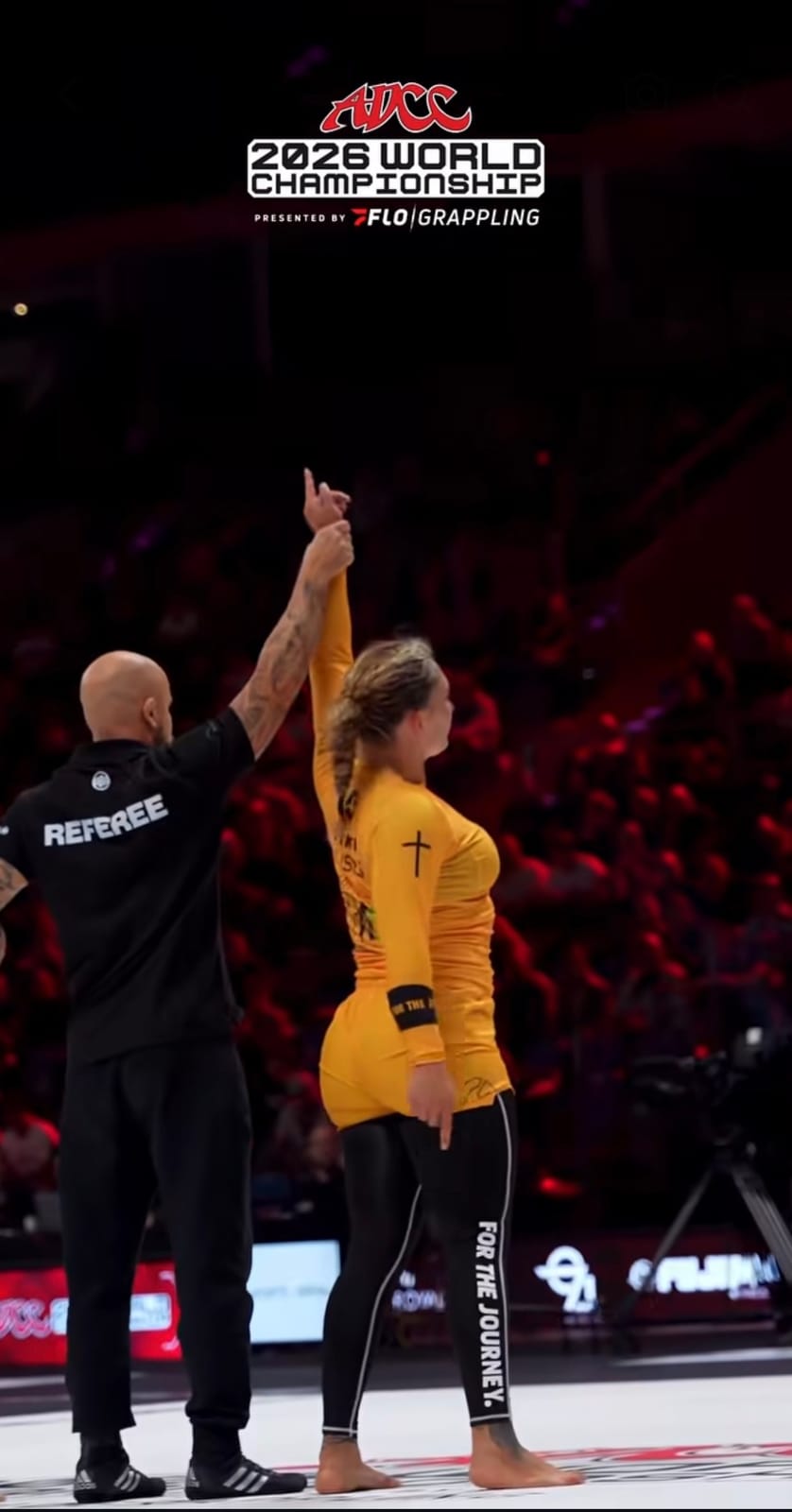
The 2026 ADCC World Championship in Kraków, Poland delivered history, a stack of new champions, and a strong showing for the United States and Europe — with Scotland’s Mark Macqueen reaching the podium in front of a European crowd.
Brazil’s Felipe Pena became the first person in ADCC history to win the absolute bracket twice, beating Roosevelt Sousa in the final. In the championship superfight, Yuri Simoes defeated Kaynan Duarte by submission after Duarte appeared to injure his shoulder in overtime.
American star Helena Crevar continued her takeover of the women’s divisions, submitting Anabel Lopez in the +65kg final to add ADCC gold to her growing collection. Fellow American Paige Ivette Clymer took bronze in the same division, submitting Elizabeth Mitrovic in 1:52 in the bronze-medal match. The USA also picked up silver medals through PJ Barch (-77kg) and Gavin Corbe (-66kg), while Austin-based Luke Griffith won his first ADCC world title at -99kg.
Europe enjoyed its strongest ADCC showing on record. Host nation Poland celebrated its first ADCC champion as Pawel Jaworski won the -88kg title with three straight leg-lock submissions on his way to the final, and Scotland’s Mark Macqueen claimed bronze in the +99kg division behind champion Victor Hugo and silver medalist Josh Saunders.
ADCC 2026 Champions
Absolute: Felipe Pena
Superfight: Yuri Simoes def. Kaynan Duarte
Men’s +99kg: Victor Hugo
Men’s -99kg: Luke Griffith
Men’s -88kg: Pawel Jaworski
Men’s -77kg: Magomed Dzharbaev
Men’s -66kg: Kennedy Maciel
Women’s +65kg: Helena Crevar
Women’s -65kg: Ana Carolina Vieira (submitted Sarah Galvão in overtime in the final)
Women’s -55kg: Jasmine Rocha
The championships also produced the weekend’s ugliest moment: a brawl broke out after the 66kg opening-round match between Dorian Olivarez and Bekzat Kapashov, with Olivarez’s corner — including Gordon Ryan — caught in the middle. ADCC disqualified both fighters and banned each for one year, with Olivarez’s father and coach suspended for two years.
-

 We Speak Music1 week ago
Fox De La Rose Refuses To Be Defined On ‘Nothing Is Written In Stone’
-

 We Speak Music1 week ago
Didn’t get tickets to Oasis? Buying for the dad who still talks about that gig in 1996
-

 We Speak Dining & Drinks2 days ago
Off The Rails Opens in Boston, Bringing Nashville-Inspired Dining, Live Music and High-Energy Entertainment Downtown
-

 We Speak Music1 week ago
Desire Machines Pair Literary Inspiration With Psychedelic Art-Rock On New Single