
We Speak Tennis
Katsiaryna Starastsenka: From Court to Community, A Tennis Journey of Passion and Resilience


Katsiaryna Starastsenka started playing tennis when she was five years old. Her parents introduced her to the sport, and her mom, who used to play when she was younger, especially encouraged her to try it. From the very first moments on the court, Katsiaryna fell in love with tennis. She loved the feeling of moving, competing, and pushing herself to improve every day, even as a child. Tennis quickly became much more than just a sport for her; it became a way of life. It has opened so many doors, from competing internationally to studying and playing at the NCAA Division I level, and it has helped her meet people from all over the world. The friendships, lessons, and experiences tennis has given her are things she will carry with her forever.
What age did you start playing tennis and what got you into the sport?
I started playing tennis when I was five years old. My parents introduced me to the sport, and my mom, who used to play when she was younger, especially encouraged me to try it. From the very first moments on the court, I fell in love with tennis. I loved the feeling of moving, competing, and pushing myself to improve every day, even as a child. Tennis quickly became much more than just a sport for me; it became a way of life. It has opened so many doors, from competing internationally to studying and playing at the NCAA Division I level, and it has helped me meet people from all over the world. The friendships, lessons, and experiences tennis has given me are things I will carry with me forever.

What’s your current training routine like during the season?
I graduated last year from Sacred Heart University, where I played NCAA Division I tennis. Back then, our coaches would plan everything for us—from our training blocks to our gym sessions and match preparation. It was a structured environment that helped me grow as a player. Since graduating, I’ve been creating and managing my own training routine, which has been both challenging and rewarding. During the season, I usually start my day with a morning training session and match play from 9 to 11. After that, I go to the gym for strength work or do conditioning to keep up my fitness. In the afternoons, I practice again from 3 to 5, focusing on drills or match play to keep my game sharp. I also like to add a pool session when I can for recovery. It’s been a new experience to take full ownership of my training, and I enjoy the process of balancing hard work with listening to what my body needs.
How do you prepare mentally before a big match?
Mental preparation has always been a big part of my approach before a match. I like to take time to visualize how I want to play, going through different scenarios in my mind so I feel prepared for whatever comes. I also use breathing techniques to calm my mind and keep my focus on the present moment rather than the outcome.
During my tennis career, I realized how much mindset impacts performance, which led me to author two research papers: ‘How Techniques That Help Develop Mental Strength in Individual Sports Such as Tennis Can Be Applied to Dealing With Everyday Stresses and Challenges That Require Resilience’ and ‘Psychological Mechanisms of Reproduction of Intensity and Freedom of Movement in Tennis Matches: Transfer of Training Effectiveness to Competitive Conditions.’ Writing these works deepened my understanding of how mental strength developed through sport can be applied to life challenges, and how training intensity and freedom of movement can be transferred to competitive environments.
Before a big match, I remind myself to trust the work I’ve put in, to focus on one point at a time, and to stay grateful for the opportunity to compete. This mindset helps me stay composed and adaptable under pressure, both on and off the court.

Which surface do you prefer playing on—hard, clay, or grass?
I’ve had the chance to play on all three surfaces, but I definitely prefer hard courts. I love the balance it offers between speed and consistency, and it suits my game style well, allowing me to be aggressive while also constructing points patiently when I need to. I grew up training mostly on hard courts, so it feels the most natural to me, and I enjoy the clean bounce and the rhythm I can find on this surface. At the same time, I appreciate the unique challenges that clay and grass bring, and I always see playing on different surfaces as an opportunity to grow and develop different parts of my game.
What’s the most memorable match you’ve ever played in?
One of the most memorable matches I’ve ever played was the semifinals of the NEC Conference in 2023, when our team at Sacred Heart University made it to the finals for the first time in program history. It was such a special moment for us. It had been raining, so the match was moved indoors, and because indoor courts were limited, as the No. 1 singles player, I was the first to go on court. It meant I was setting the tone and energy for the entire team, and I could feel the responsibility and excitement of that moment. I remember focusing on staying composed and bringing positive energy, knowing that how I approached the match would impact everyone. We fought hard that day, and making it to the finals was a testament to the hard work and belief we had in each other as a team. It’s a memory I will always carry with me, not just for the result, but for the unity and pride we felt together.
What do you consider your biggest strength on the court?
I would say my biggest strength on the court is my fighting spirit. I always fight for every point and run for every ball, no matter what the score is. I take pride in never giving up and making my opponent earn every point. Another strength is my ability to stay calm in any moment, whether I’m leading or facing challenges in a match. I’ve learned to manage my emotions, focus on the present, and keep a clear mind, which helps me make good decisions under pressure. I believe these qualities have been key to my success and allow me to compete with resilience and consistency.

What’s the best piece of advice a coach or teammate has ever given you?
One of the best pieces of advice a coach gave me was to smile even after losing a point. It sounds simple, but it helps me regroup quickly and keeps me from getting stuck in frustration. It allows me to reset mentally, think clearly about what I can adjust in that situation, and stay positive while looking for solutions. My coach also encouraged me to keep being aggressive with my shots and to look for openings in my opponent’s game, even when things aren’t going perfectly. That combination of staying calm, maintaining a positive mindset, and continuing to play proactively has made a big difference in how I handle challenges on the court.
What off-court workouts or activities help you stay in shape?
To stay in shape off the court, I like to mix up my workouts to keep things interesting and cover all aspects of fitness. I spend a lot of time in the gym focusing on strength training, and I include plyometrics and sprint drills to build explosiveness and speed. Because I live almost right on the beach, I also love using the ocean for recovery and cross-training—swimming in the pool and ocean helps with my endurance and keeps my body fresh. The variety in my routine keeps me motivated and balanced physically.
How do you balance academics or work with your tennis commitments?
Balancing academics with tennis was never a challenge for me—it’s something I’ve been used to since a very young age. At Sacred Heart University, I maintained a perfect 4.0 GPA while competing at the NCAA Division I level, which required strong discipline and effective time management. I was honored to be nominated for the NCAA Woman of the Year award, recognizing not only my athletic achievements—like NEC Player of the Year, Rookie of the Year, and leading our team to its first-ever conference championship final—but also my academic excellence and community involvement.
Volunteering with organizations like First Serve Bridgeport and mentoring young athletes were important parts of my college experience. Juggling these commitments felt natural because I had built these habits early on, and my passion for both learning and tennis motivated me every day. That balance has shaped me into a resilient and disciplined person who is ready to take on any challenge.
How do you stay motivated during long training sessions or tough periods?
During long training sessions or tough periods, I stay motivated by focusing on small improvements in each session. I remind myself that every practice is an opportunity to learn and get better, which keeps me engaged and invested even when things get challenging.
My research on how mental strength develops in individual sports has helped me understand the importance of breaking down big goals into manageable steps and staying present during practice. This mindset helps me maintain focus and resilience. Instead of getting overwhelmed, I try to approach every drill or workout with curiosity and a desire to improve, which makes the process more rewarding and sustainable.

What are your short-term and long-term goals in tennis?
Right now, my short-term goal is to keep building my ITF points by playing in as many tournaments as I can and getting better with every match. It’s all about gaining experience and staying consistent, both physically and mentally.
Long-term, I really want to make it to big events like the Miami Open. Since I currently live here, Miami feels like home, and playing in such a huge tournament in my own city would mean so much to me. It would be amazing to compete on that stage against some of the best players in the world and show what I’m capable of.
I know it takes a lot of patience and persistence, but I’m ready to put in the work and keep moving forward one step at a time.
Do you prefer singles or doubles? What do you enjoy about each?
I prefer singles, but I definitely enjoyed playing doubles, especially during my college tennis experience at Sacred Heart University. I competed and earned awards in both singles and doubles, including NEC Player of the Year, Rookie of the Year, Scholar-Athlete of the Year, and consistent ITA Division I Scholar-Athlete honors, while helping lead our team to its first-ever conference championship final and an undefeated regular season.
Singles allows me to rely completely on myself, using my strategy and resilience to build points, which I love. At the same time, doubles brought me a lot of joy in college, especially since my doubles partner was also my best friend. We had such a strong connection on court that we always knew what each other was doing without saying much, making doubles a fun and energizing part of match days. It was also the perfect pump-up before singles, helping me get into the right mindset while enjoying the teamwork and quick reactions that doubles requires.
How important is team support or having a strong community in your tennis journey?
Team support and having a strong community have been absolutely crucial throughout my tennis journey. Even though tennis is often seen as an individual sport, the encouragement, advice, and energy from coaches, teammates, and mentors make all the difference.
During college, being part of a team that believed in each other helped me push through tough moments and celebrate successes together. Our bond gave me confidence and motivation to keep improving. Beyond the court, the support network also helped me balance academics and personal life.
One of the most rewarding experiences was volunteering with First Serve Bridgeport, where I helped create a welcoming and supportive environment for underprivileged kids. I worked to build their confidence and foster teamwork, showing them how tennis can be a tool for personal growth and community connection. Helping those kids feel part of a team and encouraging their passion reinforced for me just how important community is—not only for athletes but for everyone.
Having that sense of community creates a positive environment where everyone lifts each other up, which is essential not only for performance but also for long-term passion and growth in the sport.
What’s the one tournament you dream of competing in one day?
The one tournament I’ve always dreamed of competing in is the US Open. Growing up, I watched it every year and was inspired by the energy of the crowd, the atmosphere, and the level of competition on those courts. Since moving to the U.S. and competing in college tennis, that dream has only grown stronger.
One of the most special experiences I’ve had was when our college coach arranged for our team to spend a day training on Arthur Ashe Stadium, the central court of the US Open. It was incredible to stand on that court, feel its energy, and imagine competing there one day. We also had the opportunity to play some of our college matches on the US Open courts, which made the dream feel even closer and more real. It would mean so much to me to compete in the US Open in front of a home crowd and test myself against the best players in the world on that stage.
What advice would you give to younger players just starting out?
My advice to younger players just starting out is to focus on loving the game above all else. Tennis can be tough, with ups and downs, but if you truly enjoy playing and competing, it will keep you motivated through challenges. Always work on building good habits early—whether it’s practicing consistently, staying disciplined with your training, or learning to manage your emotions on court.
Don’t be afraid to make mistakes; they’re part of the learning process. Listen to your coaches and surround yourself with supportive people who want to see you grow. Finally, remember that tennis is not just about winning matches—it’s about developing resilience, patience, and confidence that will help you on and off the court. Enjoy every moment and trust the journey.
Whether you’re a coach, athlete, parent, or sports fan, I’d love to hear from you. Have a story idea? Want to collaborate on coverage? Looking to feature your team or athlete? Use the form below to get in touch.


We Speak Sports
Iva Jovic, 18, Beats Paolini Again to Reach Ningbo Quarterfinals
American teenager Iva Jovic beat Jasmine Paolini for the second straight time, 6-4, 6-3, on Thursday to reach her seventh quarterfinal of a breakout 2026 season at the Ningbo Open.

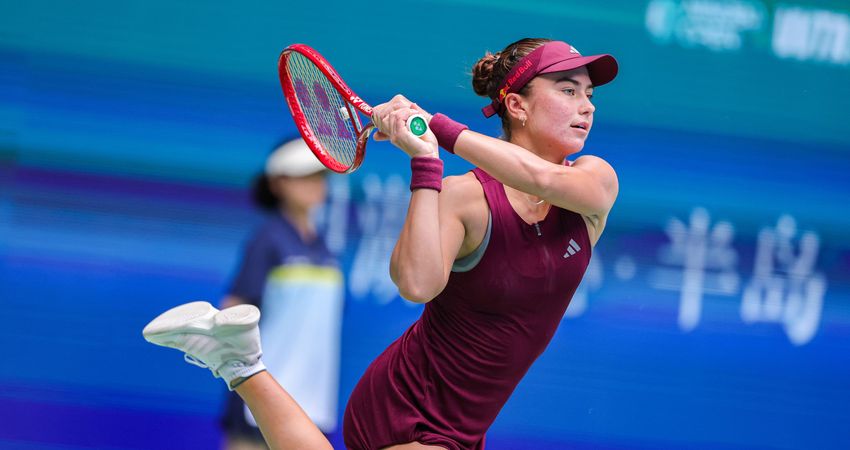
Iva Jovic’s breakout season rolled on in Ningbo. The 18-year-old American, the No. 4 seed, defeated two-time Grand Slam finalist Jasmine Paolini 6-4, 6-3 on Thursday to reach the quarterfinals of the Ningbo Open on her tournament debut.
After a first-round bye, Jovic fell behind 1-3 in the opening set before breaking in the fifth and ninth games to take it. The second set featured break after break — Jovic broke Paolini four more times — and she closed out the win in an hour and 22 minutes.
It is Jovic’s second straight win over Paolini, leveling their head-to-head at 2-2. She also beat the Italian at the Australian Open in January, her first Top 10 win, on her way to a first Grand Slam quarterfinal. By the WTA’s count, Thursday’s win was her 42nd tour-level victory of 2026 — by far her best season — her 20th career win over a Top 50 opponent, and it puts her in a seventh quarterfinal this year. She reached the semifinals in five of the previous six.
Born in Torrance, California, Jovic won her first WTA title in Guadalajara in September 2025, the youngest tour champion of that season, then defended the title last month, beating Peyton Stearns in the final. This year she has also reached the fourth round at Wimbledon and the US Open and peaked at a career-high No. 11 earlier this month; she is currently ranked No. 12.
Jovic plays sixth seed Diana Shnaider in the quarterfinals, having won their only previous meeting, in Dubai, in three sets. And with Iga Swiatek’s season over, a deep run in Ningbo would strengthen her case to travel to next month’s WTA Finals in Indian Wells as an alternate.
Photo credit: WTA
-

 We Speak Music1 week ago
Didn’t get tickets to Oasis? Buying for the dad who still talks about that gig in 1996
-

 We Speak Music1 week ago
Fox De La Rose Refuses To Be Defined On ‘Nothing Is Written In Stone’
-

 We Speak Dining & Drinks1 day ago
Off The Rails Opens in Boston, Bringing Nashville-Inspired Dining, Live Music and High-Energy Entertainment Downtown
-

 We Speak Music1 week ago
Desire Machines Pair Literary Inspiration With Psychedelic Art-Rock On New Single