
We Speak Music
Mathis Akengin creates stunning suspended atmospheres with new single ‘Mer d’hiver’

There are seas that no longer make waves. In his new single ‘Mer d’hiver’, Mathis Akengin lends his voice to that very sea, joined by the delicate voice of Claire Passard. A winter sea slowed down, dense, almost frozen, where everything seems to be holding its breath. In winter, the sea becomes a metaphor for suspended time, for life slowed down, for what seems asleep yet continues, silently, to transform.
An old sailor whispers: ‘As-tu vu passer l’orage?’ (Did you see the storm pass by?), the question lingers, simple yet devastating. Did we notice the moment when everything shifted? Was it already too late? The piece moves with restraint, between silences and resonances, like a memory one hardly dares to touch.
At the age when his peers were learning to read and write, Mathis Akengin discovered a passion for a different form of expression: the piano. Like many early talents—often referred to as ‘prodigies’ due to their rarity—the young musician entered the Conservatory at the age of six, where he would study for fifteen years, later adding a stint at the Haute Ecole de Musique in Lausanne. His exemplary path confirmed his natural talent.
However, the youngling from Franche-Comté (France) didn’t want to limit himself to classical music. Contemporary music quickly caught his attention. At the age of twelve, he formed his first band and started his first tours. Little did he know that, a few years later, he would join the blues-rock duo Catfish, a band he had once opened for. Projects multiplied. By the age of twenty-five, his list of collaborations was already impressive. Mathis’ keyboards, both in the studio and live, resonate in a variety of formations with sounds ranging from Dead Chic (rock), Eméa (world-soul), Alexandrie (pop), to Neptune Quartet (oriental jazz). Eclectic, Mathis is also a versatile artist. He’s often sought after to arrange albums, always finding new ways to develop his creativity and skills.
With all these experiences under his belt, Mathis began to envision a solo project where he could create freely, experiment, and tell the stories running through his mind. The idea became a reality: it all starts with the piano, moving towards rhythmic taps on the wooden frame in sync the melodies. The piano became both the instrument and the muse. It was no longer about telling stories through it but writing for it. Mathis transcribes oriental music for this European instrument, blending his French and Turkish roots. The inspiration flowed, and an album gradually took form.
‘Mer d’hiver’ is the first taster of the record. It’s about what gently fades away: traces, voices, bonds. Nothing is eternal. Emotion is born within this fragility. A bare piano, a veiled horizon, a fragment of life frozen in time. The piece is built around motifs, mechanical cogs that evoke the workings of a ship, leaving space for breath, for stillness. The piano, deliberately restrained, creates a suspended atmosphere, almost fixed within cold waters. The percussion on the track is crafted with Mathis’ technique of recording the piano as a percussive instrument which guides us through the fog. Claire Passard’s airy voice slips in with delicacy, heightening this suspended atmosphere. And suddenly, the storm breaks, before we even see it coming…




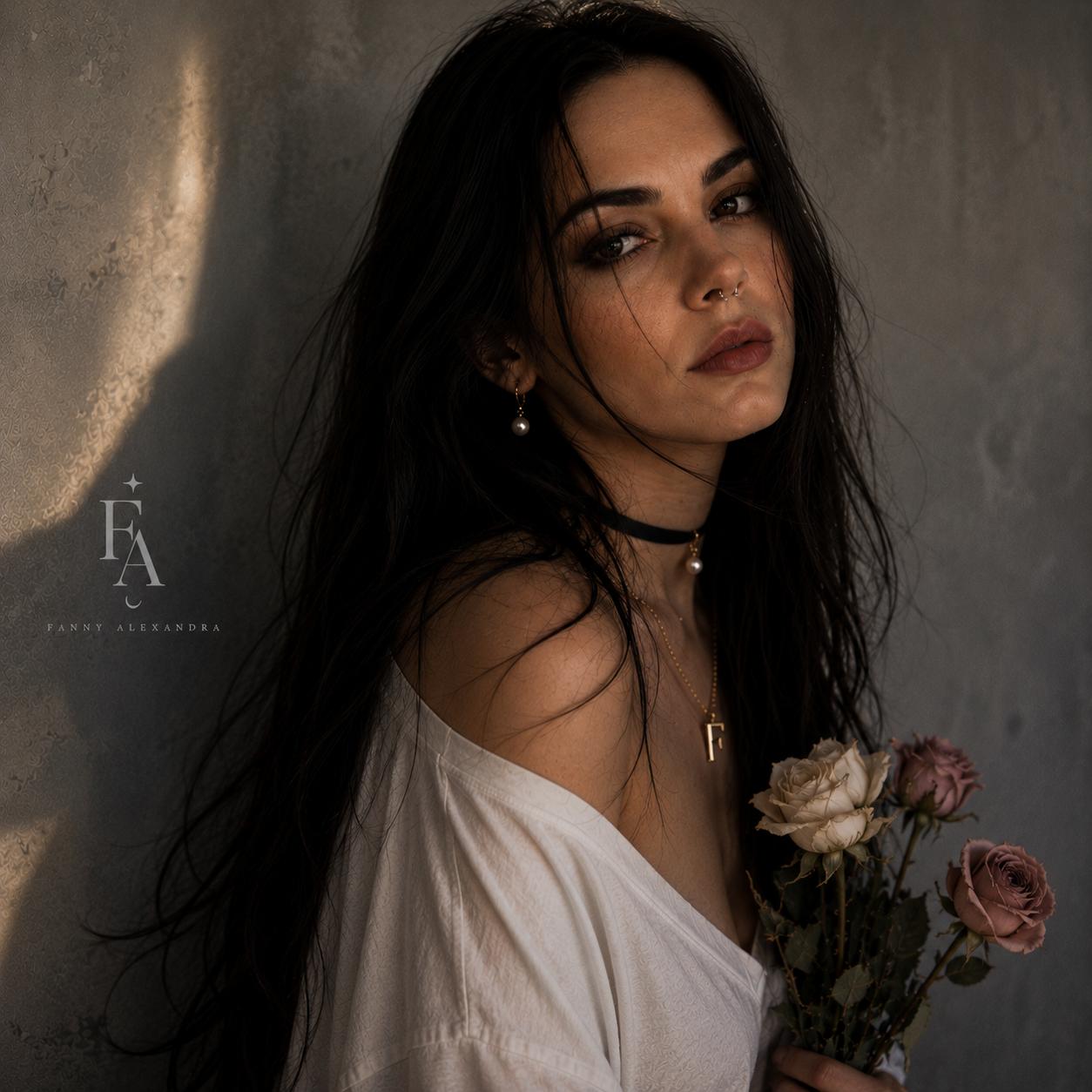
Swiss artist Fanny Alexandra returns with “Black Pearl Summer”, a new single that finds her exploring a more open side of her alternative sound. Released via Now Listen, the track combines coastal imagery with a story about growing through grief, pressure and the experiences that can shape a person over time.
Alexandra notes that the song is relatively summery by her own standards. She has said that her music is usually darker and that she has never been particularly drawn to the typical idea of summer, preferring cold air, jackets and rugged coastlines. That gives the release a clear sense of personality from the outset.
The song centres on Alexandra’s reflections on being 19 and spending years focused on survival rather than fully living. Those experiences are presented through the image of a black pearl, which becomes a way of considering how something worthwhile can emerge from a challenging period.
What makes the track particularly effective is the balance between its subject matter and its musical approach. The production gives the song room to breathe, while Alexandra keeps the focus firmly on the story she is telling. It means the track can be enjoyed as a seasonal release while still offering more to discover in the lyrics.
There is also a clear sense of change in the way Alexandra approaches her younger self. The song is not about returning to that period or trying to erase it. Instead, it considers what can be learned from experiences that once felt overwhelming.
“Black Pearl Summer” therefore offers newcomers a useful introduction to Alexandra’s work. It shows an artist comfortable writing about serious subjects, while also demonstrating a lighter musical side that may not be as familiar to listeners who know her darker material.
It is an interesting glimpse of what Alexandra can do when she lets a little more light into the picture.
-

 We Speak Music1 week ago
ADRIANNA Gets Two Very Different Lives From ‘Power Back’
-

 We Speak Music1 week ago
B BWOY BILLO AND MÖ THA TRUTH BRING EMOTION, BARS AND BROTHERHOOD TO GHANA’S RAP FUTURE
-

 We Speak Business5 days ago
Funl Raises $2.5 Million at a $10 Million Post-Money Valuation to Transform How Creators Bring Events to Life
-

 We Speak Hip-Hop6 days ago
Ghost Da Lyrical returns with Taylor Made Ghost