
We Speak Cars & Racing
NASCAR returns to Chase championship format for 2026

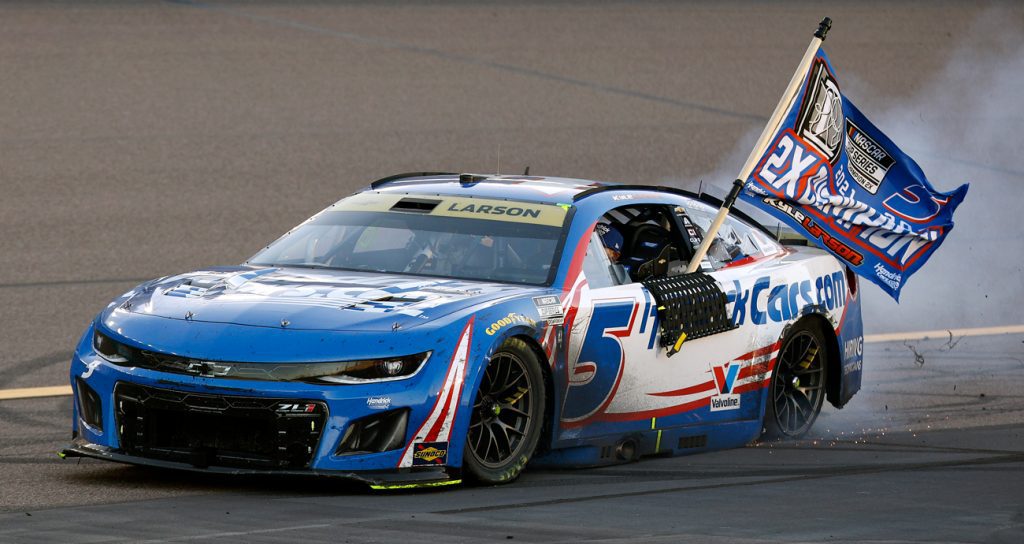
After more than a decade with an elimination-style playoff system, NASCAR’s championship format has busted the bracket and cut to The Chase.
NASCAR will return to a postseason Chase in all three national series in 2026, implementing a championship procedure that rewards full-season consistency and introducing a new points model that stokes the emphasis on race wins.
The format, announced Monday afternoon at the NASCAR Productions Facility, closes the elimination era and the one-race championship system that had been in place since 2014 for the Cup Series and since 2016 for the O’Reilly Auto Parts Series and Craftsman Truck Series. The new method for deciding those three championships takes a page from stock-car racing’s history and its first postseason system, but with modifications that chart its course for the future.
RELATED: 2026 Cup Series schedule | 2026 O’Reilly Auto Parts schedule | 2026 Craftsman Truck Series schedule
“The biggest thing was looking at who we wanted to be as a sport going forward, and that included really a focus on our core fan base and who had been with us for a long, long time and gotten the sport to where it was. So we wanted our future format to reflect that,” NASCAR president Steve O’Donnell said. “A lot of things you’re going to see and how we talked to the fans, from an overall NASCAR standpoint, was going to really embrace that hardcore fan, and so we felt like the format needed to absolutely reflect that.”
The new format uses the framework of the system that was in place from 2004-2013 in the Cup Series, but with several key enhancements.
The field sizes for The Chase in each series remain the same — the top 16 drivers in the Cup Series, 12 in O’Reilly and 10 in Trucks — but all drivers qualify based on regular-season points. The “win-and-you’re-in” rule that provided regular-season winners with automatic playoff berths is no more.
Race winners now collect 55 points, a 15-point increase over the previous points system. Points awards for all other positions and stage results remain the same, but bankable playoff points are no longer part of the format.
Points will be reset for each series’ Chase field with a 25-point premium awarded to the regular-season champion. Top seeds will start The Chase with 2,100 points, 2,075 for the second seed and 2,065 for the third, with a five-point drop for each seed after.
The Cup Series’ Chase spans the final 10 races of the season, with nine Chase races for the O’Reilly Auto Parts Series and seven in the Craftsman Truck Series.
The driver with the most points at the end of the season will be the series champion.
O’Donnell said “everything was on the table” when the new format was taking shape, and options ranged from modifying the elimination system, to adopting Chase-style procedures, to running a full 36-race points contest without playoffs. A playoff committee made up of industry stakeholders and partners — and led by NASCAR executive vice president and chief brand officer Tim Clark — met regularly last year to discuss the format, and opinions were split about the direction.
What emerged, O’Donnell said, was a happy medium that he hopes satisfies all corners of the sport, foremost fans.
“As discussions continued to flow about what we wanted to do, the core elements were we wanted it to be something the fans would embrace, we wanted it to reward consistency throughout all of the 36 races, but it was also really important for winning to matter. We didn’t want that to go away,” O’Donnell said. “So how do you marry all of those together, and where we landed, we think, is the best of both worlds, that it has that element of every race matters, all 36 races matter, but you’re also able to include The Chase and our form of a playoff, so to speak.
“But going back to The Chase, it was unique to NASCAR. It’s something we believe the fans will embrace. It’s 10 races, with every race mattering and still being very simple to explain to the fans. One set of points, easy to explain, and the best driver at the end of 36 races is ultimately going to win the championship if they can perform for those final 10 races.”
Sean Gardner | Getty Images
Last year’s championship races drew intense scrutiny after the checkered flag fell at Phoenix Raceway. Just one of the three title favorites — Truck Series champ Corey Heim — prevailed, and he needed a daring move on an overtime restart to secure the crown. Fellow season-long dominators Denny Hamlin (Cup Series) and Connor Zilisch (O’Reilly Series) finished as runners-up in their respective series after coming up short in the winner-take-all finales.
O’Donnell said those championship outcomes didn’t necessarily prompt the format change for this season, since the discussion process had begun long before last fall’s finales. Instead, he said the weekend seemed to confirm that the timing was right for a new direction.
“If anything, I’ll use myself personally, I was someone who thought we had to go away from the one-race championship,” O’Donnell said, “but when you looked at the (Truck Series) race on Friday night, if Corey Heim hadn’t have won, he’d be like, ‘Oh my gosh, what’s happening?’ But the dramatic fashion he won in, had everyone looking at each other and saying, ‘Wow, that was pretty wild. It was pretty cool.’ If anything, it kind of reintroduced that a little bit, but at the end of the day, really looking at where do you want to be in totality with all the things that could happen in a one-race, a four-race (final), whatever that may be, it just felt like the industry and everyone was really ready for us to make it as simple as possible, definitely reward winning, but have something to be able to be easily explained and that the industry could feel like this is where we want to be.”
Simplification, O’Donnell said, was a focal point of the committee’s work.
“Not only to newer fans but even the fans who follow the sport, I think, had a difficulty at times,” O’Donnell said, “and so one of the core elements that was part of the committee that Tim led was, can you explain this if you got on an elevator and you had 20 floors to explain it to somebody, how does it work? And we wanted to make sure we could do that, and we feel like we’re able to do that with one points system. You reset for the final 10 (races), but the points remain the same, and it’s pretty easy to understand that if you’re leading the points at the end, you’re our champion.”
MORE: Top moments from 2004-13 Chase era
The new 55-point payday for race wins marks the first major revision to the NASCAR points system since 2017, when stage points became part of the race procedures. It also marks a departure from the previous format’s primary single-race bonus, the automatic playoff berths that accompanied a trip to Victory Lane.
While that system yielded multiple clutch performances in must-win moments, it also, on occasion, incentivized overly aggressive driving and provided playoff spots for drivers deep in the standings who were able to produce a season-saving victory. A 55-point payout, O’Donnell said, should provide motivation that fuels both race-weekend and season-long goals.
“I think when you looked at the ‘win-and-you’re-in,’ it would be hard to argue that it didn’t change the way the drivers raced,” O’Donnell said. “So we did not want to lose, going into Turn 4, we don’t want someone blatantly taking someone out, right, but a bump-and-run, an aggressive move, is part of what NASCAR is all about. So how do you keep that element? And so by adding 15 points, we thought that that would be enough of an incentive, hopefully, to continue to really push that winning narrative.
“One of the things with win-and-in that we didn’t think about that ultimately happened was we wanted every race to matter, and that didn’t happen with win-and-in, right? You saw someone who could win that first playoff race and then kind of say, ‘OK, I’ll see you in a couple weeks,’ and that’s not something we want to deliver for the fans. So we felt like more points to the win, but you still have got to be there every race and hopefully you’re going for those wins for 36 races in a row.”
The Chase will officially return when the postseason begins for all three series in September. With the O’Reilly Auto Parts Series expanding to a nine-race postseason, The Chase will begin for both that circuit and the Cup Series on Labor Day weekend at Darlington Raceway; the Truck Series Chase will open two weeks later at Bristol Motor Speedway. “It was the goal and a little bit of luck, candidly,” O’Donnell said, indicating that competition officials will aim to sync those three Chase schedules even more closely in future seasons.
O’Donnell said the overall goal couldn’t have been possible without the cooperation of the playoff committee, which drew contributors from a wide cross-section of the NASCAR industry. He said their passion for the sport and the desire to make it better were pivotal.
MORE: Buy tickets to races now!
“I think what I would say about the playoff committee is, first and foremost, an appreciation for the time they committed,” O’Donnell said. “They don’t have to do that, it’s not part of their day job, but they all took the time to do it from all walks of life — OEMs, drivers, teams, tracks — and all had a position going in, and I would say that position probably changed for most people, including myself, during the process.
“So that’s what collaboration is all about, is taking the best ideas, formulating those, beating those up as a group, coming back and making sure you’re right, and we certainly took a long time to get here, but we did that because we wanted to land at a place that some would say, ‘Well, you’ve been there in the past.’ Yes, we have, but we’ve tweaked it, and I think it’s in a really strong position and something I believe that the fans should embrace, we hope that they’ll embrace, but I know our industry is going to be behind.”
 Championship Weekend Comes Home: After Seven Years Away, NASCAR’s Titles Return to Homestead
 Gabriel “Fluffy” Iglesias Brings His Classic VW Buses to LA Auto Show Industry Day
 NEWS: Firestone Grand Prix of St. Petersburg tickets go on sale tomorrow
 South Carolina-Made GT Radial Tires Win Second Straight Formula DRIFT Tire Cup Championship
 Breeders’ Cup 2026 Preview: Fields Set for Two Championship Days at Keeneland
 Tickets On Sale Today for Hilary Hahn Gala Concert with The Florida Orchestra
 Brewers Rout Rays 10-1 in Game 3 to Move Within One Win of First World Series Title
 Cowboys Run Past Eagles 38-21 on Monday Night Football Behind Prescott, Williams



We Speak Cars & Racing
Championship Weekend Comes Home: After Seven Years Away, NASCAR’s Titles Return to Homestead
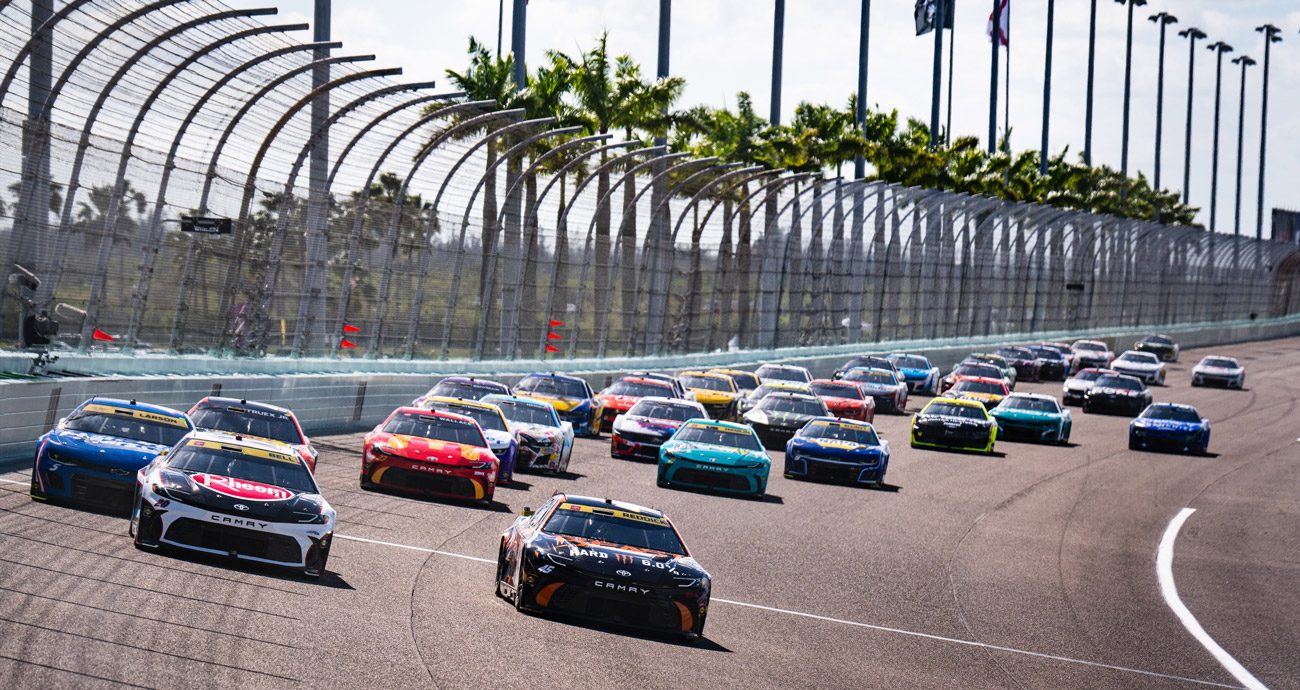
HOMESTEAD, Fla. — For 18 straight years, NASCAR’s season ended under the South Florida sun. From 2002 through 2019, every Cup Series champion was crowned at Homestead-Miami Speedway, on a 1.5-mile oval where the fastest line runs inches from the wall and the palm trees sway over the backstretch. Then the finale moved away. This year, it comes home.
NASCAR Championship Weekend runs Nov. 6–8, 2026, at Homestead-Miami Speedway, and for the first time since 2019 all three national series will settle their championships on the same South Florida weekend. The sport made it official back in May 2025, announcing that Homestead would host the finale as part of a new rotating model — championship weekend will move among tracks year to year, with Homestead first up and Phoenix Raceway, the finale’s home since 2020, staying in the rotation.
“It’s the place to be,” Homestead-Miami Speedway president Guillermo Santa Cruz said when the return was announced. “South Florida is the best place in America to host events — we have the weather, the people, the culture and the excitement.”
A weekend built in threes
The weekend stacks one championship per day. It opens Friday night, Nov. 6, when the NASCAR CRAFTSMAN Truck Series runs its title race at 7:30 p.m. ET on FS1 — 134 laps, 201 miles. Trucks get the weekend started early, with practice on Thursday evening and qualifying Friday afternoon.
Saturday, Nov. 7, belongs to the NASCAR O’Reilly Auto Parts Series — the circuit formerly known as the Xfinity Series, renamed for 2026. Its championship race goes off at 5 p.m. ET on The CW, 200 laps and 300 miles, with qualifying earlier in the day. When the checkered flag falls, the track keeps the party going with a post-race concert by Orlando Mendez from 8 to 9:30 p.m.
Sunday, Nov. 8, is the main event: the NASCAR Cup Series Championship, 267 laps and 400.5 miles, live on NBC at 3 p.m. ET. Before the green flag, a pre-race concert takes over the frontstretch at 1 p.m. — the speedway has announced Miami’s own Jason Derulo will headline it — and when the race ends, fans can reach the frontstretch through the crossover gates for the championship celebration.
The Chase changes everything
This is not the championship format Homestead fans remember. Gone is the elimination playoff that produced a winner-take-all Championship 4. In its place, NASCAR brought back The Chase for 2026 — in all three series.
Here is how it works in the Cup Series: the top 16 drivers in points after the 26-race regular season make the Chase. There is no more “win and you’re in” — a victory no longer locks anyone into the postseason. The 16 are seeded by their regular-season points, with the regular-season champion starting at 2,100 points, and they run 10 races with no eliminations, no rounds and no resets. A race win is worth 55 points, stage points still count, and when the last lap ends at Homestead on Nov. 8, the driver with the most points is the champion. Simple as that.
The other two series run the same playbook on a smaller scale: 12 drivers over nine races in the O’Reilly Auto Parts Series, and 10 drivers over seven races in the Truck Series. All three titles come down to who has been best, most consistently, over the full stretch run — and all three will be decided at Homestead.
With two races left — Martinsville on Nov. 1, then Homestead — Kyle Larson leads the Cup Series Chase after winning at Talladega on Oct. 25, and the field behind him is fighting to keep his run from turning into a coronation. Larson knows this track as well as anyone in the field: he won the Cup races at Homestead in 2022 and again in March 2025. Nothing is decided yet. Under The Chase, every position at Martinsville and every lap at Homestead carries championship weight — there is no scenario where Nov. 8 is a formality.
A track that demands everything
Homestead-Miami Speedway opened in 1995, part of South Florida’s rebuild after Hurricane Andrew, and it has been making champions uncomfortable ever since. The 1.5-mile asphalt oval carries variable banking — 18 to 20 degrees through the turns — that lets drivers search for grip from the apron to the wall. The signature Homestead move is running the top lane, throttle down, with the right side of the car kissing the barrier. It is how Tyler Reddick won here in 2024, and it is how titles were won here for nearly two decades: Jimmie Johnson sealed his record-tying seventh championship at Homestead in 2016, and Kyle Busch (2015, 2019), Brad Keselowski (2012) and Joey Logano (2018) all lifted the Cup at this track.
The grandstands hold 55,000, the Fan Zone opens every race day and stays open until the checkered flag, and the campgrounds fill up early — camper load-in starts Thursday alongside the first practice session. The weekend also has a hometown artistic stamp: Miami pop artist Romero Britto, announced as the weekend’s honorary creative director, designed a special trophy for the winner’s Victory Lane celebration and painted a mural on the speedway tower.
The practical details: tickets, hospitality packages and camping are on sale now through homesteadmiamispeedway.com or by calling 866-409-7223. If you are watching from home, it is FS1 on Friday night, The CW on Saturday, and NBC for the Cup finale on Sunday at 3 p.m. ET.
Seven years ago, Homestead-Miami Speedway stopped being where NASCAR seasons end. On Nov. 8, with three champions crowned in three days and a Chase that rewards the best driver over the long haul, it becomes that place again.
Gabriel “Fluffy” Iglesias Brings His Classic VW Buses to LA Auto Show Industry DayNEWS: Firestone Grand Prix of St. Petersburg tickets go on sale tomorrowSouth Carolina-Made GT Radial Tires Win Second Straight Formula DRIFT Tire Cup Championship The Offspring, Jimmy Eat World and 311 Headline SEMA Fest in Las Vegas on November 6Breeders’ Cup 2026 Preview: Fields Set for Two Championship Days at KeenelandTickets On Sale Today for Hilary Hahn Gala Concert with The Florida OrchestraBrewers Rout Rays 10-1 in Game 3 to Move Within One Win of First World Series TitleCowboys Run Past Eagles 38-21 on Monday Night Football Behind Prescott, Williams
-

 We Speak Jazz5 days ago
Toronto Jazz Singer Ori Dagan Announces First Live Album ‘Live in the Market’ for October 23 Release
-

 WE Speak MMA6 days ago
UFC 334: Gane vs. Hokit, Harrison vs. Nunes Title Fights Set for November 14 at Madison Square Garden
-

 We Speak Comedy5 days ago
Nate Bargatze Plays Rexburg Tomorrow, Then Settles Into Las Vegas on the Record-Breaking Big Dumb Eyes Tour
-

 We Speak Celebrity News4 days ago
Jennifer Lawrence Steps Into Beauty With Biodesigned Haircare Brand mes°