
We Speak Track And Field
Not Just Distance, but Direction: Zaidah Lightener’s Calculated Climb to Excellence in the Art of Horizontal Jumps

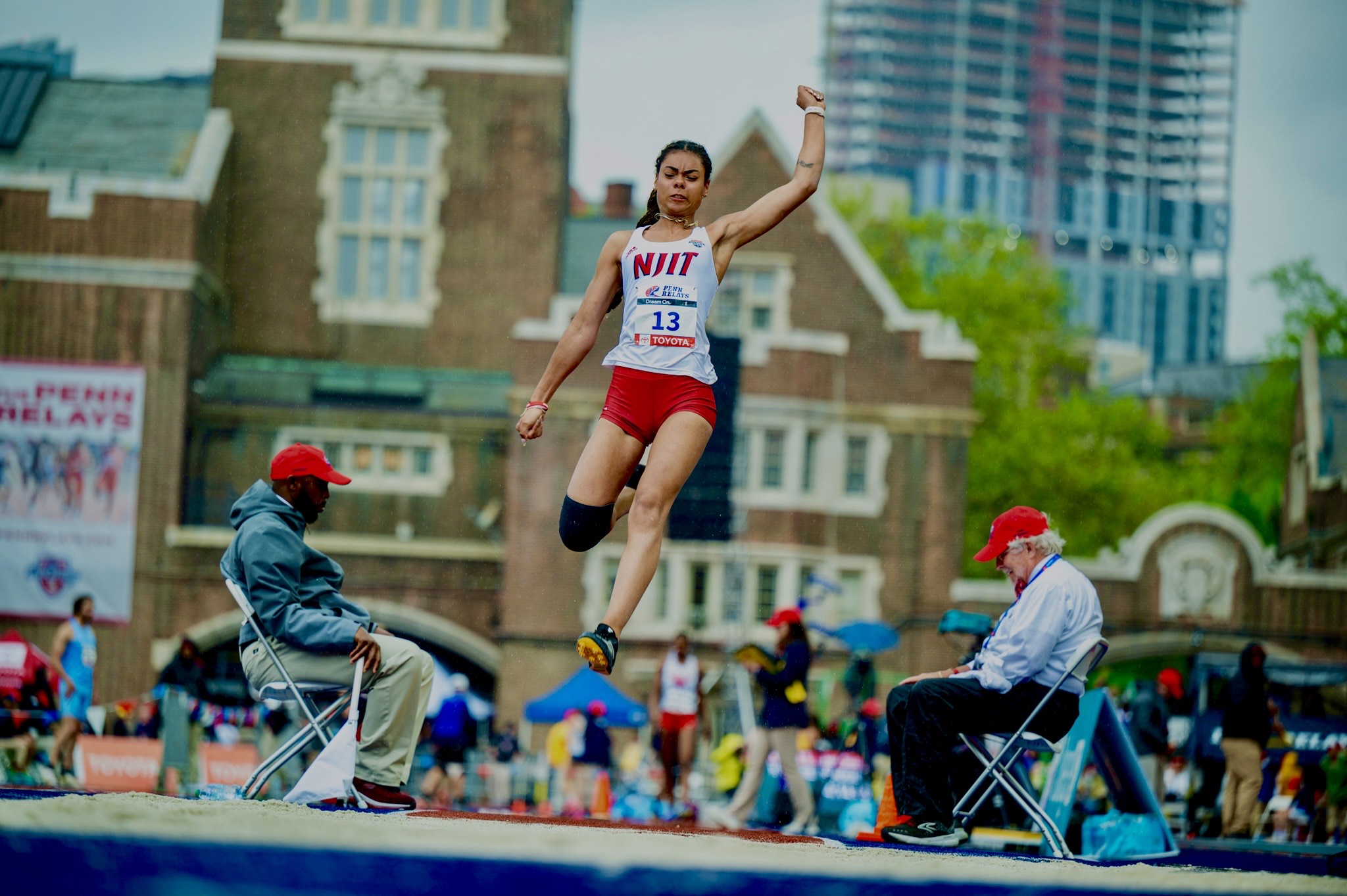
Zaidah Lightener’s journey into track and field wasn’t planned. It was discovered. With a background rooted in gymnastics and a spirit defined by energy, resilience, and raw talent, she found her way to the runway not by following a blueprint but by trusting her instincts and letting her strengths speak for themselves. Now a collegiate athlete at NJIT, Zaidah brings a bold mix of power and personality to the world of horizontal jumps. Her love for movement, attention to detail, and unshakable belief in staying mentally strong through adversity have helped shape her not just as an athlete but as a force in the making. Whether she’s pushing through a tough workout, finding peace through music, or laughing with teammates between reps, Zaidah is fully present in her process. Her story is still unfolding. One thing is clear. She’s taking flight in more ways than one.

What events do you specialize in, and which one do you enjoy the most?
I specialize in the horizontal jumps! Long jump is my favorite, and I love training for it, but I can also triple jump pretty well.
How did you get started in track and field, and what drew you to your specific events?
In middle school, I did gymnastics for about 12 years, but I got a little too tall and was looking for something new. I’m not so coordinated with a ball, so track seemed like a good option. During a tryout day for all the events, I absolutely nailed long jump and the sprints. The sport just felt really natural for me. I was really drawn to the long jump because it reminded me a lot of vault in gymnastics. I tried it, impressed a lot of people, and ended up breaking the school record in about two weeks!
What’s a typical training week like for you in terms of sprint/hurdle/field event workouts?
In the pre- and off-season, we focus on conditioning to build strength before technique work. My week usually includes a tempo day, a technique day, and a hill or hard workout day, with lift days in between. As a jumper, speed and explosion are everything. When the season gets closer, we shift into technical work like pit training, landing drills, and short approach jumps to refine form and flight. During season, I usually jump on Monday, Wednesday, and Friday, and do speed and lift on the other days.

What’s the most challenging part of your event, and how do you train to overcome it?
There are two big challenges. First, physical fatigue during jumps, especially after prelims. To combat that, we build stamina with tempo runs and strengthen our legs in the weight room. The second challenge is mental. I developed IT band syndrome, and it got so bad I could barely run. I felt stuck and frustrated, sometimes even crying in the trainer’s room. But I fought through it with rehab, strength work, journaling, and support from those around me. Mental strength is everything in jumping.
What’s your toughest workout or training session—and how do you mentally get through it?
Tempo Tuesdays and hill workout Fridays are brutal. As a jumper, I don’t run as much as the distance groups, so those workouts hit hard. To push through, I think about three things: 1) The harder I train, the better I get. 2) Pros don’t sit around, they get uncomfortable to improve. 3) The contrast bath afterward is going to feel amazing.

Do you have a favorite drill or technique that’s helped you improve?
One of my favorite drills is jumping off a 3-inch wooden box placed at the board. It gives you extra height and hang time, making it feel like you’re flying. It really helps sharpen your technique mid-air and makes practice fun.
Describe your pre-race or pre-event routine. Any superstitions or must-haves?
My mind has to be clear—like an empty, sparkly bubble. Music is a must, especially the song “Conga” by Miami Sound Machine. It puts me in a fun, dancing mood. And I always eat Skittles before every meet. It’s a tradition that just completes me.
How do you handle nerves or pressure before a big meet?
I get really nervous, so I try to clear my head with music and conversation. Talking to people—even my competition—helps make the atmosphere feel friendly instead of intimidating. The jumper community is always super fun and supportive, which helps a lot.

What has been your most memorable performance so far and why?
Two moments stand out. First, at a Rutgers meet, I finally went over 6 meters again after injury. I hit 6.01m with my friends around, the sun shining, and good music playing. It was pure relief and joy. The second was at Penn Relays. I made the championship flight but jumped poorly—my worst was 4 meters. The wind and nerves got to me. That performance still drives me to be better every day.
Who do you look up to in your sport, whether locally or professionally?
Tara Davis-Woodhall is a huge inspiration. Her personality is fun and vibrant, and she’s an incredible athlete and advocate for mental health. I also look up to Steve Gordon, a well-known jumper and amazing coach. He’s passionate, honest, and persistent. He’s done great things in the sport and pushes me to get uncomfortable and grow. #welovesteve
What’s one technical aspect of your event you’re really focused on improving right now?
Consistency in my run and stacking my jumps. Without speed, there’s no jump. I’m also working on landing—especially full extension—and improving my flexibility to help with that.

How important is mental preparation in your events, and how do you work on it?
It’s huge. Seeing competitors’ marks can be intimidating, but I remind myself that nothing is guaranteed. It all comes down to what you do in the moment. I believe everything happens for a reason, and I trust God’s plan—even when things don’t go as expected. Gratitude and perspective keep me grounded.
Do you approach your events more with strategy or instinct? Why?
Definitely instinct. Coach hates it, but I don’t really count my steps. I jump when it feels right, and it works for me—unless the wind is crazy or I’m really tired. I just rip it like a Beyblade.
What’s your favorite track or field venue to compete at and why?
I love The Armory. The runway feels super bouncy, and Chipotle is right around the corner.
What kind of music or motivation gets you hyped before competing?
My playlist is dance-heavy, but BigXthaPlug is a favorite. I like music that’s so loud I can feel it in my spine. If I have both AirPods in, I probably can’t hear you—but I’ll still smile at you!

How do your teammates or training group influence your performance?
My teammates are everything. They uplift me, make practice fun, and keep me motivated. I remember at indoor conference, I missed finals in long jump and was heartbroken. The next day, a big group came out to support me in triple jump and I ended up medaling. Their energy made all the difference.
What’s your go-to recovery routine after a meet or heavy practice?
Contrast baths—hot and cold tubs—are amazing. I also love deep tissue massages. Huge shoutout to our trainers Carson and Antonio! I’m in the training room a lot, whether for rehab, recovery, or talking about what kind of dog everyone on the team would be.
How do you balance school, life, and training? Any tips?
Being a D1 athlete at a tech school is tough, so scheduling is key. Google Calendar is my best friend. School comes first, but I also make time for fun and recovery. Being near NYC helps—I like to decompress with walks, coffee shops, or just people-watching in the city. Balance starts with mental health, so don’t be afraid to ask for help or take breaks.

Outside of track and field, what are your interests or hobbies?
I love art, especially pottery and museums. I enjoy nature walks and people-watching—NYC is perfect for that. I’m a huge cake lover, especially tiramisu, and I’m on a mission to find the best one in the city.
What advice would you give to someone just starting out in your event?
Know what you want and stick to it, but don’t forget to enjoy the moments. Having a goal gives you purpose, but don’t get so obsessed that you lose the love for the sport. Work hard and have fun. That’s how you grow.


We Speak Sports
Yehualaw Returns in Valencia as Kwizera Chases Spanish History
Yalemzerf Yehualaw returns from maternity leave in Valencia on Oct. 25, Rodrigue Kwizera chases a first Spanish win, and Kenenisa Bekele is also on the start list.

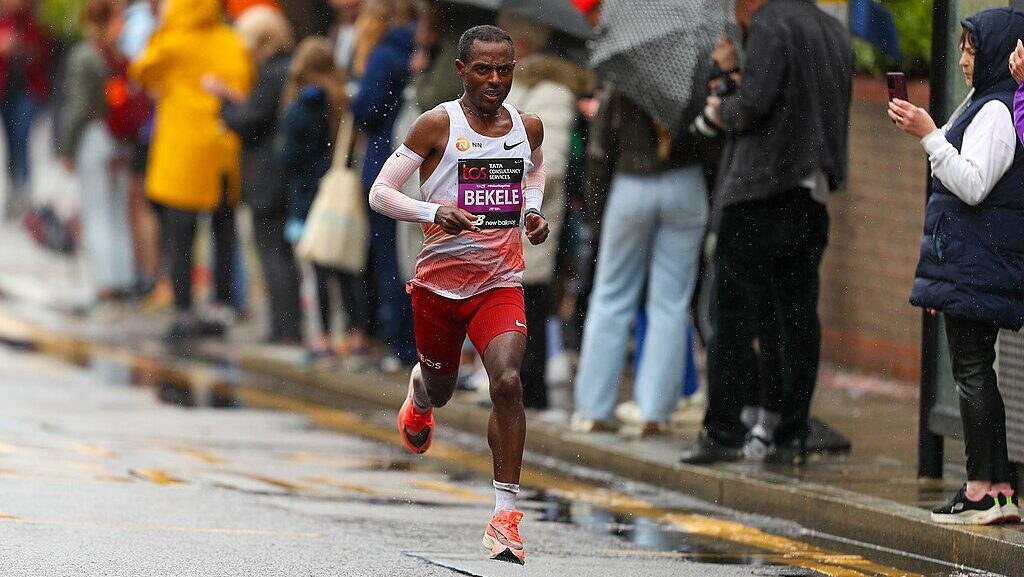
The Valencia Half Marathon on Sunday, Oct. 25 brings together a returning superstar, a man chasing national history, and one of the greatest distance runners of all time.
Yalemzerf Yehualaw headlines the women’s race in her return from maternity leave. The Ethiopian last raced at the Boston Marathon in April 2025, finishing third in 2:18:06, and her half marathon personal best of 1:03:51 — run on this course in 2021 — makes her the fastest woman in the field. She faces Lisbon champion Tsigie Gebreselama, world road running silver medallist Veronica Loleo and Ftaw Zeray on a course famous for fast times.
The men’s race could produce a first. Rodrigue Kwizera owns the fastest personal best in the field at 58:16, set in Prague earlier this year, and after receiving Spanish citizenship in 2026 he is chasing both the first Spanish men’s victory in Valencia and the Spanish record of 59:39. His training partner Thierry Ndikumwenayo, Andrea Kiptoo, Owen Kapkama, Daniel Ebenyo and 2018 winner Jemal Yimer are all in the field — along with Kenenisa Bekele, the three-time Olympic champion whose appearance alone will draw a crowd.
Britain’s Ben Connor, Charlie Wheeler and Samantha Harrison also feature. The course records — Yomif Kejelcha’s 57:30 and Letesenbet Gidey’s 1:02:52 — were both world records when set, which tells you everything about Valencia’s speed.
Photo: Canadian Running
-

 We Speak Music1 week ago
Didn’t get tickets to Oasis? Buying for the dad who still talks about that gig in 1996
-

 We Speak Music1 week ago
Fox De La Rose Refuses To Be Defined On ‘Nothing Is Written In Stone’
-

 We Speak Dining & Drinks1 day ago
Off The Rails Opens in Boston, Bringing Nashville-Inspired Dining, Live Music and High-Energy Entertainment Downtown
-

 We Speak Music1 week ago
Desire Machines Pair Literary Inspiration With Psychedelic Art-Rock On New Single