
We Speak Music
Anna Silverman Shines in Chekhov’s London Revival

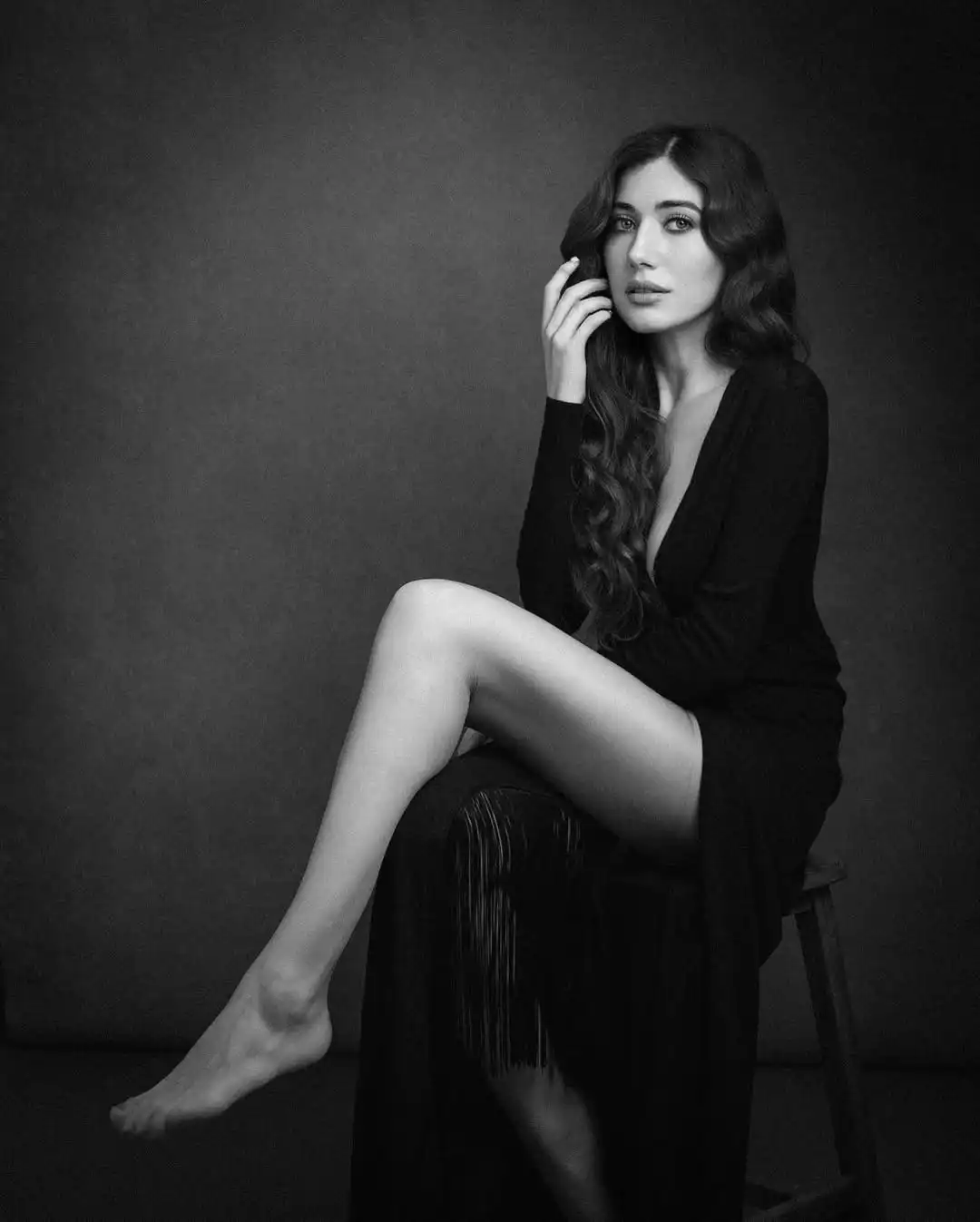
The stage is set, the lights dim, and in just a few moments, a timeless classic unfolds. Chekhov in London is not just another adaptation of The Seagull – it is a daring, stripped-down reimagining guided by the singular vision of Victor Sobchak, a director with an uncompromising approach to theatre. This unique production, blending performance, documentary and personal reflection, challenges both actors and audiences to reconsider what it means to tell a story on stage.
At its heart, Chekhov in London follows three interwoven threads: a condensed performance of The Seagull, an intimate exploration of the rehearsal process, and revealing interviews with Victor and his cast. The loose structure allows room for spontaneity, ensuring that the final piece retains the raw energy of live performance. The result is an immersive theatrical experience that defies convention and highlights the director’s unorthodox methods.
It might be a short production , but within those few moments unfolds an intense scenario of The Seagull. The film fuses performance, documentary and behind-the-scenes insights, resulting in a fascinating work that feels at once theatrical and uncomfortably real.
At the center of this version is Anna Silverman in the role of Irina Arkadina. Unlike the more fragile, wide-eyed Nina, Arkadina is fierce, ego-driven and emotionally strong. Her character is a woman of status and pride but yet, beneath the surface, she is quite brittle. The film’s direction leans into that psychological tension, and Anna doesn’t shy away from it and in fact, she walks straight into the fire.
“I knew from the beginning this wasn’t going to be a conventional performance,” Anna reflects. “Victor didn’t want a polished, distant Arkadina – he wanted a woman trapped in her skin, in her legacy, in her relationships. There was no way to play her halfway.”
In this adaptation, Arkadina isn’t simply a supporting figure in her son’s tragedy – she becomes a central pillar of the emotional architecture. The scenes between her, Treplieff and Nina are structured to feel tight and unforgiving. From a visual perspective, the production chose to create a claustrophobic atmosphere, using close framings, low lighting and limited space. This wasn’t accidental – it was intentional.

“The idea was to strip away the distance – both physically and emotionally,” Anna says. “The camera is close. The pauses feel longer. There’s a tension that’s not just acted, it’s felt.”
For Anna, playing Arkadina came with its own set of challenges – not just technically, but emotionally.
“It was important for me to avoid turning her into a villain. She’s not cruel for the sake of it. She’s scared. She’s aging in a World that punishes women for being anything less than eternal. She’s trying to hold on to relevance, to love, to her past power and it’s slipping. I had to meet her there.”
Working with Victor Sobchak is not for the faint-hearted. Known for his intensity and no-nonsense expectations, he pushes actors into emotional terrain that feels almost unsafe—but never without purpose.
“There were moments I left rehearsal feeling completely stripped bare,” Anna admits. “Victor doesn’t settle for performance. He wants truth – even if it’s messy, even if it makes you uncomfortable. Especially if it makes you uncomfortable.”
This meant many scenes were approached with only minimal technical blocking and instead prioritised emotional improvisation. Anna’s performance, while deeply rehearsed, maintains a feeling of spontaneity – it is almost like we are watching her discover Arkadina for the first time, in real time.
Behind the performance was intense internal work. Anna immersed herself not only in Chekhov’s text, but in Stanislavski’s psychological approach, asking not just what Arkadina says – but why she can’t say anything else.
“You have to find where she lives inside you,” Anna says. “For me, it was about understanding what it means to be needed, but not nurtured. What it means to perform not only on stage, but in life.”
She also speaks of the moments when she doubted herself, at some points when Arkadina’s emotional contradictions left her feeling disconnected.
“It’s exhausting to play someone who won’t break, because it means you carry the weight of everything she’s holding in. As an actress, the real challenge was to show the cracks without letting her fully fall apart.”
The film makes the most of its minimalist structure – focusing entirely on the emotional triangle between Arkadina, Treplieff and Nina. There are no sweeping landscapes or dramatic scores. Instead, it’s the silence, the breath between lines, the glance not returned that builds the tension.
“That was Victor’s vision from the start,” Anna explains. “He wanted it to feel like there was no escape – emotionally or physically. Every word, every pause, becomes a battlefield.”

In the end, Anna doesn’t pretend the role left her untouched. Arkadina, she says, revealed more to her than she expected.
“I think the most painful part of playing Arkadina is how much I saw of myself in her fears. It’s easy to admire the beautiful parts of a character, but it’s when you recognise your own shadows in them – that’s when it becomes real.”
Chekhov in London may be brief in length, but it leaves a long emotional imprint. And Anna Silverman’s Arkadina is at its heart: proud and undeniably alive.
_______________________________
Chekhov in London” is a rebellion, a love letter to theatre itself.
Featured photo credit: Tom Trevatt


We Speak Hip-Hop
ATL Legend Lil Atlanta of Trillville Turns Up the Energy With New Single and Music Video “Turn Me Up”

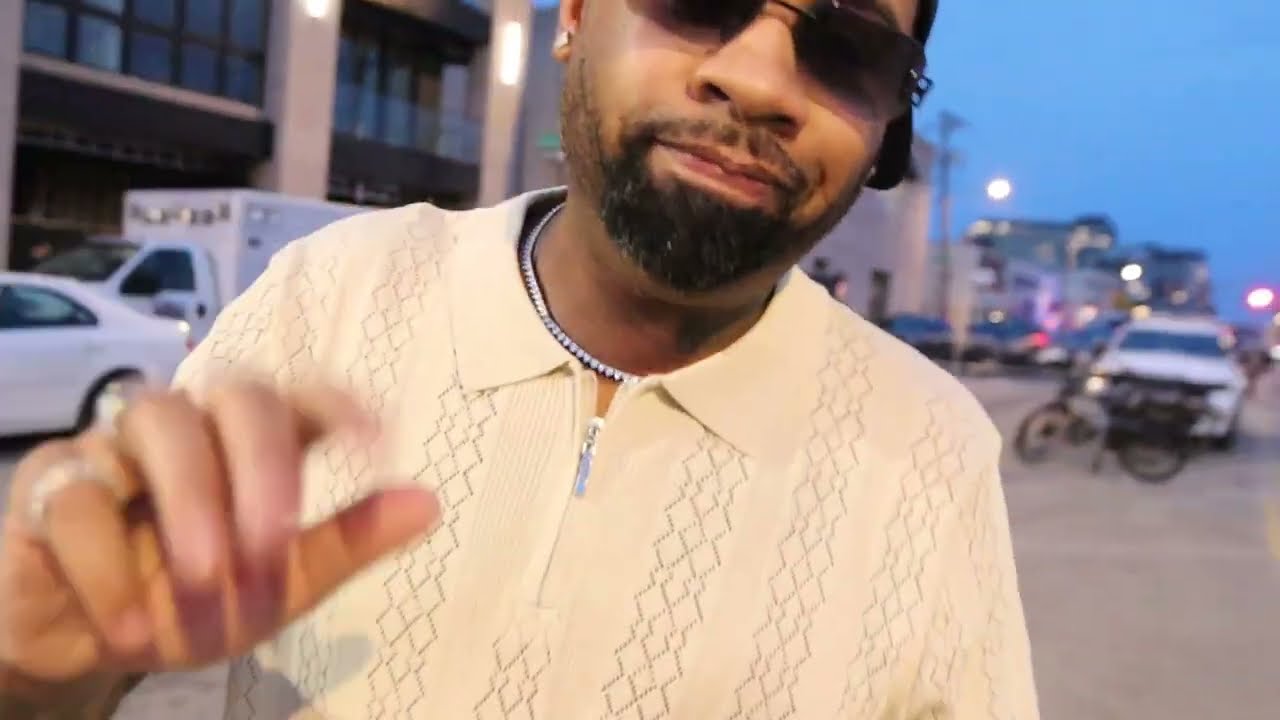
Atlanta hip-hop veteran Lil Atlanta of the legendary group Trillville, also known as Mr. Edwards, is back with his new single and official music video, “Turn Me Up,” available now on digital streaming platforms.
Known for helping shape the sound and energy of Atlanta’s influential crunk era, Lil Atlanta continues to represent the city’s musical legacy while introducing new music to longtime fans and a new generation of listeners.
Watch the official video:
The official music video brings together a lineup of hip-hop heavyweights, featuring special appearances by Trillville, Scrappy, Bone Crusher, Crime Mob, Philly Freeway, F.L.Y. and Travis Porter. The visual celebrates the artists, connections and culture that helped put Atlanta hip-hop on the map.
Directed by Benny Fame (@Bennyfame_bigmoves), “Turn Me Up” delivers high-energy visuals that connect Atlanta’s hip-hop legacy with a fresh chapter in Lil Atlanta’s musical journey.
Released through Global Move Entertainment, the single is available now on Apple Music, with the official music video streaming on YouTube.
Follow the artist on Instagram: @LilAtlantaTrill and @RealMrEdwards.
-

 We Speak Dining & Drinks2 days ago
Off The Rails Opens in Boston, Bringing Nashville-Inspired Dining, Live Music and High-Energy Entertainment Downtown
-

 We Speak Music1 week ago
Fox De La Rose Refuses To Be Defined On ‘Nothing Is Written In Stone’
-

 We Speak Music1 week ago
Didn’t get tickets to Oasis? Buying for the dad who still talks about that gig in 1996
-

 We Speak Music1 week ago
Desire Machines Pair Literary Inspiration With Psychedelic Art-Rock On New Single