
We Speak Music
VÆB arrive with ‘Gimme More’


VÆB arrive with ‘Gimme More’ sounding like they’ve raided a glitter-soaked time capsule and rebuilt it with modern circuitry. The Icelandic duo lean hard into their trademark chaos-pop sensibility, turning nostalgia into something hyperactive and strangely fresh. There’s an immediate sense of movement in the track, like it’s already halfway through a dance routine before you’ve even hit play. It’s playful, self-aware, and deliberately unpolished in all the right places.
What stands out most is the production’s refusal to sit still. Electro-swing textures collide with sped-up pop instincts, creating a sonic palette that feels both retro and algorithmically engineered. The track doesn’t chase subtlety; it thrives on momentum. Every bar feels like it’s trying to outdo the last, yet somehow it never tips into overload. Instead, it finds that sweet spot between chaos and control.
VÆB’s vocal chemistry remains a defining weapon. The brothers’ delivery feels conversational one moment and theatrical the next, as if they’re swapping characters mid-line. There’s a Gen Z irony running through it, but it never undermines the sincerity of the hook. Even when the track winks at its own absurdity, it still wants to be remembered as a pop song first and foremost.
Lyrically, ‘Gimme More’ plays with desire in its most exaggerated form—less emotional plea, more pop-cultural chant. It’s not trying to reinvent thematic depth, but it reframes want as performance. That self-awareness is what keeps it engaging. The repetition becomes hypnotic rather than hollow, pulling listeners deeper into its neon-lit orbit.
Ultimately, ‘Gimme More’ feels like VÆB doubling down on their identity before their debut album lands. It’s loud, slightly unhinged, and intentionally maximalist. If this is the entry point into VÆBOUT, it suggests a record that refuses restraint in favour of pure, engineered exhilaration.



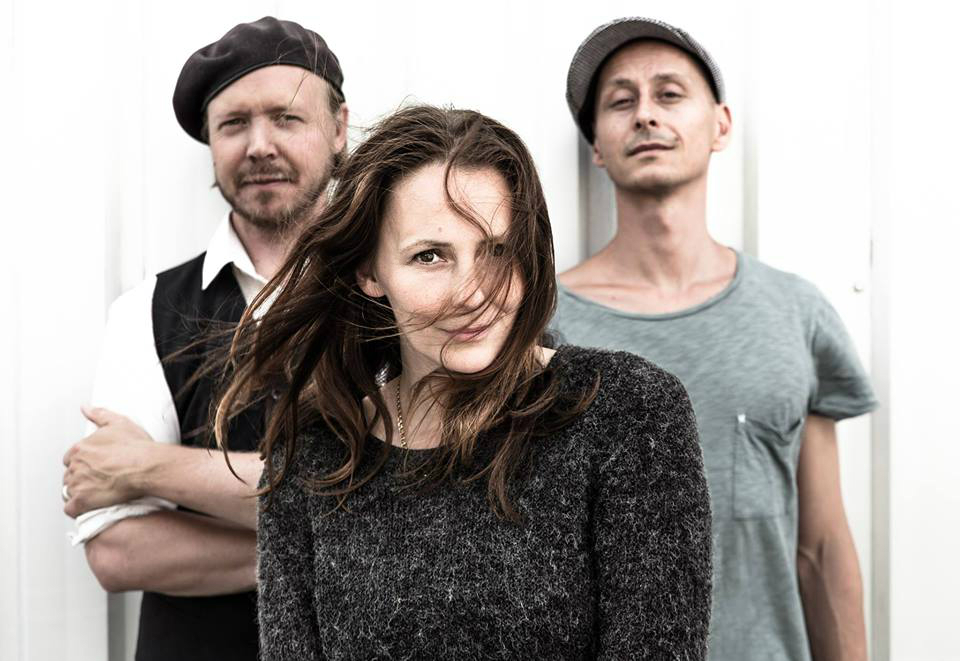
What happens when guitar-led songwriting meets programmed rhythms and layers of synthesisers? On Wither Without, out now via Now Listen, Akaba make that combination central to their second album, building a sound that reaches further into electronic music than their debut, The Rust Within.
The Stockholm trio bring together three distinct contributions. Åsa Carild supplies the vocals and lyrics, Tobias Ljungkvist plays guitar, and Mattias Olsson produces the record. All three share the music credits, giving the nine tracks a collaborative foundation beneath Carild’s personal writing.
The production is particularly important to the album’s character. Synthesised layers and programmed beats sit alongside the guitars rather than simply filling out the arrangements. This gives the songs a different sense of movement, with room for close vocal passages as well as busier, more unsettled sections.
“Go North” offers a clear introduction to the record’s concerns. Its focus on taking another route in life brings questions of departure and belonging into the foreground, without reducing the song to one fixed interpretation.
Across the tracklist, titles such as “Two Rights”, “Mistake” and “Grieve” sit within a wider sequence about a relationship reaching its end. The subject gives the album continuity, while the changing arrangements provide its musical variation.
For Akaba, the shift towards electronic production is more than a change in surface texture. On Wither Without, it becomes an essential part of how the songs communicate, placing the details of the arrangement alongside the writing itself.
-

 We Speak Dining & Drinks2 days ago
Off The Rails Opens in Boston, Bringing Nashville-Inspired Dining, Live Music and High-Energy Entertainment Downtown
-

 We Speak Music1 week ago
Fox De La Rose Refuses To Be Defined On ‘Nothing Is Written In Stone’
-

 We Speak Music1 week ago
Desire Machines Pair Literary Inspiration With Psychedelic Art-Rock On New Single
-

 We Speak Music1 week ago
Didn’t get tickets to Oasis? Buying for the dad who still talks about that gig in 1996