
We Speak Entertainment
Baron Davis Teams With Issa Rae, Amy Pascal on Movie Projects

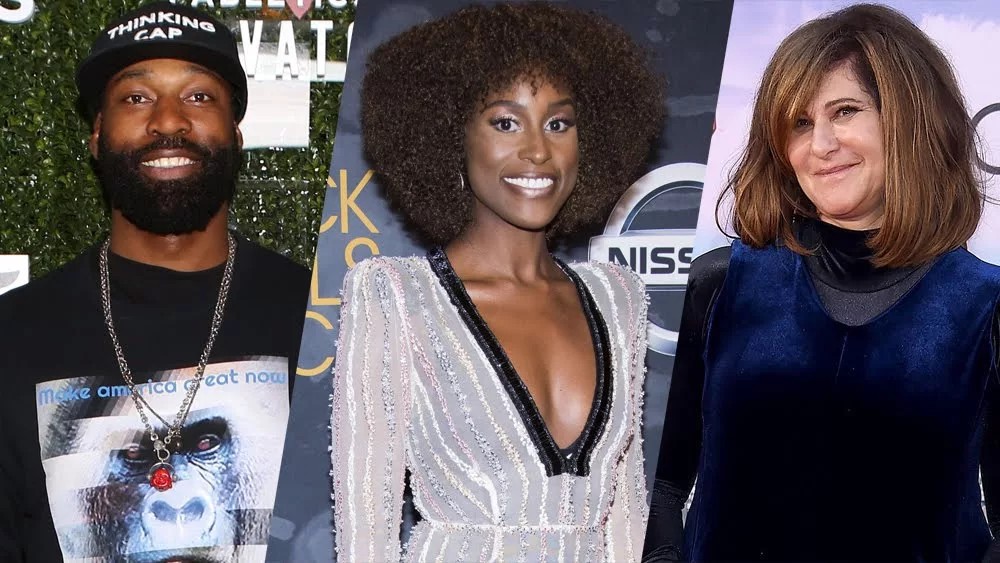
Former National Basketball Assn. star Baron Davis launched No Label Productions and is developing movie projects with Issa Rae and Amy Pascal, according to Variety.com
Davis has teamed with Hollywood veterans Bryan Smiley, who worked at Fox Digital and New Regency, and Zennen Clifton, whose resume includes Yahoo and WME. Their focus is music and urban-driven films across linear and digital platforms aimed at younger audiences.
“We picked the name No Label because we wanted to emphasize that we’re looking for diverse content and we’re nimble,” Davis said.
No Label has teamed with Rae, co-creator and star of HBO’s “Insecure,” on the movie project “Feud.” The story centers on a dysfunctional African-American family going on a road trip to play for a game show in order to win enough money to keep their struggling restaurant afloat.
Rae is producing through her Color Creative banner. She is not attached to star or write.
No Label is partnered with Pascal, the former Sony Pictures chief who segued into a producing deal, on the drama “Ghost,” centered on a young black American male juggling life between his home neighborhood that is stricken with violence and gang activity, and the private school that he attends with affluent people blind to the realities of his home life. The young man’s journey in learning to deal in both worlds takes a toll on his psychological advancement when he meets a mysterious man, Ghost, which changes his life.
Pascal told Variety that she’s known Davis since he was a student at Crossroads School in Santa Monica, Calif.
“I’m doing this because I love Baron Davis and just believe in the guy,” she added. “He’s very committed to making this work.”
Davis retired from the NBA in 2012 and has been active since in producing documentaries including the documentary “The Drew: No Excuse, Just Produce”; the Emmy-nominated documentary “Crips and Bloods: Made in America,” an official selection of the Sundance Film Festival and the Los Angeles Film Festival, and “Sole Man,” an installment of “30 for 30” for ESPN.




We Speak Entertainment
Rocky Kramer’s Rock & Roll Tuesdays Presents “The Black Parade” On Tuesday, October 13th, 2026 7 PM PT on Twitch

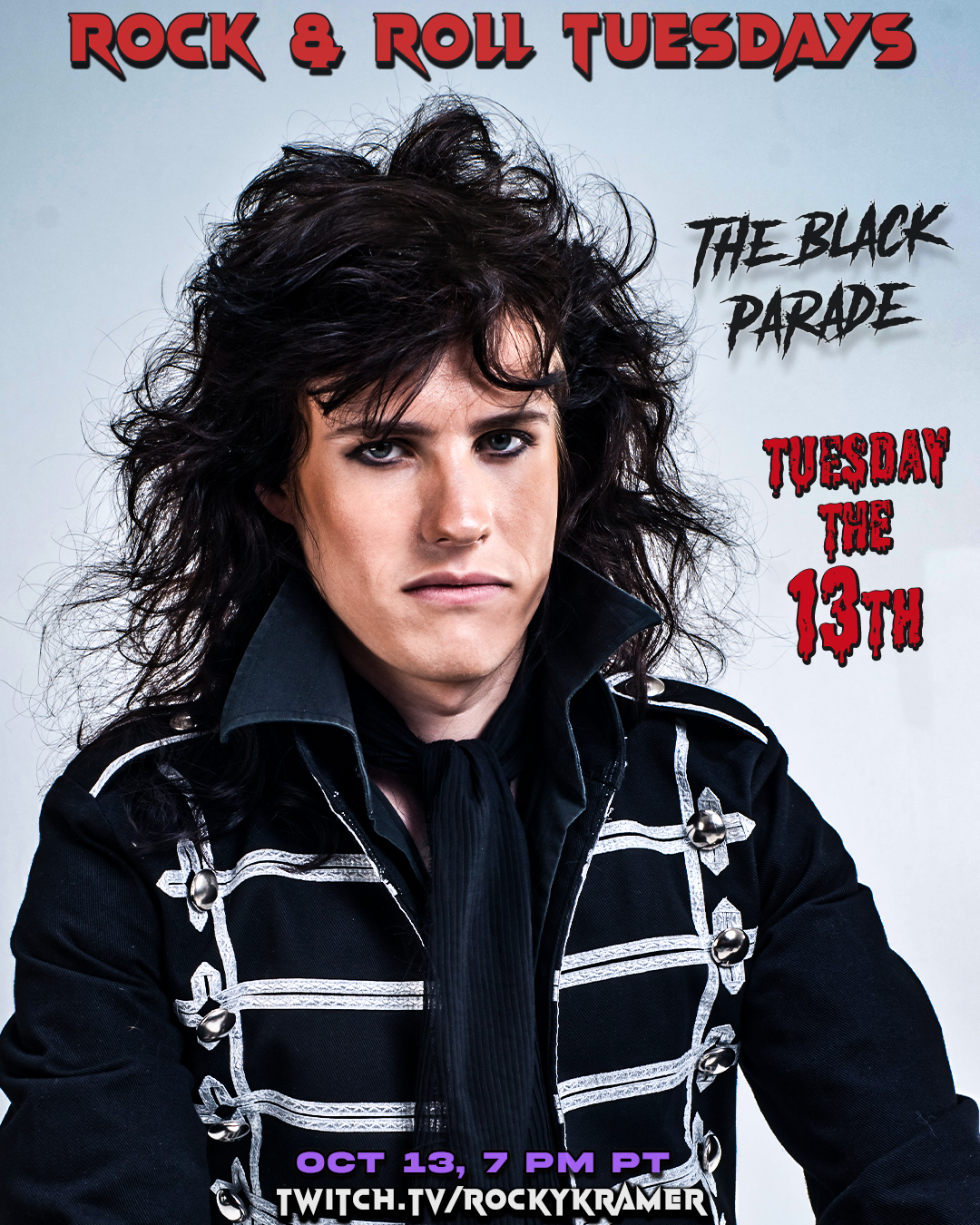
Rocky Kramer will be hosting “The Black Parade” on this week’s episode of Rocky Kramer’s Rock & Roll Tuesdays on Twitch. Tune into Twitch on Tuesday, October 13th, 2026 at 7 PM PT for this amazing show.
Rocky Kramer is a guitar virtuoso, often being compared to the greatest guitar players in the world. Rocky has performed on shows with some of the greatest musicians on the planet including Ozzy Osbourne, John Lodge, Steve Vai, Leland Sklar, Kenny Aronoff, Tommy James, Verdeen White, Ten Years After, BuckCherry, Rick Wakeman and more.
Rocky’s first studio album, “Firestorm” is now available worldwide through Allied Artists Music Group, together with an epic music video of his #1 Global DRT Chart topper single, “Rock Star”, that also picked up a Best Rock Performance nod at the 2019 Hollywood Music In Media Awards (“HMMA”).
Rocky Kramer recently returned to the studio to record his sophomore album “Alone In The Rain” which will be released soon!!!

Rocky Kramer was recently cast in The Mutt Productions/ Allied Artists rock n’ roll time travel comedy adventure “Rockin’ In Time” where he will play the film’s lead character, Lars Olsen. The film is being directed by Aaron Lee Lopez (of the “Teenage Girl” franchise) and is being produced by multi-platinum and six-time Grammy Award winning musician turned motion picture producer, Kurt Wipfli.
Rocky Kramer is now the new lead guitarist in Prescott Niles’ new revival of the legendary band The Knack. Known worldwide for their smash hit “My Sharona,” The Knack helped define the sound of late-1970s power pop and rock. Decades later, the band’s influence continues to resonate with fans and musicians across generations. With Rocky Kramer now joining the lineup, the band is poised to introduce that legacy to a new era of audiences while honoring the spirit that made them legendary.
Watch Rocky Kramer’s “Rock Star” Music Video here:
Watch Rocky Kramer’s Rock & Roll Tuesdays “The Black Parade” on October 13th, 2026, at 7 PM PT on Twitch here:
http://www.twitch.tv/rockykramer
The official website for Rocky Kramer may be found at http://www.RockyKramer.com
Visit Rock & Roll Tuesdays with Rocky Kramer on IMDB here:
-

 We Speak Music1 week ago
National Gospel Recording Artist Ellen Hayes Announces the Release of Her Farewell Album, Behind My Eyes
-
We Speak Music1 week ago
Mel D makes bittersweetness glow with magnetic new single ‘ORANGE’
-

 We Speak Music1 week ago
Kazimi Shines In New Single ‘Errant Nodes’
-

 We Speak Music1 week ago
Karabo Unleashes New Single ‘Only 4 U’