
We Speak Music
Daniela García: Engineering Character Through Costume

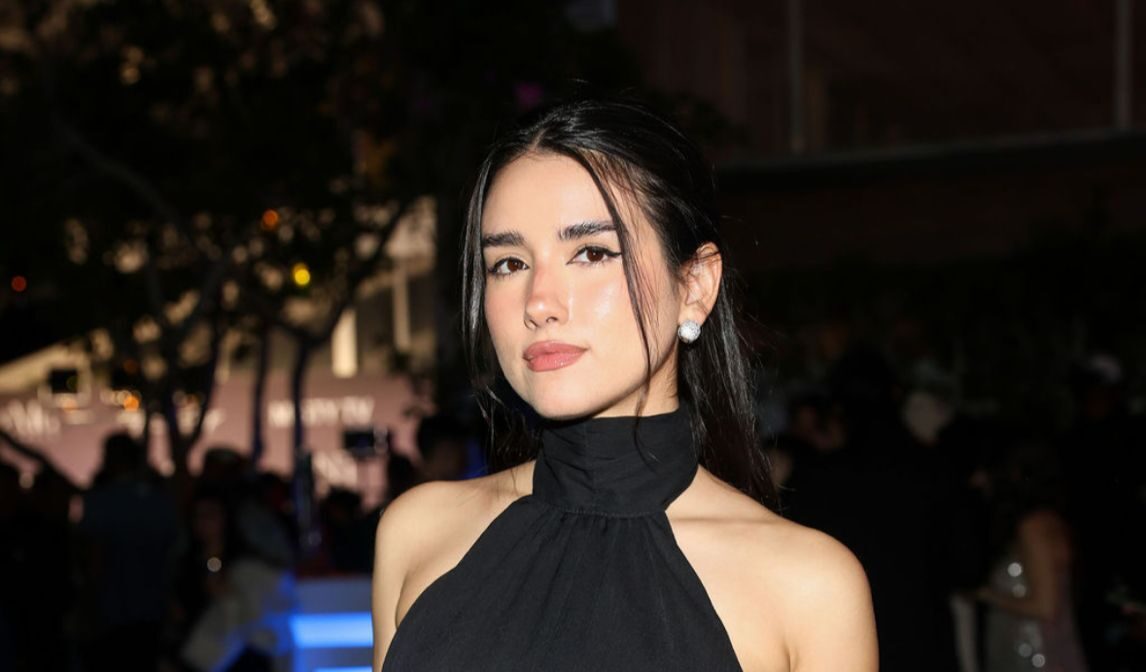
In a town where everyone claims to “tell stories,” Daniela García actually builds them — seam by seam.
Based in Los Angeles and originally from Mexico, Daniela isn’t just a stylist dressing actors. She’s a structural thinker. A designer who approaches wardrobe the way a director approaches blocking or a cinematographer approaches light. Her foundation at the New York Film Academy — where she studied directing and screenwriting — shows in everything she does. She doesn’t start with fabric. She starts with psychology.

For Daniela, costume begins at script breakdown. She builds wardrobe maps that track emotional arcs, power shifts, socioeconomic signals, and continuity variables across scenes. Every look is engineered to evolve with the character — not decorate them.
And she’s obsessive in the best way.
Color systems are calibrated for digital sensors and mobile-screen compression. Saturation and tonal contrast are tested for vertically framed compositions. Fabrics are selected based on how they move under lighting grids and how texture reads in tight close-ups. Distressing, aging, and continuity analytics are documented scene by scene — especially in action sequences where stunt choreography can literally tear a character’s identity apart.
That level of technical control is rare.
Mastering the Vertical Series Boom
Daniela has emerged as a defining force in the exploding vertical series market. She’s designed for DramaBox productions including His Love Was a Lie, Taming the Football Bad Boy, and the action-driven The Vanished Champ Strikes Back, as well as ReelShort titles like Swapped My Ex for His Billionaire Uncle and the upcoming My Duplicated Husband.
Vertical storytelling — consumed almost entirely on phones — changes everything. Tight framing means color hierarchy, silhouette clarity, and textural contrast must work instantly. There’s no room for visual confusion. Wardrobe becomes the primary storytelling tool.

In aspirational romance dramas, Daniela leaned into high-class contemporary styling, structured tailoring, and assertive chromatic choices that hold attention within seconds.
But with The Vanished Champ Strikes Back — released February 2026 and already surpassing six million views — she pivoted hard. The MMA-centered action series demanded mobility and durability without sacrificing authority. Stretch-compatible fabrics, compression layering, and controlled distressing supported fight choreography while darker tonal palettes reinforced dominance and physical power.
Producer Apoorv Arora of DramaBox put it plainly:
“Daniela consistently demonstrated exceptional efficiency and attention to detail, creating distinct, character-driven looks under extremely tight production timelines. She handled multiple costume changes per day with fast turnaround, maintained strong continuity across episodes, and collaborated seamlessly with producers, directors, and the camera department to ensure costumes translated effectively on screen.”
Efficiency under pressure. Visual authority under constraint. That’s not easy to fake.
Festival Credibility and Psychological Color Systems
Beyond vertical content, Daniela’s work has earned festival recognition.
Her thesis film Cruda Verdad Dura Moral — exploring betrayal and moral frameworks that enable assault without accountability — received its first official selection at the Worldwide Women Film Festival in March 2026.
Her earlier short, Viva, won Best Costume Design at the Athens International Monthly Film Festival. In that film, progressive bandage construction and fabric deterioration became visual metaphors for collective denial and moral decay — subtle, layered, and unsettling.

In Haim Means Life, directed by Daria Libinzon and selected by the Beverly Hills Film Festival, Daniela collaborated with Bassel Ziad to create a bold triadic palette of saturated red, green, and yellow. The chromatic tension drew inspiration from Beanpole by Kantemir Balagov — where unconventional color pairings heighten psychological density.
Lace textiles evoked fragility. Pinned wing motifs suggested imposed purity and maternal expectation. Color coding externalized internal conflict surrounding fear of motherhood. It wasn’t decorative. It was narrative engineering.
Professional Standing and Industry Alignment
Daniela is a member of the Costume Society of America and Women in Film — affiliations that reflect her commitment to professional standards and industry advancement.
She is currently costume designing the vertical mini-series Traded to the Shadow Heir for Rhapsody Productions, continuing her exploration of mobile-optimized colorimetry and contemporary silhouette construction. She also has upcoming collaborations with Wild Ferry Films and Apoorv Arora.
But she’s not staying in one lane.
Expanding into Historical Reconstruction
For the short film Devils, now raising funds on Seed & Spark, Daniela is building a period-accurate wardrobe system set in Texas in 1918. This isn’t surface-level vintage styling. It requires structured skirt construction, historically accurate underlayers, textured natural fabrics, and precisely coded color symbolism assigned to each character’s moral intention.
Early 20th-century garment architecture demands discipline. It’s a different muscle entirely — and she’s leaning into it.

Because that’s who she is.
Daniela García doesn’t “pick outfits.” She constructs narrative ecosystems. She engineers how characters breathe inside fabric. In an industry that often treats costume as an afterthought, she treats it as architecture.
And the smart productions are noticing.
On the web:
Instagram:
https://www.instagram.com/daniellaaagr
IMDb:
https://m.imdb.com/name/nm16592982
LinkedIn:



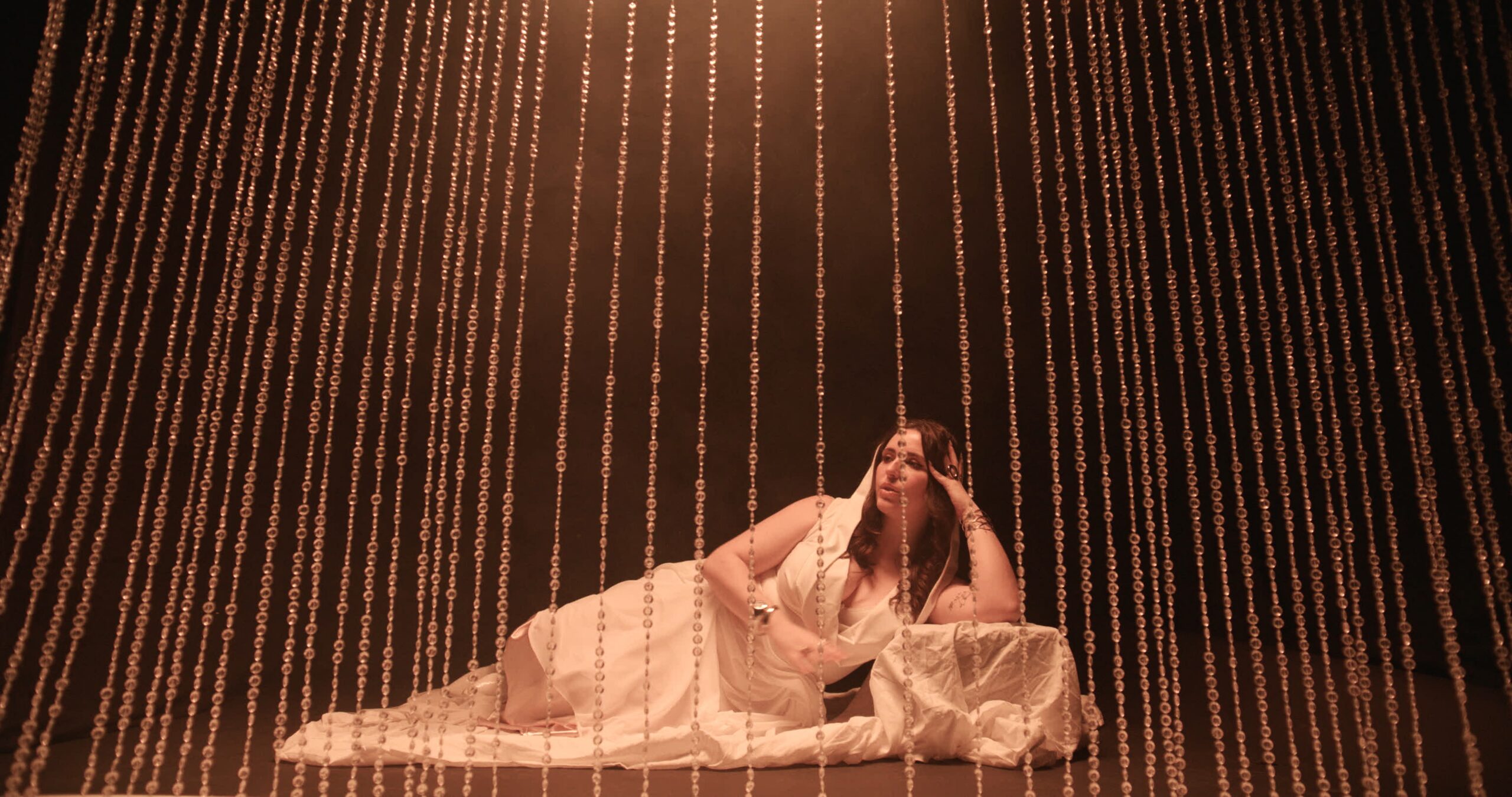
Two years ago, Naomi Aguilera walked onto my radar with EGO, an infectious soulful pop debut that made it impossible not to move. Fast forward to her debut EP Mosaïques, and it was clear she wasn’t just passing through. Personal, colorful, rooted in her Spanish heritage & Brussels upbringing, it even earned her a spot as Apple Music Benelux’s Up Next artist!
Now she’s back with BB ILY, marking the start of a new era. The bilingual single — French and English — is built around one of the most universal human experiences: that special connection that doesn’t need translation. Where EGO invited you to forget your ex on the dancefloor, BB ILY pulls you somewhere more intimate: with sultry beats courtesy of Turana, it’s a dance where gestures, whispers, sighs and the sound of a voice matters more than the words that come out of it… It’s sensual, a little mystical, and entirely her own.
First taste of Naomi Aguilera’s upcoming project Ojalá, due in 2027, it feels effortlessly catchy. This is the kind of track that casts its spell quietly, with interesting and unexpected rhythmic shifts in the verses, and a delicious chorus that lodges itself in your head before you even notice. By the time you do, it’s too late. But you won’t find me complaining about it!
-

 We Speak Music1 week ago
National Gospel Recording Artist Ellen Hayes Announces the Release of Her Farewell Album, Behind My Eyes
-
We Speak Music1 week ago
Mel D makes bittersweetness glow with magnetic new single ‘ORANGE’
-

 We Speak Music1 week ago
Kazimi Shines In New Single ‘Errant Nodes’
-

 We Speak Music1 week ago
Karabo Unleashes New Single ‘Only 4 U’