
We Speak Financials
Dow, S&P 500 and Nasdaq Post Their Best Day Since April as Nvidia Soars 31% on Jensen Huang’s Return
The Dow, S&P 500 and Nasdaq posted their best day since April on Monday, November 23, 2026, as Nvidia jumped 31% after Jensen Huang returned as chief executive.

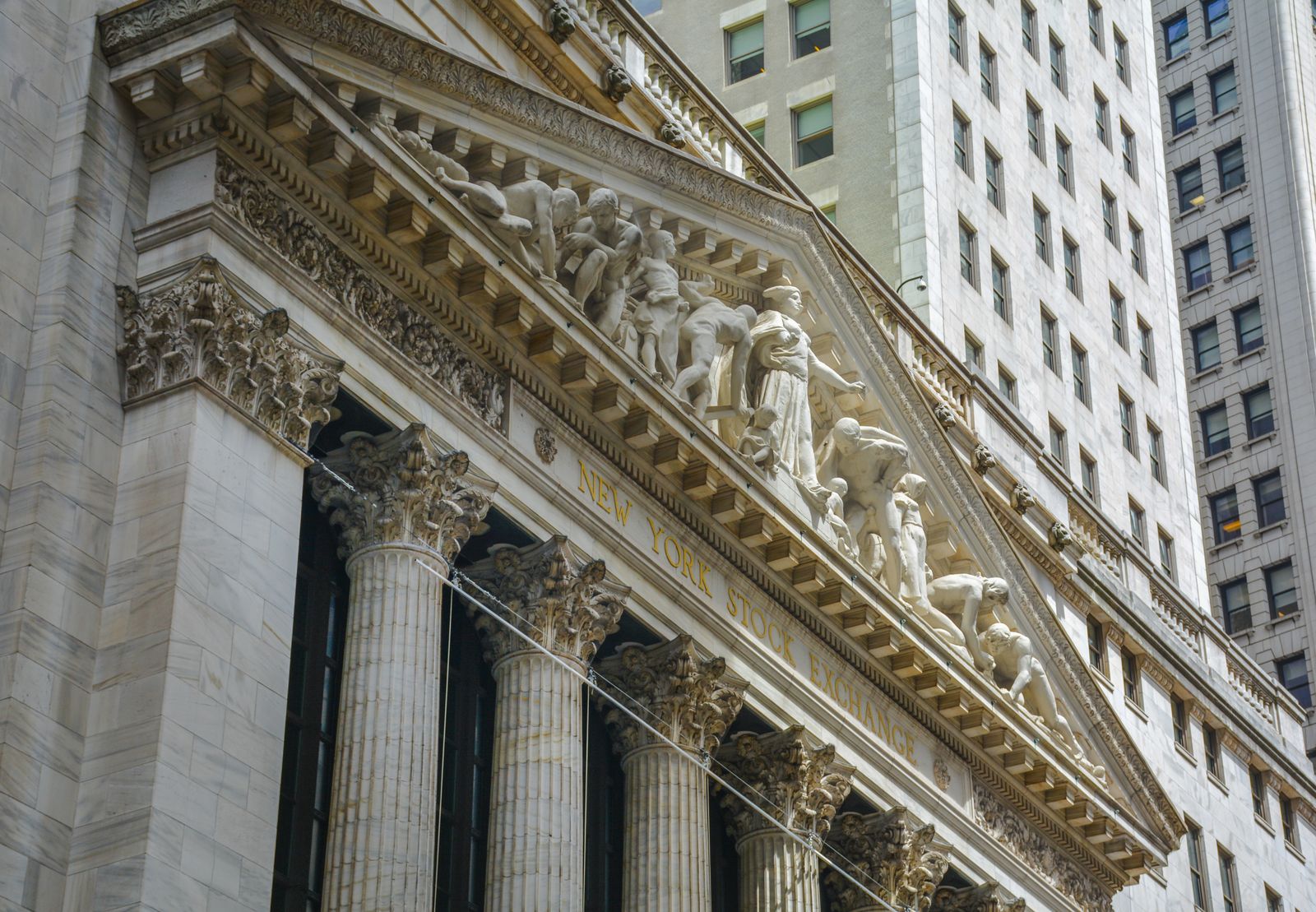
Wall Street had its best day since April on Monday, November 23, 2026, as a sharp rally in Nvidia and other chip stocks pulled the major indexes higher after a week of losses. The Dow Jones Industrial Average closed at 49,595.30, up 1,448.00 points, or 3.01 percent. The S&P 500 closed at 7,237.17, up 326.78 points, or 4.73 percent. The Nasdaq Composite closed at 24,089.56, up 1,471.86 points, or 6.51 percent.
All three indexes were coming off a rough stretch. The S&P 500 had fallen for seven straight sessions before Monday, and the Nasdaq had dropped about 10 percent in a week, according to Yahoo Finance. Monday’s rebound was broad, but it was led by technology and semiconductors, and by one company in particular.
Nvidia Leads the Rally
Nvidia was the story of the day. The chipmaker said its board had reinstated Jensen Huang as chief executive, and its shares jumped 31.48 percent to close at $165.05, up $39.52 on the day. Nvidia was the most actively traded stock in the market, and its gain alone helped lift the S&P 500 and the Nasdaq, where the company carries heavy weight.
The move spread through the chip sector. Micron Technology rose 17.62 percent. Intel gained about 13 percent, Oracle rose 12.62 percent, and Applied Materials climbed 14.39 percent, while Lam Research added 13.91 percent. Advanced Micro Devices rose 5.87 percent, and Palantir gained 11.17 percent. Microsoft rose 2.57 percent and Apple added 2.46 percent.
What the Numbers Say
The size of Monday’s move matters because of where the market had been. The S&P 500 closed the previous session at 6,910.39, so Monday’s gain of 326.78 points took it back above 7,200. The Dow closed the previous session at 48,147.30. The Nasdaq closed the previous session at 22,617.70, and its 6.51 percent gain was the largest of the three indexes in percentage terms.
Not everything rose. Energy stocks were among the day’s laggards, with Chevron down 0.90 percent, ConocoPhillips down 2.78 percent and Exxon Mobil down 1.42 percent. CrowdStrike fell 7.54 percent to $208.97, and Costco slipped 3.10 percent to $1,097.91. The 10-year Treasury yield stood at 4.918 percent. The VIX, the market’s gauge of expected volatility, stood at 26.62. Gold was at $3,619.80 an ounce, down 0.87 percent, Bitcoin was at $60,227.92, down 1.92 percent, and crude oil was at $79.94 a barrel, down 0.29 percent.
What Comes Next
Early Tuesday, futures pointed to a steadier open: S&P futures were at 7,259.50, up 0.07 percent, Dow futures were at 49,718.00, up 0.08 percent, and Nasdaq futures were at 26,797.75, down 0.04 percent. Traders will now watch whether Monday’s rebound holds, with inflation data and the Federal Reserve’s outlook still front of mind, along with the level of Treasury yields. One day does not make a trend, and the market had just come through seven straight down days for the S&P 500. But Monday showed how quickly a single company’s news can change the mood of the whole market when that company sits at the center of the artificial-intelligence trade.
Read Next
Tom Lee Called 7,700 by Christmas. The Market Got There in October, So He Moved His Target to 8,000
https://wespeakmedia2.com/tom-lee-called-7700-by-christmas-the-market-got-there-in-october-so-he-moved-his-target-to-8000/
Paramount Posts Its First Numbers After the $110 Billion Warner Bros. Deal
https://wespeakmedia2.com/paramount-posts-its-first-numbers-after-the-110-billion-warner-bros-deal/
The Lakers Sale Closes In on a Record $12.5 Billion Valuation
https://wespeakmedia2.com/the-lakers-sale-closes-in-on-a-record-12-5-billion-valuation/
 How Howard Schultz Built Starbucks From One Seattle Coffee Shop
 Debt, Explained: How Interest Works and How Borrowers Get Ahead of It
 Credit Scores and Credit Cards, Explained Without the Hype
 How a Budget Actually Works: A Plain-Language Guide to Planning Your Money
 Five Names Chase PGA Tour Player of the Year as 2026 Nicklaus and Palmer Award Nominees Are Revealed
 Foo Fighters’ Fans Take Centre Stage in New Fandemonium Episode
 Monmouth Women’s Basketball Falls to No. 18 Maryland 86-53
 David Rivera Y La Bámbula Ring In New Year’s Eve at Long Live Roxbury
Are you an artist or a business with a story to tell?
Get Featured on We Speak Media
Are you an athlete ready for your moment?
Get your Athlete Spotlight



We Speak Financials
How Howard Schultz Built Starbucks From One Seattle Coffee Shop
Howard Schultz did not found Starbucks, but he turned a small Seattle coffee shop into a global company. This is the business story of how he did it, and what it cost.
Howard Schultz did not found Starbucks. He found it as a small Seattle shop that sold coffee beans, and he turned it into a company that sells coffee by the cup all over the world. The story is not about inventing coffee. It is about seeing a different business in the same product, and then building it, shop by shop, for decades.
The Shop He Found
Starbucks began in 1971, when three partners, Jerry Baldwin, Zev Siegl and Gordon Bowker, opened a shop in Seattle’s Pike Place Market that sold coffee beans and equipment. It did not sell brewed coffee by the cup. It was a specialty retailer, and it was small. Schultz joined the company in 1982 as its director of marketing. He had grown up in public housing in Brooklyn, New York, and he had worked his way through college and into sales. He was not a coffee expert. He was a salesman who noticed what customers wanted.
The Trip to Milan
In 1983, Schultz traveled to Milan, Italy, for a trade show, and he saw something that changed his thinking: espresso bars on almost every corner, where people stood at the counter, drank a small coffee, talked to the barista and went on with their day. Coffee in Milan was not a product on a shelf. It was a daily ritual, and a place. Schultz came home convinced that Starbucks should sell coffee by the cup, in a shop built around that ritual. The founders disagreed. They wanted to stay a bean retailer. Schultz left in 1985 and started his own coffee-bar company, Il Giornale, to prove the idea himself.
Buying the Company
In 1987, the founders of Starbucks decided to sell. Schultz raised money from investors and bought the company for $3.8 million, merging it with Il Giornale and keeping the Starbucks name. He was 34 years old, and he now owned a handful of Seattle shops and a big idea. Over the next five years, he opened stores across the American West and in Chicago, selling the experience as much as the coffee: the smell, the names of the drinks in Italian, the baristas who knew regular customers. By the time Starbucks went public in 1992, it had grown from a handful of shops to more than 100 stores.
What the Business Actually Sold
Schultz often described Starbucks as a “third place”: not home and not work, but a place in between where people could sit, meet and linger. That idea shaped everything about the shops, from the chairs to the music to the way drinks were made in front of customers. It also shaped the economics. A cup of coffee costs little to make, so the margin on each drink is high, as long as enough people come through the door. The challenge was getting them to come every day, and to pay more than they would for coffee at home. The answer was the experience, repeated consistently in every store.
Schultz also built the company around its workers. Starbucks offered health care to part-time employees and gave stock options to workers, which it called Bean Stock, at a time when few retailers did either. The logic was business, not charity: a company that depends on the person behind the counter cannot afford high turnover and low morale. The benefits were expensive, and they were part of the reason the company’s costs ran high, but they were also part of the reason its service stayed consistent as it grew.
The Hard Years, and the Return
Growth brought its own problems. By the mid-2000s, Starbucks was opening stores so fast that the experience Schultz had built began to thin out, and the financial crisis of 2008 hit sales hard. Schultz, who had stepped down as chief executive in 2000, returned to the job in 2008. He closed hundreds of underperforming stores, retrained baristas, and brought back the smell of fresh coffee by removing the sandwiches whose odor had filled the shops. He stepped down again in 2017, and returned briefly as interim chief executive in 2022, before leaving the company’s leadership for good. Each return followed the same pattern: the company had drifted from the idea that made it, and Schultz came back to restore it.
What the Story Teaches
The Schultz story is often told as a story of vision, but the business lesson is more practical. He did not invent a product. He took an existing product, coffee beans, and changed how it was sold: by the cup, in a place people wanted to be, at a price that reflected the experience rather than the cost of the beans. He borrowed money to buy a small company, grew it carefully, took it public, and kept control of the details that made it work. It is a reminder that in business, the product is only part of the company. The rest is the place, the people and the price, and getting those three right is the work of a founder.
Read Next
How Many Spotify Streams Does It Take to Make $100?
https://wespeakmedia2.com/how-many-spotify-streams-does-it-take-to-make-100/
Vinyl Passed Half a Billion Dollars and CDs Are Climbing Again. The Format Money, Explained.
https://wespeakmedia2.com/vinyl-passed-half-a-billion-dollars-and-cds-are-climbing-again-the-format-money-explained/
The Lakers Sale Closes In on a Record $12.5 Billion Valuation
https://wespeakmedia2.com/the-lakers-sale-closes-in-on-a-record-12-5-billion-valuation/
Debt, Explained: How Interest Works and How Borrowers Get Ahead of ItCredit Scores and Credit Cards, Explained Without the HypeHow a Budget Actually Works: A Plain-Language Guide to Planning Your Money Interest Rates, Explained: What They Do to Ordinary BorrowersFive Names Chase PGA Tour Player of the Year as 2026 Nicklaus and Palmer Award Nominees Are RevealedFoo Fighters’ Fans Take Centre Stage in New Fandemonium EpisodeMonmouth Women’s Basketball Falls to No. 18 Maryland 86-53David Rivera Y La Bámbula Ring In New Year’s Eve at Long Live Roxbury
-

 We Speak Rock3 hours ago
State Champs Bring the Around the World and Back Again Tour to Starland Ballroom on November 27
-

 We Speak Latin1 day ago
Anthony Ramos Releases New Holiday Single ‘En Las Alturas / In The Highest’
-

 We Speak Soul1 day ago
The D’Angelo Estate Releases ‘Kamikazi,’ the First Official D’Angelo Single Since His Passing
-

 We Speak College Football2 days ago
HBCU Roundup: SWAC Title Game Set as Alabama A&M Visits Prairie View, South Carolina State Finishes Perfect in the MEAC