
We Speak Financials
Debt, Explained: How Interest Works and How Borrowers Get Ahead of It
Debt is borrowed money that must be repaid, with interest. This plain-language guide explains how debt works, how interest compounds, and how borrowers get ahead of it.

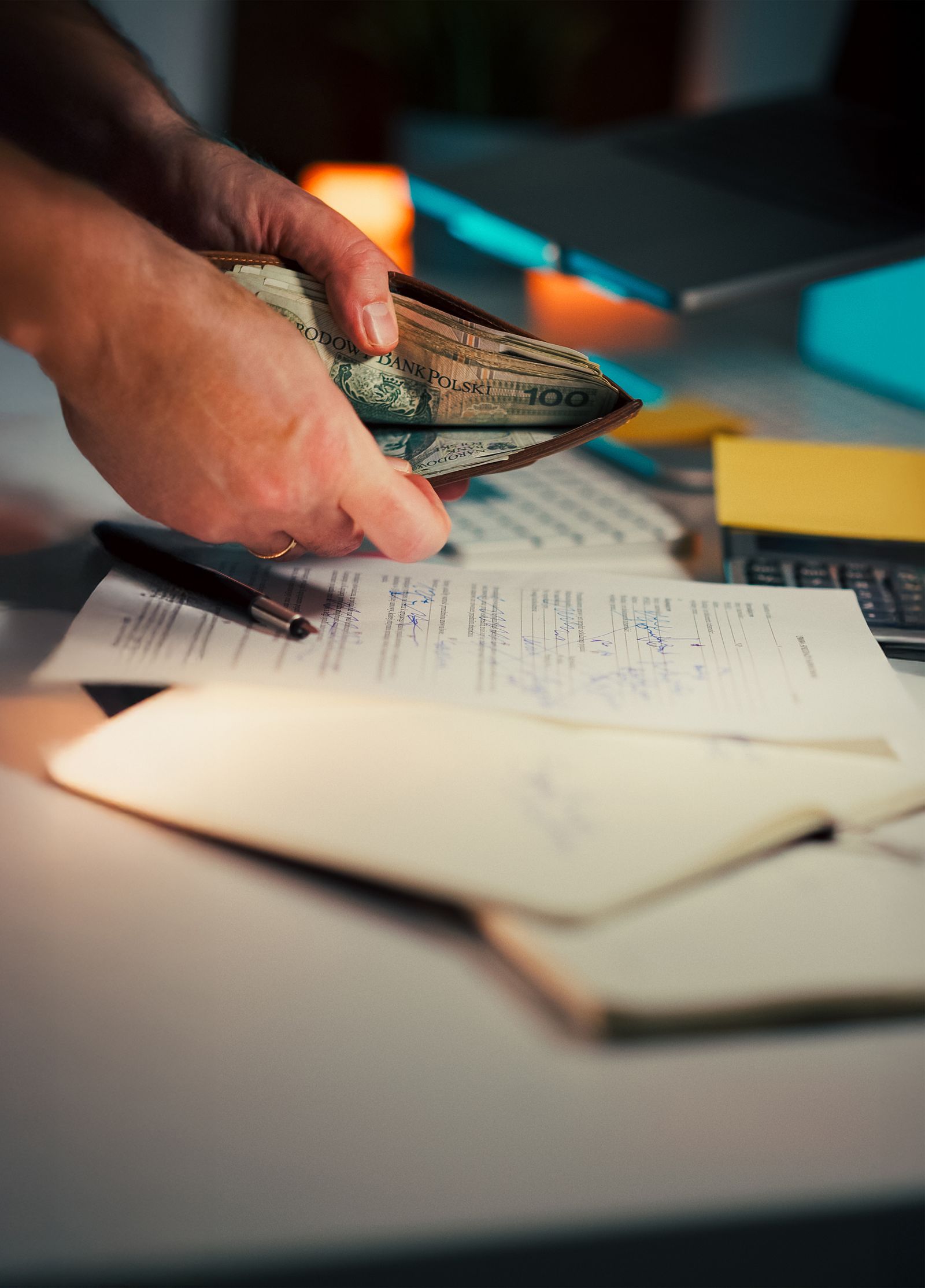
Debt is borrowed money that must be repaid, with interest. Almost everyone uses debt at some point: to buy a home, to pay for education, to start a business, or to cover an emergency. Debt is neither good nor bad by itself. It is a tool, and like any tool, its cost depends on how it is used. This guide explains how debt works, how interest compounds, and how borrowers get ahead of it.
How Interest Compounds
Interest is the price of borrowing, and compounding is what makes it grow. When interest is charged on a balance, and the interest itself is not paid, the next round of interest is charged on a larger amount, including the unpaid interest. That is compound interest. A balance of $1,000 on a credit card at 20 percent a year costs about $200 in interest in the first year if nothing is paid. In the second year, interest is charged on $1,200, not $1,000, so it costs about $240. Left alone, a debt grows faster the longer it is left alone. That is why a small balance can become a large one, and why paying a debt down early saves more than the payment itself.
The Difference Between Kinds of Debt
Not all debt costs the same. A mortgage is usually the cheapest kind of borrowing for a household, because the loan is secured by a house and is paid over decades at a relatively low rate. A car loan costs more, and a credit card costs far more, because the lender has no asset to take if the borrower does not pay. People often describe debt as “good” when it buys something that can grow in value or earn income, like a home or an education, and “bad” when it pays for spending that is gone before the bill arrives. The labels are rough, but the underlying point is real: the interest rate matters more than the label. A low-rate loan for a home is very different from a high-rate balance on a card, even though both are debt.
The Minimum Payment Trap
Credit cards require only a small minimum payment each month, often 1 or 2 percent of the balance plus interest. Paying only the minimum keeps the account current, but it barely reduces the balance, and the interest keeps compounding. A $1,000 balance at 20 percent, paid at only the minimum, can take years to clear and cost hundreds of dollars in interest on top of the original $1,000. The minimum payment is the slowest way out of debt. Paying more than the minimum, even a little more, shortens the time and cuts the total interest, because every extra dollar goes to the balance that interest is charged on.
Two Ways People Pay Debt Down
Two methods are commonly described for paying down several debts. One is to pay the smallest balance first, for the motivation of clearing a debt entirely, and then move to the next. The other is to pay the highest interest rate first, which saves the most money in interest over time. The first is often called the snowball method and the second the avalanche method. The avalanche saves more money on paper. The snowball can work better for people who need early wins to keep going. Neither is right for everyone. The method that matters is the one a person will actually stick with, month after month.
How Borrowers Get Ahead
Getting ahead of debt comes down to three things. First, stop the balance from growing: a card that is being paid down while new spending is added to it is a treadmill. Second, pay more than the minimum, and direct the extra money to one debt at a time until it is gone. Third, protect the progress with an emergency fund, even a small one, so that the next unexpected bill does not go back on a card. Debt is not a moral failing, and it is not a life sentence. It is a number, with an interest rate attached, and it shrinks when more is paid than the interest adds. Understanding that arithmetic is the first step to getting ahead of it.
Read Next
Taylor Swift Bought Her Songs Back. The Weeknd Kept His and Still Got Paid. Inside the Catalog Money.
https://wespeakmedia2.com/taylor-swift-bought-her-songs-back-the-weeknd-kept-his-and-still-got-paid-inside-the-catalog-money/
How a $7 Million Breeders’ Cup Purse Really Splits: What Sovereignty’s Owner, Trainer and Jockey Took Home
https://wespeakmedia2.com/how-a-7-million-breeders-cup-purse-really-splits-what-sovereigntys-owner-trainer-and-jockey-took-home/
A Five Game World Series Cost Fox Millions, and the Math Shows Why Networks Root for Game Seven
https://wespeakmedia2.com/a-five-game-world-series-cost-fox-millions-and-the-math-shows-why-networks-root-for-game-seven/
 How Howard Schultz Built Starbucks From One Seattle Coffee Shop
 Credit Scores and Credit Cards, Explained Without the Hype
 How a Budget Actually Works: A Plain-Language Guide to Planning Your Money
 Interest Rates, Explained: What They Do to Ordinary Borrowers
 Frank Black Shares Live Videos for “Speedy Marie” and “Calistan” Ahead of Teenager Of The Year – Live, Out November 27
 Andy Schweigardt Takes Over as Chair of North American International Cataloguing Standards Committee
 Five Names Chase PGA Tour Player of the Year as 2026 Nicklaus and Palmer Award Nominees Are Revealed
 Foo Fighters’ Fans Take Centre Stage in New Fandemonium Episode
Are you an artist or a business with a story to tell?
Get Featured on We Speak Media
Are you an athlete ready for your moment?
Get your Athlete Spotlight



We Speak Financials
How Howard Schultz Built Starbucks From One Seattle Coffee Shop
Howard Schultz did not found Starbucks, but he turned a small Seattle coffee shop into a global company. This is the business story of how he did it, and what it cost.
Howard Schultz did not found Starbucks. He found it as a small Seattle shop that sold coffee beans, and he turned it into a company that sells coffee by the cup all over the world. The story is not about inventing coffee. It is about seeing a different business in the same product, and then building it, shop by shop, for decades.
The Shop He Found
Starbucks began in 1971, when three partners, Jerry Baldwin, Zev Siegl and Gordon Bowker, opened a shop in Seattle’s Pike Place Market that sold coffee beans and equipment. It did not sell brewed coffee by the cup. It was a specialty retailer, and it was small. Schultz joined the company in 1982 as its director of marketing. He had grown up in public housing in Brooklyn, New York, and he had worked his way through college and into sales. He was not a coffee expert. He was a salesman who noticed what customers wanted.
The Trip to Milan
In 1983, Schultz traveled to Milan, Italy, for a trade show, and he saw something that changed his thinking: espresso bars on almost every corner, where people stood at the counter, drank a small coffee, talked to the barista and went on with their day. Coffee in Milan was not a product on a shelf. It was a daily ritual, and a place. Schultz came home convinced that Starbucks should sell coffee by the cup, in a shop built around that ritual. The founders disagreed. They wanted to stay a bean retailer. Schultz left in 1985 and started his own coffee-bar company, Il Giornale, to prove the idea himself.
Buying the Company
In 1987, the founders of Starbucks decided to sell. Schultz raised money from investors and bought the company for $3.8 million, merging it with Il Giornale and keeping the Starbucks name. He was 34 years old, and he now owned a handful of Seattle shops and a big idea. Over the next five years, he opened stores across the American West and in Chicago, selling the experience as much as the coffee: the smell, the names of the drinks in Italian, the baristas who knew regular customers. By the time Starbucks went public in 1992, it had grown from a handful of shops to more than 100 stores.
What the Business Actually Sold
Schultz often described Starbucks as a “third place”: not home and not work, but a place in between where people could sit, meet and linger. That idea shaped everything about the shops, from the chairs to the music to the way drinks were made in front of customers. It also shaped the economics. A cup of coffee costs little to make, so the margin on each drink is high, as long as enough people come through the door. The challenge was getting them to come every day, and to pay more than they would for coffee at home. The answer was the experience, repeated consistently in every store.
Schultz also built the company around its workers. Starbucks offered health care to part-time employees and gave stock options to workers, which it called Bean Stock, at a time when few retailers did either. The logic was business, not charity: a company that depends on the person behind the counter cannot afford high turnover and low morale. The benefits were expensive, and they were part of the reason the company’s costs ran high, but they were also part of the reason its service stayed consistent as it grew.
The Hard Years, and the Return
Growth brought its own problems. By the mid-2000s, Starbucks was opening stores so fast that the experience Schultz had built began to thin out, and the financial crisis of 2008 hit sales hard. Schultz, who had stepped down as chief executive in 2000, returned to the job in 2008. He closed hundreds of underperforming stores, retrained baristas, and brought back the smell of fresh coffee by removing the sandwiches whose odor had filled the shops. He stepped down again in 2017, and returned briefly as interim chief executive in 2022, before leaving the company’s leadership for good. Each return followed the same pattern: the company had drifted from the idea that made it, and Schultz came back to restore it.
What the Story Teaches
The Schultz story is often told as a story of vision, but the business lesson is more practical. He did not invent a product. He took an existing product, coffee beans, and changed how it was sold: by the cup, in a place people wanted to be, at a price that reflected the experience rather than the cost of the beans. He borrowed money to buy a small company, grew it carefully, took it public, and kept control of the details that made it work. It is a reminder that in business, the product is only part of the company. The rest is the place, the people and the price, and getting those three right is the work of a founder.
Read Next
How Many Spotify Streams Does It Take to Make $100?
https://wespeakmedia2.com/how-many-spotify-streams-does-it-take-to-make-100/
Vinyl Passed Half a Billion Dollars and CDs Are Climbing Again. The Format Money, Explained.
https://wespeakmedia2.com/vinyl-passed-half-a-billion-dollars-and-cds-are-climbing-again-the-format-money-explained/
The Lakers Sale Closes In on a Record $12.5 Billion Valuation
https://wespeakmedia2.com/the-lakers-sale-closes-in-on-a-record-12-5-billion-valuation/
 Debt, Explained: How Interest Works and How Borrowers Get Ahead of ItCredit Scores and Credit Cards, Explained Without the HypeHow a Budget Actually Works: A Plain-Language Guide to Planning Your MoneyInterest Rates, Explained: What They Do to Ordinary BorrowersFrank Black Shares Live Videos for “Speedy Marie” and “Calistan” Ahead of Teenager Of The Year – Live, Out November 27Andy Schweigardt Takes Over as Chair of North American International Cataloguing Standards CommitteeFive Names Chase PGA Tour Player of the Year as 2026 Nicklaus and Palmer Award Nominees Are RevealedFoo Fighters’ Fans Take Centre Stage in New Fandemonium Episode
-

 We Speak Rock4 hours ago
State Champs Bring the Around the World and Back Again Tour to Starland Ballroom on November 27
-

 We Speak Latin1 day ago
Anthony Ramos Releases New Holiday Single ‘En Las Alturas / In The Highest’
-

 We Speak Soul1 day ago
The D’Angelo Estate Releases ‘Kamikazi,’ the First Official D’Angelo Single Since His Passing
-

 We Speak College Football2 days ago
HBCU Roundup: SWAC Title Game Set as Alabama A&M Visits Prairie View, South Carolina State Finishes Perfect in the MEAC