
We Speak Track And Field
From Hop to History: How Faith and Meters Define Olivia Dowd’s Track and Field Journey

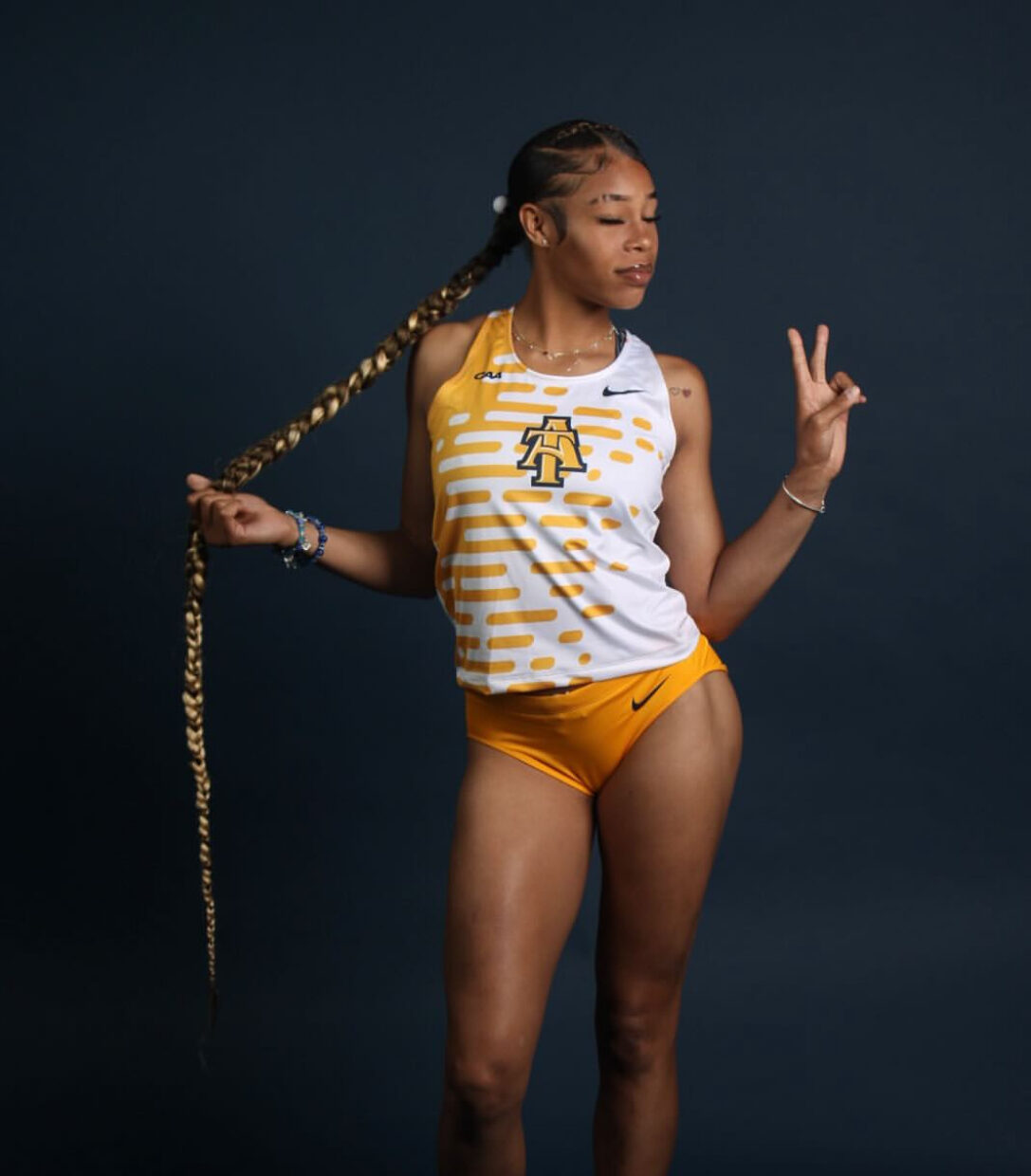
Greensboro, NC – Olivia Dowd is more than just a standout on the track, she’s a force redefining what it means to be a champion. With a powerful combination of speed, strength, and precision, Dowd has become one of the most accomplished athletes in her program’s history. In a historic leap for North Carolina A&T’s track and field program, Olivia Dowd has etched her name into the record books as the first woman in school history to qualify for the NCAA Nationals in the triple jump. Known for her explosive power, technical precision, and unwavering drive, Dowd’s achievement marks a breakthrough not only for her personal career, but for the legacy of women’s athletics at NCAT. With each jump, she’s not just chasing distance, she’s setting new standards.
Today we’d like to introduce you to Olivia Dowd.
Olivia, what events do you specialize in, and which one do you enjoy the most?
I specialize in the triple jump, long jump, and sprints (practice wise). Out of all of them, triple jump is my favorite. It challenges me both mentally and physically, and there’s nothing like the rhythm and power it takes to execute all three phases. It’s where I feel the most in control and free.
How did you get started in track and field, and what drew you to your specific events?
I got started in track and field in high school. At first, I joined just to stay in shape for basketball, but I quickly realized I had a natural talent for jumping events. One of my coaches, Coach Lonnie, who I deeply appreciate for not only believing in me when he saw me at basketball practice, but also had the patience to develop a hardworking student athlete-encouraged me to try the triple jump, and after my first meet, I was hooked. The technique, timing, and power it takes really drew me in. It felt like a puzzle I wanted to keep solving, and the challenge motivated me to keep improving. Over time, I fell in love with the long jump and sprints too, but triple jump became my passion.
What’s a typical training week like for you in terms of sprint/hurdle/field event workouts?
A typical week of running includes a mix of acceleration, speed, and sprint endurance training. Early in the week, I focus on short sprints like 20s, 30s, or 40s to build explosive power and refine my starts. Midweek sessions include flying 30s, sprint mechanics drills, and sometimes hurdle mobility to improve stride efficiency and control. Toward the end of the week, I do longer sprints like 150s or 200s to build endurance while maintaining form under fatigue. I also incorporate bounding and plyometrics to support my triple and long jump phases. Recovery and treatment are a huge part of my routine. I stay consistent with ice baths, stretching, cupping, massage, and foam rolling to keep my body ready and reduce the risk of injury.
What’s the most challenging part of your event, and how do you train to overcome it?
The most challenging part of triple jump is how physically demanding it is on your entire body. You’re sprinting at full speed, then transitioning through three explosive phases. Hop, step, and jump—which puts a lot of force on your knees, hips, and ankles. I actually had to redshirt my outdoor season last year due to a meniscus injury, and I still feel pain at times depending on how intense the training is or if I’ve fallen behind on recovery. That experience really taught me how essential it is to take care of my body. I stay on top of treatment—ice baths, stretching, cupping, and soft tissue work—and make recovery just as much of a priority as training. It’s not just about pushing through pain but listening to your body and being proactive so you can stay healthy and keep performing at a high level.

What’s your toughest workout or training session-and how do you mentally get through it?
One of the toughest workouts I’ve gone through was during fall training when my coach had me doing endurance workouts—like 200s and up—while the rest of the team had lighter sessions. It was hard not to feel frustrated at times, especially training alone and pushing through when everyone else seemed to have it easier. I’d catch myself complaining, but eventually I realized my coaches pushed me harder because they saw something in me—they believed in my potential and knew I was capable of greatness. That shift in perspective changed everything. I embraced the challenge, stayed disciplined, and trusted the process. When I finally hit 43 feet, I was able to look back and truly appreciate all the work and sacrifice it took to get there. It reminded me that every tough rep had a purpose, and I wouldn’t be where I am without God’s strength and guidance.
Do you have a favorite drill or technique that’s helped you improve?
One of my favorite drills is the free leg drop drill that we do before every triple jump practice. Since I jump right-right-left, this drill really helps me dial in on my hop and step phases. It teaches me how to actively drop my left leg during the hop, which sets me up for a more controlled and powerful transition into the second phase. It also reinforces the importance of striking the ground with purpose after each phase so I can keep driving forward with momentum. It’s a simple drill, but it’s made a huge difference in helping me feel the rhythm and mechanics of the jump.
Describe your pre-race or pre-event routine. Any superstitions or must-haves?
Before every meet, I have a routine that helps me stay focused and grounded. As soon as I arrive, I check in and get my spikes checked so I can mentally lock in on my event and the phases I need to execute. About an hour and a half before I compete, I take time to walk around and talk to God. That time with Him centers me—it reminds me that no matter the outcome, I already have the victory because God is with me. It gives me confidence and peace, knowing that He’s proud of me simply for showing up and giving my all. After my walk, I listen to my gospel playlist to stay uplifted and in the zone. Around 30 minutes before my event, I begin warming up, stretching, and getting my body ready. Then I head out to the track, do 3–4 full run-throughs, 3 short approaches, and then it’s jump time!
How do you handle nerves or pressure before a big meet?
Before a big meet, I definitely feel nerves, but I’ve learned how to manage them by shifting my focus. Instead of stressing over the outcome, I remind myself why I do this and that it’s bigger than just one jump or one competition. I take time to pray, breathe, and just talk to God. That connection gives me peace and reminds me that no matter what happens, I’m not alone out there. I also remind myself of all the hard work I’ve put in. Pressure turns into confidence when you trust your preparation. I try to channel those nerves into focus and energy, and once I step on the runway, I’m locked in and ready to compete.
What has been your most memorable performance so far and why?
My most memorable performance was at Regionals, and it still feels surreal. Leading up to the meet, I was doubting myself—comparing my PR of 12.90m (42’4”) to the 22 other incredibly talented triple jumpers ahead of me. I kept thinking, I just want to break the school record, and whatever happens after that is in God’s hands. I knew I wanted to make it to nationals, but I wasn’t stressing it because just being at regionals was already a huge personal accomplishment.
On my first jump, I hit 41’8”, and while it was solid, it didn’t feel like enough. I saw my name on the board in a qualifying spot for nationals (top 12) but then I slowly dropped down to 17th. I knew I couldn’t settle. Right before I stepped onto the runway for my next jump, I took a moment to pray and said, Lord, please give me the strength to go to nationals. I took off—and when I landed and saw “43’4¼” on the board, I screamed and cried. Not only did I place 5th, but I broke the school record and became the first woman at NCAT to qualify for nationals in triple jump. That moment proved to me that I can do anything I set my mind to—with God by my side.
Who do you look up to in your sport, whether locally or professionally?
I truly look up to my family more than anyone. With eight siblings and a strong support system, they’ve always motivated me to keep going, even when things got tough. That’s another thing—people often think my life is all flowers and no bad days, but I’m human too. My family has seen me at my highest and lowest, and their belief in me has never wavered. My mom especially inspires me with her strength and faith. She works two jobs, seven days a week, and still shows up for all of us with love and support. Watching how hard my family works and the love they pour into everything they do reminds me why I compete and who I do it for.
I also admire all of my coaches—past and present—who’ve poured into me not just as an athlete, but as a person. They’ve challenged me, believed in my potential, and helped shape me into the competitor I am today. My teammates, past and present, deserve credit too. Training alongside them pushes me to be better, and their support, encouragement, and shared grind have created bonds I’ll always be grateful for.
Another big part of my inspiration is my boyfriend and his family. He’s been one of my biggest supporters—always encouraging me to be my best, praying with me before meets, and reminding me of my worth no matter the outcome. His family has also embraced me with so much love and support, and I’m so thankful to have them cheering me on. That kind of love and belief gives me strength on and off the runway.
And when it comes to professional athletes, I truly admire Tara Davis. Her energy, passion, and love for the sport are contagious, and she’s unapologetically herself. Watching her compete reminds me that it’s okay to have fun while still being fierce. She’s proof that you can be joyful, confident, and dominate at the highest level.
At the end of the day, my family—by blood and by bond—will always be my biggest inspiration. They’re the reason I keep chasing greatness.

What’s one technical aspect of your event you’re really focused on improving right now?
Right now, I’m really focused on improving my landing in triple jump. I’ve noticed that I tend to rush through it, which affects my overall distance. One key issue is that I’m not fully driving my arms up at the end – I usually land with my hands at more of a diagonal angle instead of reaching straight up. That slight change might not seem like much, but it can actually shorten my jump. So I’m working on finding the right technique that helps me stay patient through the landing and finish strong with my arms up to maximize my distance.
How important is mental preparation in your events, and how do you work on it?
Mental preparation is so important to me—honestly, I don’t perform well if my mind isn’t at ease. It’s normal to feel nervous or even a little anxious, but having a clear, relaxed mindset before I compete helps me stay focused and execute my phases with confidence. One of the ways I work on this is through daily journaling and Bible study. These routines help me reflect, set the tone for my day, and stay grounded in my purpose, both as an athlete and as a person. When my mind is clear and my heart is aligned with God, I feel unstoppable. That mental and spiritual balance is everything for me.
Do you approach your events more with strategy or instinct? Why?
I’d say I approach my event with a balance of both strategy and instinct, but I definitely lean more toward strategy. Triple jump is a very technical event—it’s not just about power or speed, but how you manage each phase. I have to focus on things like my run-up rhythm, staying tall in my hop phase, keeping posture in the step, and finishing the jump with a solid landing. That takes planning, drills, and constant adjustments with my lovely jumps coach, Coach Hopkins.
But once I’m on the runway, instinct kicks in. I trust the training, feel the rhythm, and just go. That instinct helps me react in real time and adjust if something feels off. So while the blueprint is strategy, the execution is instinct.
What’s your favorite track or field venue to compete at and why?
My favorite places to compete are definitely at North Carolina A&T and the University of North Florida in Jacksonville, where regionals were held. Competing at NCAT feels like home—the energy, the support, and knowing I’m representing something bigger than myself always pushes me to give my all. But regionals at UNF was a whole different kind of special. That track will always have a place in my heart because it’s where I hit my personal best of 43’4¼ and became the first woman at NCAT to qualify for nationals in triple jump. Every time I think about that meet, I remember the growth, the faith, and all the hard work that led to that moment. So yeah, both places mean a lot to me—one is home, and the other is where I made history.
What kind of music or motivation gets you hyped before competing?
Before I compete, I only listen to gospel music—no secular music at all. That’s something I’ve stuck with since high school, and it’s a big part of how I prepare mentally and spiritually. It helps calm my nerves, keep me focused, and remind me of the bigger purpose behind everything I do. I have a go-to playlist filled with artists like Ricky Dillard, my pastor and First Lady Warryn and Erica Campbell (Mary Mary), JJ Hairston, Tye Tribbett, Sunday Service Choir, James Hall Worship and Praise, and many more. That kind of music gets me hyped while keeping me grounded—it reminds me that God is with me every step of the way.
How do your teammates or training group influence your performance?
My teammates and training group play a huge role in my performance. Being surrounded by people who are just as driven and passionate as I am pushes me to be better every single day. We hold each other accountable, celebrate each other’s wins, and support one another through the tough days. Even when the workouts are hard or I’m mentally drained, just having their energy and encouragement gives me that extra boost to keep going.
We all want to see each other win, and that kind of environment is rare and special. It’s more than just teammates—it’s a family. They’ve seen me on good days and bad days, and we’ve all grown together through the grind. Whether it’s on the runway, in the weight room, or during travel weekends, their presence helps keep me locked in and reminded that I’m not doing this alone.
And I can’t forget about my coaches! They’ve played a huge part in shaping me into the athlete I am. Coach Johnson always told us that all that matters is getting 1% better every day. He reminded us not to get overwhelmed by the big picture—because if you stare at the whole staircase, you’ll spiral into thoughts that eat you up emotionally and mentally. Instead, just focus on the next step and take it one step at a time. That mindset has truly changed how I approach my training, competition, and life as a whole. Coach Johnson also told us, “You have to get something wrong 10,000 times before getting it right.” Coach Hopkins always reminds us—it’s a mind game. And that’s so true. At this level, it’s not just physical; your mental toughness is everything. Are you willing to put in the work, stay focused, and push through the doubt? That’s what separates good from great. That perspective sticks with me every time I step onto the track.
What’s your go to recovery routine after a meet or heavy practice?
After a meet or a heavy practice, recovery is everything for me, especially as a triple jumper where the impact on my body is intense. My go-to recovery routine starts with heading straight to the training room for treatment. I usually do ice baths, get my legs flushed out, and sometimes use compression boots. If I’m feeling any pain—especially in my knee from my past meniscus injury—I make sure to communicate that with the trainers so we can stay on top of it. I also do stretching, foam rolling, and sometimes use resistance bands for mobility work. On rest days, I still stay consistent with recovery, whether it’s icing, using a heating pad, or even just elevating my legs. I’ve learned the hard way that recovery is just as important as the work you put in. It’s what keeps me going and helps me show up strong for the next session.
How do you balance school, life, and training? Any tips?
Balancing school, life, and training isn’t always easy, but it’s definitely possible with the right mindset and organization. I’ve learned to prioritize what matters most and manage my time wisely. Being a D1 athlete, my schedule is packed with practices, lifts, travel, and meets—but I still make time for classes, studying, and my social life. On top of that, I’m involved in 7 organizations on campus and serve as a mentor to both college students and elementary/middle schoolers. It gets overwhelming sometimes, but staying organized is key. I use a planner and set reminders on my phone to stay on track with assignments and deadlines. My team mates and I also have an app called team works that has our whole schedule for all of our classes, practice times, weight session times, and treatment/recovery times. One thing that helps me a lot is setting boundaries and learning to say no when I need to rest or focus.
I also lean on my support system, which is my family, friends, and mentors who keep me grounded and motivated, especially when unexpected things come my way. Life is hard and my faith plays a huge role too—it reminds me why I do what I do and gives me peace even in the chaos.
Tip: Find a routine that works for you and don’t compare your journey to anyone else’s, that’s the first step to failure! Remember everybody’s journey is different, so what may work for you may not work for everybody else. Stay disciplined, humble, give yourself grace, and always make time for recovery—mentally, physically, and spiritually.
Outside of track and field, what are your interests or hobbies?
Outside of track and field, I’m definitely a family-oriented person. I love spending time with my siblings because we’re super close and always laughing about something. I also love dogs, babies, and just being around good energy. I’m the type of person who thrives around my friends and family. I enjoy traveling, seeing new places, and making memories with the people I love. Music is another big part of my life. It helps me focus, unwind, and connect spiritually, especially through gospel. I also enjoy working out outside of track just to stay active and feel good.
And one of my favorite things is just sitting down and talking to my grandma—she’s full of wisdom and always brings me peace—and of course, talking to Nee Nee! Whether we’re chatting about life or laughing at something random, she always makes my day. Life outside of athletics is what keeps me grounded and reminds me who I am beyond the sport.
What advice would you give to someone just starting out in your event?
It takes time! You have to be patient. If you’re patient with triple jump, it’ll be patient with you. This isn’t an event where everything clicks right away—it takes consistency, mental toughness, and most importantly, trust in the process. I was decent coming out of high school with triple jump. I jumped 38’11”, which broke the school record at Golden Valley High School in Santa Clarita, California. Still, putting myself out there and reaching out to multiple HBCUs was hard—especially being from all the way on the West Coast.
When I came to NCAT, I was terrified. I had been denied by previous coaches because I didn’t hit the standard, and I was scared I wouldn’t get a shot. But that day, Coach Johnson saw me—not just as an athlete, but as a person. I’ll never forget that. I came in as a walk-on, and now I’m making history. That’s not just a milestone—it’s a testimony and a story I hope inspires someone else who feels overlooked or unsure of themselves.
So here’s my advice:
•Don’t compare yourself to anyone else. Everyone’s journey is different.
•Put in the work even when nobody’s watching.
•Take care of your body. Recovery, treatment, and rest days are just as important as the hard workouts. I learned the hard way that skipping them can set you back.
•Be coachable and open to growth. Even if you don’t “get it” right away, keep showing up and giving it your all.
•Stay rooted in purpose. Know your why. For me, that’s my faith, my family, and proving to myself that I belong.
At the end of the day, you’re not just training for numbers, you’re building a legacy. So keep showing up, stay locked in, and trust that your time is coming.
Whether you’re a coach, athlete, parent, or sports fan, I’d love to hear from you. Have a story idea? Want to collaborate on coverage? Looking to feature your team or athlete? Use the form below to get in touch.


We Speak Sports
Yehualaw Returns in Valencia as Kwizera Chases Spanish History
Yalemzerf Yehualaw returns from maternity leave in Valencia on Oct. 25, Rodrigue Kwizera chases a first Spanish win, and Kenenisa Bekele is also on the start list.

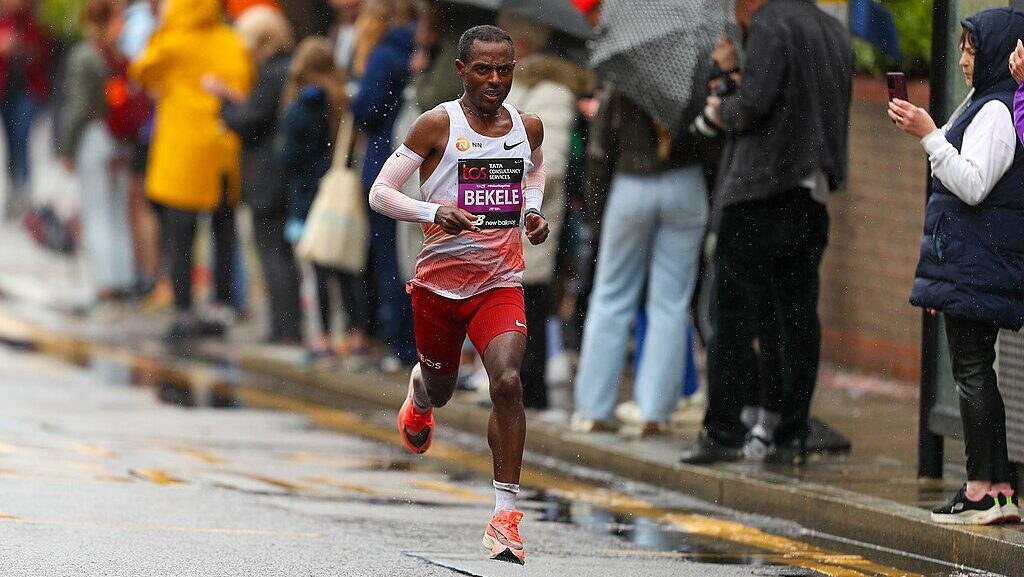
The Valencia Half Marathon on Sunday, Oct. 25 brings together a returning superstar, a man chasing national history, and one of the greatest distance runners of all time.
Yalemzerf Yehualaw headlines the women’s race in her return from maternity leave. The Ethiopian last raced at the Boston Marathon in April 2025, finishing third in 2:18:06, and her half marathon personal best of 1:03:51 — run on this course in 2021 — makes her the fastest woman in the field. She faces Lisbon champion Tsigie Gebreselama, world road running silver medallist Veronica Loleo and Ftaw Zeray on a course famous for fast times.
The men’s race could produce a first. Rodrigue Kwizera owns the fastest personal best in the field at 58:16, set in Prague earlier this year, and after receiving Spanish citizenship in 2026 he is chasing both the first Spanish men’s victory in Valencia and the Spanish record of 59:39. His training partner Thierry Ndikumwenayo, Andrea Kiptoo, Owen Kapkama, Daniel Ebenyo and 2018 winner Jemal Yimer are all in the field — along with Kenenisa Bekele, the three-time Olympic champion whose appearance alone will draw a crowd.
Britain’s Ben Connor, Charlie Wheeler and Samantha Harrison also feature. The course records — Yomif Kejelcha’s 57:30 and Letesenbet Gidey’s 1:02:52 — were both world records when set, which tells you everything about Valencia’s speed.
Photo: Canadian Running
-

 We Speak Music1 week ago
Fox De La Rose Refuses To Be Defined On ‘Nothing Is Written In Stone’
-

 We Speak Music1 week ago
Didn’t get tickets to Oasis? Buying for the dad who still talks about that gig in 1996
-

 We Speak Dining & Drinks1 day ago
Off The Rails Opens in Boston, Bringing Nashville-Inspired Dining, Live Music and High-Energy Entertainment Downtown
-

 We Speak Music1 week ago
Desire Machines Pair Literary Inspiration With Psychedelic Art-Rock On New Single