
We Speak Track And Field
More Than a Jumper: How John Watkins Combined Athletic Precision, Mental Strength, and Team Support to Soar in the Triple Jump

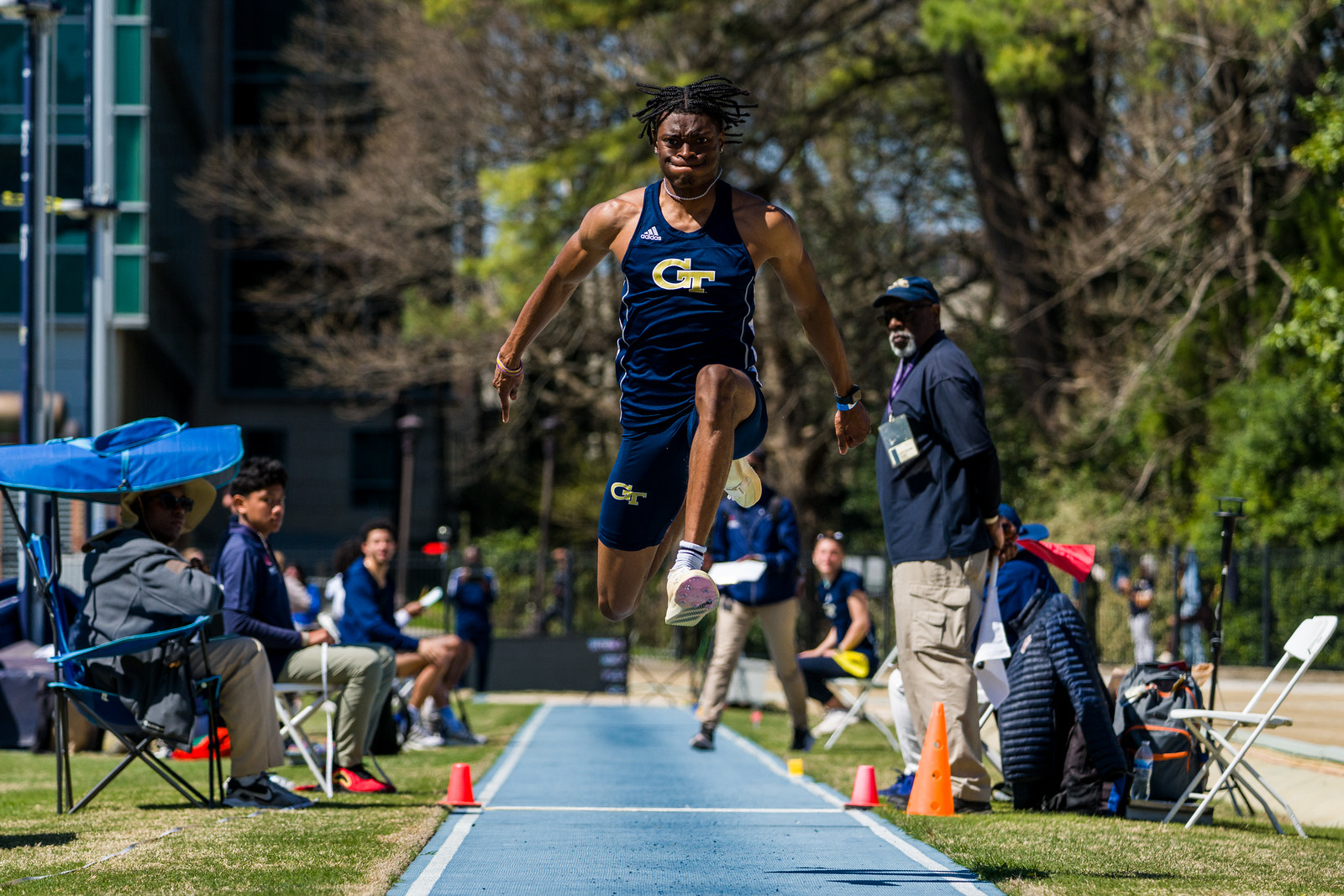
John Watkins is a standout triple jumper whose journey into track and field began in middle school and evolved into a passion that defines his athletic identity. A former Georgia Tech athlete, Watkins has developed a deep technical mastery of his event, fueled by a background in basketball training and a relentless drive to improve. Known for his explosive power, meticulous preparation, and calm mindset under pressure, Watkins has made his mark at the collegiate level, highlighted by a memorable performance at the ACC Indoor Championships. Whether bounding down the runway or pushing through grueling training sessions, he brings intensity, precision, and a love for the sport that continues to inspire those around him.
What events do you specialize in, and which one do you enjoy the most?
Triple jump is my specialty, and it’s the event I enjoy the most.
How did you get started in track and field, and what drew you to your specific events?
In middle school, the track coach also led a fitness class I was part of. During the running segments, he noticed my potential and encouraged me to join the track team. I started as a middle-distance runner, but later shifted gears to prepare for summer basketball. My goal was to dunk by 8th grade, so I focused on plyometric and explosive drills to improve my vertical. When I returned to track the following year, my coach saw my jumping ability and suggested I try long and triple jump. I’ve been a jumper ever since.

What’s a typical training week like for you in terms of sprint, hurdle, or field event workouts?
My weekly routine includes triple jump technique work, sprinting, and lifting. Mondays are focused on my approach and the first phase of triple jump. In the weight room, we work on strength and explosiveness through complex lifts. Tuesdays are sprint days, often focused on speed or endurance. Wednesdays are heavy plyometric days, emphasizing good ground contact. Thursdays are recovery-focused, helping prep for Friday, which is when we put everything together and take full jumps.
What’s the most challenging part of your event, and how do you train to overcome it?
The most difficult part of triple jump is executing a slow, controlled hop phase. The slower and more deliberate it is, the more force you’ll feel during ground contact. I train to overcome this by building leg strength and focusing on active ground contacts.
What’s your toughest workout or training session, and how do you mentally get through it?
The conditioning phase is the toughest. We do a lot of running, stadiums, and hills—it really wears you down. The key is mental fortitude and leaning on your teammates. Having that support makes a huge difference.

Do you have a favorite drill or technique that’s helped you improve?
My favorite drill is alternating bounding. It’s simple but highly effective for improving knee angles, ground contacts, and arm action all at once.
Describe your pre-race or pre-event routine. Any superstitions or must-haves?
Besides my routine warm-up, I don’t have any rituals or superstitions.
How do you handle nerves or pressure before a big meet?
I treat big meets like another practice. I remind myself that I do this every day, so nothing really changes. I go in thinking, “All I need to do is have a good practice day.”
What has been your most memorable performance so far and why?
My jump of 51’10” at the ACC Indoor Championships at Virginia Tech stands out. It was a major personal best, but what made it unforgettable was the energy and support from my teammates. That moment still gives me chills.
Who do you look up to in your sport, whether locally or professionally?
When I first started triple jump, I really admired Christian Taylor. Being the second-farthest jumper of all time, he was a big inspiration to me.
What’s one technical aspect of your event you’re really focused on improving right now?
Although I’ve completed my collegiate eligibility, if I were to keep competing, I’d focus on maintaining speed through takeoff and keeping my arms in sync.

How important is mental preparation in your events, and how do you work on it?
Mental preparation is crucial. Track and field is 90% mental and 10% physical. I meditate regularly to build mental strength. Learning to ignore time and stay present in the moment has helped me tremendously.
Do you approach your events more with strategy or instinct? Why?
I compete based on instinct. Early on, trying to strategize too much led to overthinking and poor results. As Division I athletes, we train our bodies to perform. If we trust that training and compete naturally, the results will follow.
What’s your favorite track or field venue to compete at and why?
Clemson’s indoor facility is my favorite. As a Georgia Tech athlete, we competed there often. It feels like a home away from home.
What kind of music or motivation gets you hyped before competing?
Before heading to the track, I meditate on my favorite scriptures, which are posted on my mirror. When it’s closer to competition time, I switch to rap music to boost my energy.
How do your teammates or training group influence your performance?
My teammates have been everything. We create mantras to motivate each other during practice and meets. Track can be mentally and physically draining, and having a strong support group is essential. They’ve pushed me to be my best every day.
What’s your go-to recovery routine after a meet or heavy practice?
The Normatec boots are a must. I try to use them daily to keep my legs fresh. I also love contrast baths—hot and cold tubs are a close second.

How do you balance school, life, and training? Any tips?
Use a calendar! Time management is key. There are 24 hours in a day, which is plenty if you’re intentional. I don’t waste time scrolling on my phone, which frees me up to enjoy other things I love.
Outside of track and field, what are your interests or hobbies?
I enjoy listening to music, reading, painting, and doing puzzles.
What advice would you give to someone just starting out in your event?
Study the event. Watch pro jumpers on YouTube and follow your favorites on social media. Understanding how the best do it will give you a solid foundation and help you mentally prepare for training.
Whether you’re a coach, athlete, parent, or sports fan, I’d love to hear from you. Have a story idea? Want to collaborate on coverage? Looking to feature your team or athlete? Use the form below to get in touch.


We Speak Sports
Yehualaw Returns in Valencia as Kwizera Chases Spanish History
Yalemzerf Yehualaw returns from maternity leave in Valencia on Oct. 25, Rodrigue Kwizera chases a first Spanish win, and Kenenisa Bekele is also on the start list.

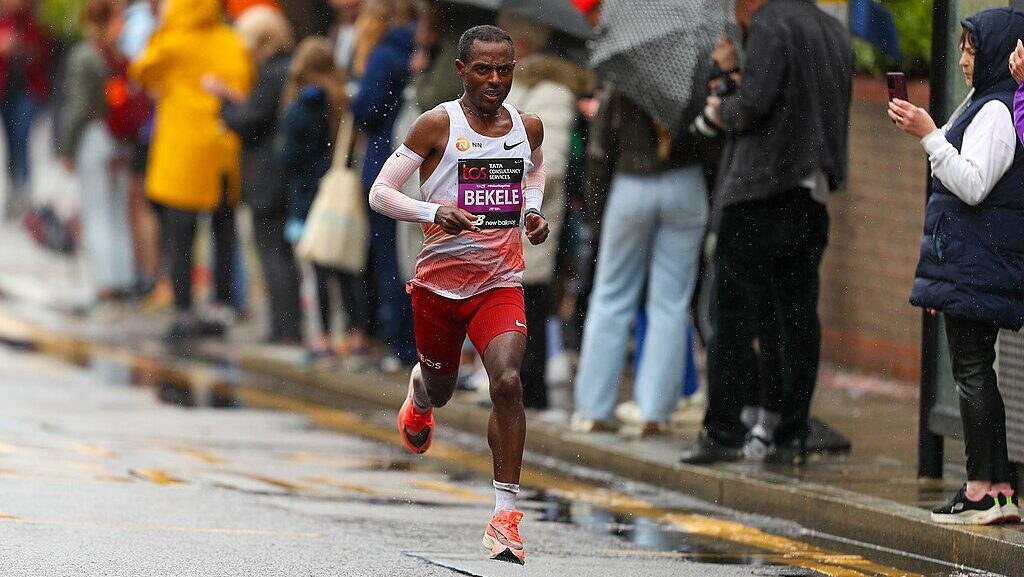
The Valencia Half Marathon on Sunday, Oct. 25 brings together a returning superstar, a man chasing national history, and one of the greatest distance runners of all time.
Yalemzerf Yehualaw headlines the women’s race in her return from maternity leave. The Ethiopian last raced at the Boston Marathon in April 2025, finishing third in 2:18:06, and her half marathon personal best of 1:03:51 — run on this course in 2021 — makes her the fastest woman in the field. She faces Lisbon champion Tsigie Gebreselama, world road running silver medallist Veronica Loleo and Ftaw Zeray on a course famous for fast times.
The men’s race could produce a first. Rodrigue Kwizera owns the fastest personal best in the field at 58:16, set in Prague earlier this year, and after receiving Spanish citizenship in 2026 he is chasing both the first Spanish men’s victory in Valencia and the Spanish record of 59:39. His training partner Thierry Ndikumwenayo, Andrea Kiptoo, Owen Kapkama, Daniel Ebenyo and 2018 winner Jemal Yimer are all in the field — along with Kenenisa Bekele, the three-time Olympic champion whose appearance alone will draw a crowd.
Britain’s Ben Connor, Charlie Wheeler and Samantha Harrison also feature. The course records — Yomif Kejelcha’s 57:30 and Letesenbet Gidey’s 1:02:52 — were both world records when set, which tells you everything about Valencia’s speed.
Photo: Canadian Running
-

 We Speak Music1 week ago
Didn’t get tickets to Oasis? Buying for the dad who still talks about that gig in 1996
-

 We Speak Music1 week ago
Fox De La Rose Refuses To Be Defined On ‘Nothing Is Written In Stone’
-

 We Speak Dining & Drinks1 day ago
Off The Rails Opens in Boston, Bringing Nashville-Inspired Dining, Live Music and High-Energy Entertainment Downtown
-

 We Speak Music1 week ago
Desire Machines Pair Literary Inspiration With Psychedelic Art-Rock On New Single