
We Speak Entertainment
New Film: Sammy Davis, Jr.: I’ve Gotta Be Me – directed by SAM POLLARD


SAMMY DAVIS, JR.: I’VE GOTTA BE ME
is the first major film documentary to examine Davis’ vast talent and his journey for identity through the shifting tides of civil rights and racial progress during 20th-century America. Sammy Davis, Jr. had the kind of career that was indisputably legendary, so vast and multi-faceted that it was dizzying in its scope and scale. And yet, his life was complex, complicated and contradictory. Davis strove to achieve the American Dream in a time of racial prejudice and shifting political territory. He was the veteran of increasingly outdated show business traditions trying to stay relevant; he frequently found himself bracketed by the bigotry of white America and the distaste of black America; he was the most public black figure to embrace Judaism, thereby yoking his identity to another persecuted minority.
Featuring new interviews with such luminaries as Billy Crystal, Norman Lear, Jerry Lewis, Whoopi Goldberg, Quincy Jones and Kim Novak, with never-before-seen photographs from Davis’ vast personal collection and excerpts from his electric performances in television, film and concert, SAMMY DAVIS, JR.: I’VE GOTTA BE ME explores the life and art of a uniquely gifted entertainer whose trajectory blazed across the major flashpoints of American society from the Depression through the 1980s.
Premiering at the 2017 Toronto International Film Festival, this moving and compelling film lets viewers see the highs and lows of this extraordinary man as he reached out to accomplish his goals to entertain the world, while people and situations continued to try and hold him down. His life and his legacy has never been documented in a feature film before now.


We Speak Entertainment
Rocky Kramer’s Rock & Roll Tuesdays Presents “The Black Parade” On Tuesday, October 13th, 2026 7 PM PT on Twitch

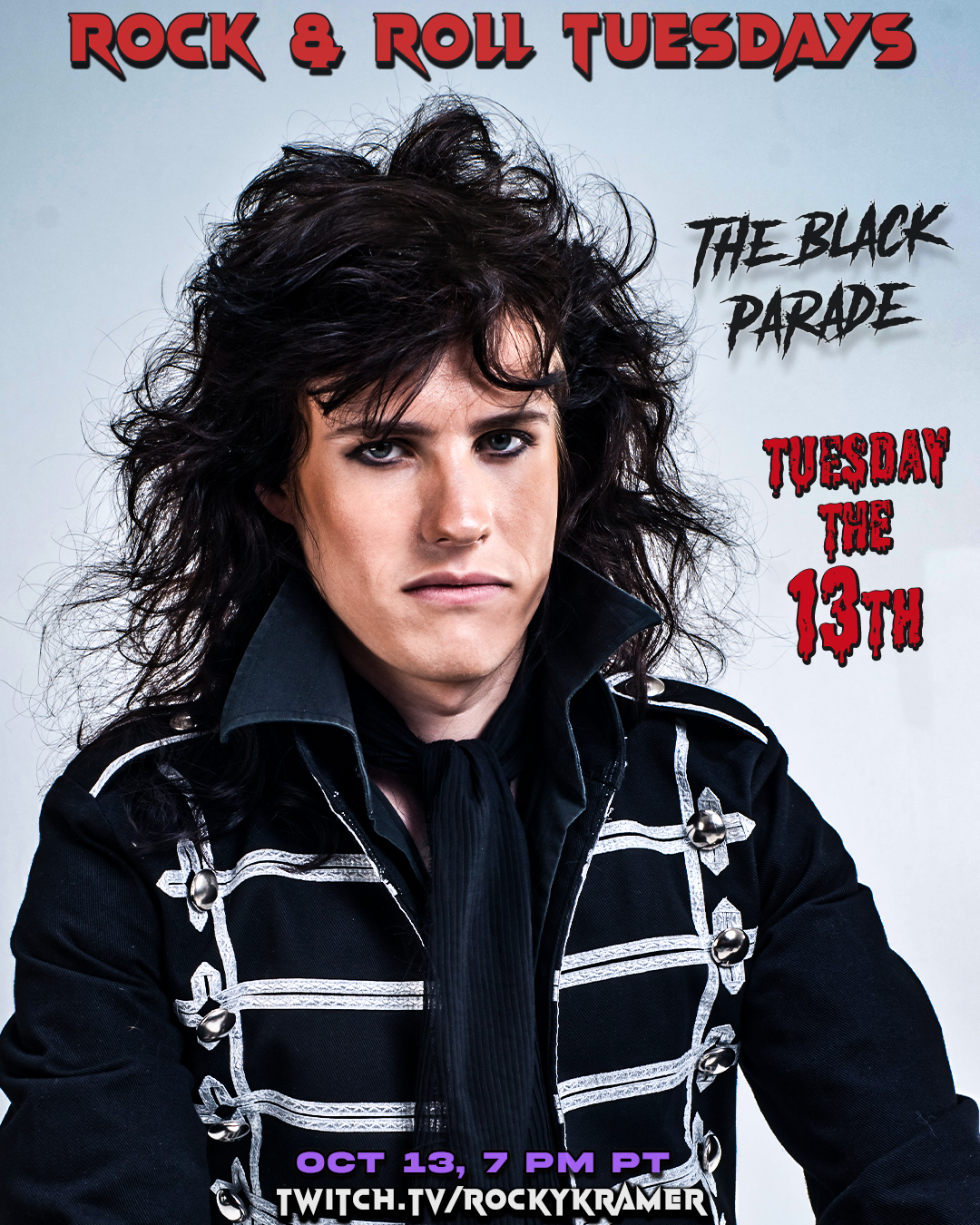
Rocky Kramer will be hosting “The Black Parade” on this week’s episode of Rocky Kramer’s Rock & Roll Tuesdays on Twitch. Tune into Twitch on Tuesday, October 13th, 2026 at 7 PM PT for this amazing show.
Rocky Kramer is a guitar virtuoso, often being compared to the greatest guitar players in the world. Rocky has performed on shows with some of the greatest musicians on the planet including Ozzy Osbourne, John Lodge, Steve Vai, Leland Sklar, Kenny Aronoff, Tommy James, Verdeen White, Ten Years After, BuckCherry, Rick Wakeman and more.
Rocky’s first studio album, “Firestorm” is now available worldwide through Allied Artists Music Group, together with an epic music video of his #1 Global DRT Chart topper single, “Rock Star”, that also picked up a Best Rock Performance nod at the 2019 Hollywood Music In Media Awards (“HMMA”).
Rocky Kramer recently returned to the studio to record his sophomore album “Alone In The Rain” which will be released soon!!!

Rocky Kramer was recently cast in The Mutt Productions/ Allied Artists rock n’ roll time travel comedy adventure “Rockin’ In Time” where he will play the film’s lead character, Lars Olsen. The film is being directed by Aaron Lee Lopez (of the “Teenage Girl” franchise) and is being produced by multi-platinum and six-time Grammy Award winning musician turned motion picture producer, Kurt Wipfli.
Rocky Kramer is now the new lead guitarist in Prescott Niles’ new revival of the legendary band The Knack. Known worldwide for their smash hit “My Sharona,” The Knack helped define the sound of late-1970s power pop and rock. Decades later, the band’s influence continues to resonate with fans and musicians across generations. With Rocky Kramer now joining the lineup, the band is poised to introduce that legacy to a new era of audiences while honoring the spirit that made them legendary.
Watch Rocky Kramer’s “Rock Star” Music Video here:
Watch Rocky Kramer’s Rock & Roll Tuesdays “The Black Parade” on October 13th, 2026, at 7 PM PT on Twitch here:
http://www.twitch.tv/rockykramer
The official website for Rocky Kramer may be found at http://www.RockyKramer.com
Visit Rock & Roll Tuesdays with Rocky Kramer on IMDB here:
-

 We Speak Music1 week ago
National Gospel Recording Artist Ellen Hayes Announces the Release of Her Farewell Album, Behind My Eyes
-
We Speak Music1 week ago
Mel D makes bittersweetness glow with magnetic new single ‘ORANGE’
-

 We Speak Music1 week ago
Kazimi Shines In New Single ‘Errant Nodes’
-

 We Speak Music1 week ago
Karabo Unleashes New Single ‘Only 4 U’