
We Speak Entertainment
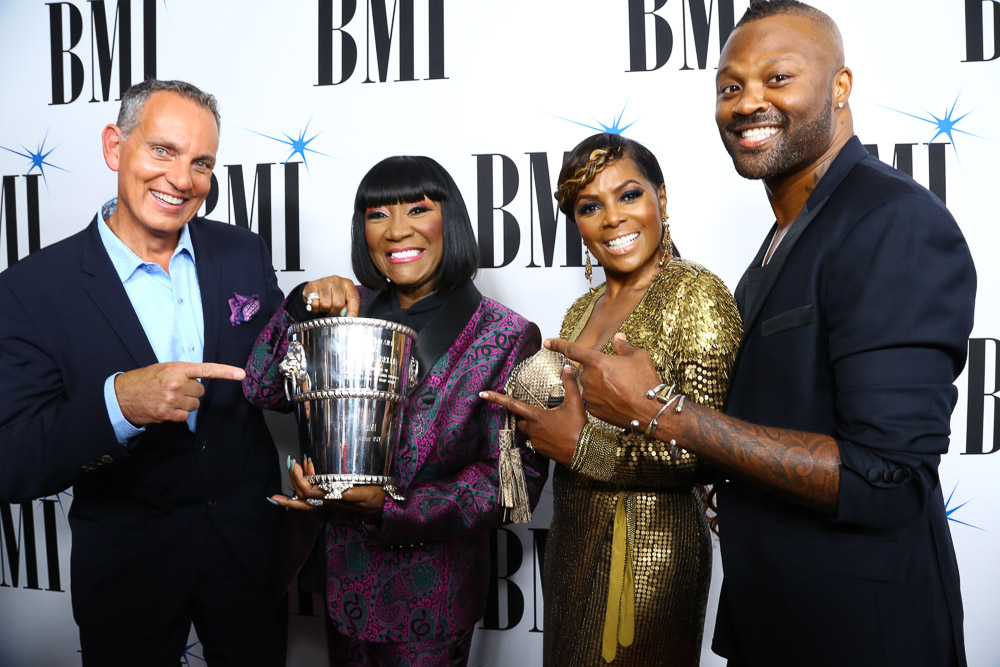
Patti LaBelle Named BMI Icon at the 2017 BMI R&B/Hip-Hop Awards

2017 BMI R&B/HIP-HOP AWARDS
“Me, Myself & I” named Song of the Year; Metro Boomin awarded Producer of the Year and Universal Music Publishing Group presented with Publisher of the Year

Last night, Broadcast Music Inc. (BMI) celebrated the songwriters, producers and publishers of the year’s most-performed R&B/hip-hop songs during the 2017 BMI R&B/Hip-HopAwards held at The Woodruff Arts Center’s Symphony Hall in Atlanta. Multiple Grammy Award-winning singer-songwriter Patti LaBelle took home the night’s highest honor as BMI Icon in recognition of her distinguished career, spanning more than 50 years.
Hosted by BMI President & CEO Mike O’Neill and BMI Vice President, Writer/Publisher Relations Catherine Brewton with Lifestyle Specialist Kenny Burns as co-host, the evening included stellar performances by some of the hottest talent on the music scene. The night kicked off with Atlanta’s own Big Boi from OutKast performing a medley of two of their biggest hits, “B.O.B.” and “GhettoMusick.” Hip-hop brother duo Ayo and Teo went on to give a dynamic performance of their Billboard Hot 100 hit song “Rolex,” before Keke Palmer and BMI’s Wardell Malloy named Detroit-based rapper Kash Doll BMI’s Social Star, voted on by fans across BMI’s Instagram and Twitter accounts. Jacquees serenaded the audience with his Billboard R&B charting single, “B.E.D.” while Rick Ross kept the energy flowing with a medley of his biggest hits including “Hustlin,’” “Trap, Trap, Trap” and “B.M.F. (Blowin’ Money Fast).”


As a BMI Icon, Ms. LaBelle joined an elite group of songwriters who have received BMI’s Icon Award for their “unique and indelible influence on generations of music makers.” Previous recipients include Nile Rodgers, Kenneth “Babyface” Edmonds, James Brown, Al Green and Snoop Dogg, among others.




We Speak Entertainment
Rocky Kramer’s Rock & Roll Tuesdays Presents “The Black Parade” On Tuesday, October 13th, 2026 7 PM PT on Twitch

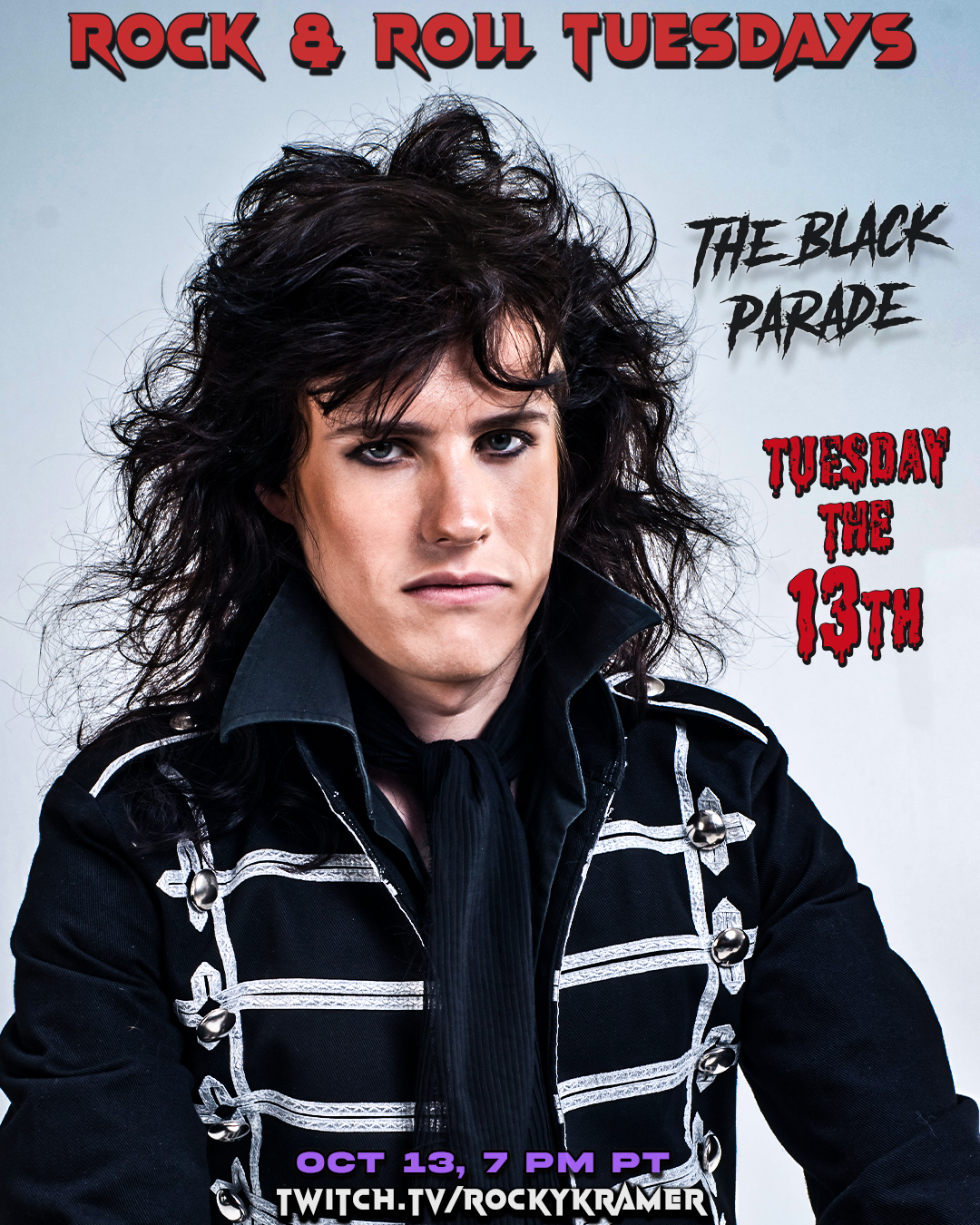
Rocky Kramer will be hosting “The Black Parade” on this week’s episode of Rocky Kramer’s Rock & Roll Tuesdays on Twitch. Tune into Twitch on Tuesday, October 13th, 2026 at 7 PM PT for this amazing show.
Rocky Kramer is a guitar virtuoso, often being compared to the greatest guitar players in the world. Rocky has performed on shows with some of the greatest musicians on the planet including Ozzy Osbourne, John Lodge, Steve Vai, Leland Sklar, Kenny Aronoff, Tommy James, Verdeen White, Ten Years After, BuckCherry, Rick Wakeman and more.
Rocky’s first studio album, “Firestorm” is now available worldwide through Allied Artists Music Group, together with an epic music video of his #1 Global DRT Chart topper single, “Rock Star”, that also picked up a Best Rock Performance nod at the 2019 Hollywood Music In Media Awards (“HMMA”).
Rocky Kramer recently returned to the studio to record his sophomore album “Alone In The Rain” which will be released soon!!!

Rocky Kramer was recently cast in The Mutt Productions/ Allied Artists rock n’ roll time travel comedy adventure “Rockin’ In Time” where he will play the film’s lead character, Lars Olsen. The film is being directed by Aaron Lee Lopez (of the “Teenage Girl” franchise) and is being produced by multi-platinum and six-time Grammy Award winning musician turned motion picture producer, Kurt Wipfli.
Rocky Kramer is now the new lead guitarist in Prescott Niles’ new revival of the legendary band The Knack. Known worldwide for their smash hit “My Sharona,” The Knack helped define the sound of late-1970s power pop and rock. Decades later, the band’s influence continues to resonate with fans and musicians across generations. With Rocky Kramer now joining the lineup, the band is poised to introduce that legacy to a new era of audiences while honoring the spirit that made them legendary.
Watch Rocky Kramer’s “Rock Star” Music Video here:
Watch Rocky Kramer’s Rock & Roll Tuesdays “The Black Parade” on October 13th, 2026, at 7 PM PT on Twitch here:
http://www.twitch.tv/rockykramer
The official website for Rocky Kramer may be found at http://www.RockyKramer.com
Visit Rock & Roll Tuesdays with Rocky Kramer on IMDB here:
-

 We Speak Music1 week ago
National Gospel Recording Artist Ellen Hayes Announces the Release of Her Farewell Album, Behind My Eyes
-
We Speak Music1 week ago
Mel D makes bittersweetness glow with magnetic new single ‘ORANGE’
-

 We Speak Music1 week ago
Kazimi Shines In New Single ‘Errant Nodes’
-

 We Speak Music1 week ago
Karabo Unleashes New Single ‘Only 4 U’