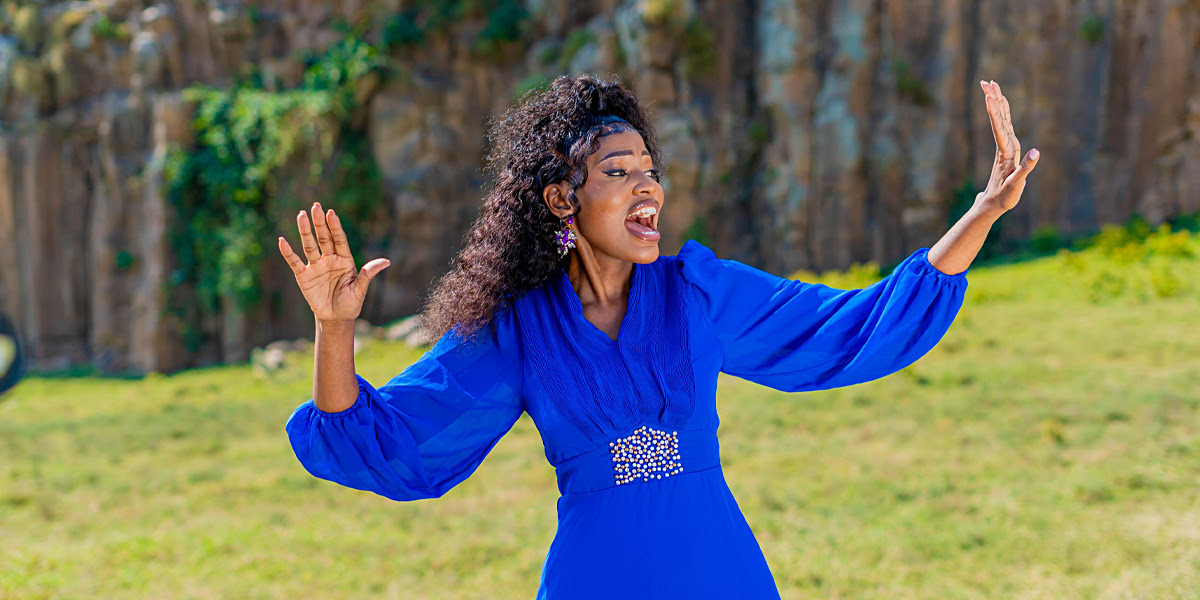
Snoop Dogg, one of rap’s OGs, has a gospel double album out. Yes, that’s right: The D-O-Double-G is doing G-O-D.
A humble, peace-loving, family-centered Snoop emerges on the 32-track double album “Bible of Love.” He quotes from the Book of Isaiah — “No weapon formed against me shall prosper” — and has nice things to say about his devout grandmother.
“I’m just a nobody trying to tell everybody about somebody who can save anybody,” he raps in one song. On another: “The devil will show up/But we’re going to keep on doing God’s work/Yes, sir/Rebuke the devil.”
Snoop doesn’t perform on every track, preferring to showcase a variety of outstanding performers in the genre, such as The Clark Sisters, John P. Kee and Kim Burrell.
Thanks to Mr. Dogg, non-gospel folk will now be exposed to powerhouses like Tye Tribbett, whose infectious “You” makes hearts race, and K-Ci, whose voice flutters like a butterfly on “No One Else.”
When Snoop does drop in, his nasally, precise, laconic flow works in beautiful counterpoint to gospel stars such as Rance Allen (a terrifically funky “Blessing Me Again”), and B. Slade, who pops up all over the CDs and teams up with Snoop on the stunning, album ending “Words Are Few.”
Some big music names have joined rap’s doggfather on the project, including Faith Evans (on the show-stopping “Saved”), Charlie Wilson (the foot-stomping “One More Day”) and Patti LaBelle, with a spirited “When It’s All Over”).
Rising star October London, who sang the steamy “Kisses Down Below” and was last seen poolside with some bikini beauties knocking back expensive liquor on Snoop’s video for “Go On,” is a tad more conservative here with “In the Name of Jesus.” Soopafly offers a view of what a rap-dance-gospel song can sound like on “Praise Him.”
“Bible of Love” doesn’t just showcase talented gospel artists. It also shows off an elastic, big-tent version of the musical genre that can include flavors of soul, blues and R&B. Adding rap makes perfect sense.
Danish author and academic Luise Noring brings an unusually analytical perspective to dystopian storytelling with her political thriller ‘Hidden’, a speculative survival narrative set in a near-future New York where institutions begin to fracture and the social contract is under strain.
Trained as a researcher with a Ph.D. from Copenhagen Business School, Noring spent years studying urban governance, economic systems, and the structures shaping modern societies. Her academic work examined city finance, public institutions, and the evolving role of cities in the global economy, while her advisory work has taken her across multiple international institutions and cities addressing governance and development challenges.
In recent years, Noring has expanded her work into fiction, using speculative storytelling as a lens to explore the fragility of political and social systems. Her novels — ‘Hidden’, ‘Unsettled’, and ‘Abandoned’ — examine the tensions shaping contemporary democracies and the ways power and information influence human lives. Her nonfiction book ‘Rotten’ explores the erosion of the Danish legislative system.
With its character-driven narrative and strong political themes, ‘Hidden’ is currently positioned as intellectual property available for feature film adaptation.
Your dystopian thriller ‘Hidden’ presents a survival story set in a near-future New York. What initially inspired the story?
We often assume that our legal, financial, and social systems rest on a coherent and rational foundation. In reality, many of these structures are far more fragile than we like to believe. When those systems begin to fracture, the consequences shape how people live, survive, and exercise power.
“That tension became the starting point for ‘Hidden’. The story explores a world where institutions are eroding and power is increasingly maintained through secrecy and control of information.”
Saskia’s journey reflects that discovery. Her story is not only about survival but about awakening to the realization that the systems she once trusted do not function the way society claims they do.
Dystopian storytelling has seen a resurgence in film and television. Do you feel ‘Hidden’ reflects anxieties audiences are experiencing today?
Across many societies there is a growing uncertainty about the stability of the systems structuring everyday life. Rising living costs, economic insecurity, and widening inequality are making it harder for many people to maintain stability. As a result, more people are beginning to question whether the systems meant to provide opportunity and protection are still functioning as intended. At the same time, technological and economic transformations are reshaping the world. Artificial intelligence is changing the meaning of work, global financial systems are altering how wealth is concentrated, and political frameworks often struggle to keep pace with these changes. When institutions fail to adapt, the consequences are felt directly by citizens. Trust erodes and opportunities narrow. In that sense, the anxieties reflected in ‘Hidden’ emerge from a broader realization that many of the systems organizing society are struggling to keep pace with the forces reshaping the world.
Photo credit: Capture Photos
At the heart of ‘Hidden’ is Saskia, a mother protecting her children in an underground world. Why was it important to center the story around a maternal protagonist?
Centering the story around Saskia as a mother was essential because it brings the narrative back to one of the most fundamental human instincts: protecting one’s children. I wanted to juxtapose that deeply human instinct with the abstract structures of society and the demands those systems place on individuals. A mother’s love is immediate and human, while the institutions around her are often bureaucratic and indifferent. Through Saskia’s perspective, the reader experiences how quickly the moral framework of society can shift when survival becomes precarious. When institutions fail or turn against the people they are meant to protect, individuals are forced into impossible choices.
‘Hidden’ is positioned as an IP available for a feature film adaptation. How do you imagine the story translating to the screen?
I envision ‘Hidden’ as a character-driven political thriller set within a speculative but recognizable world.
Rather than presenting a distant dystopia, the film would portray a society that feels uncomfortably close to our own. The tension comes from the gradual erosion of trust in institutions and the widening gap between those protected by systems of power and those pushed outside them.Visually, the film would rely on grounded realism rather than spectacle. The world above ground would feel tense and politically charged, shaped by news broadcasts, social media, and public messaging where truth and propaganda blur.In contrast, the underground world would feel improvised and fragile, revealing a population pushed out of sight by the systems above.At its center remains Saskia’s journey as she learns to survive within a collapsing system in order to protect her children.
The project has been compared to dystopian works such as ‘Children of Men’ and ‘The Hunger Games’. What filmmakers might be a natural fit to bring ‘Hidden’ to the screen?
Bringing ‘Hidden’ to the screen would require filmmakers comfortable working at the intersection of speculative fiction, political storytelling, and psychological drama. The story is not simply a dystopian narrative. It is grounded in recognizable social realities and focused on the emotional experience of individuals caught within collapsing systems.
“For that reason, the best fit would be filmmakers who approach speculative fiction as a way of examining the present rather than escaping from it.”
At its core, ‘Hidden’ is about human choices — about how ordinary people navigate truth, power, and survival when the structures around them begin to collapse.