
We Speak Entertainment
Gospel Artist Travis Greene Reflects on Inauguration Performance: “Once God Gave Me The Green Light…it was very simple”

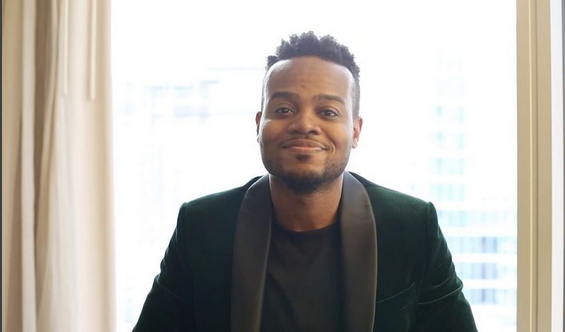
In January, Travis Greene and Chrisette Michele performed at Donald Trump’s Inauguration.
While many haven’t heard from the Gospel singer, the Black community has definitely canceled and sent Chrisette Michele back to wherever she bought that skirt from.
In a recent interview, the Grammy nominated artist spoke about not having any regrets and doing what God called him to do.
He stated:
My motivation for doing what I feel internally God has called me to do is simply the scale at which I tried to live my life. What I mean by that is, I try to put things on a scale, public opinion versus eternal consequences. To me, on a scale of eternity, it makes way more sense to do what God has called me to do.
There is a scripture that’s very scary that says if you are ashamed of me here I’ll be ashamed of you there, so I try not to allow fear stand in the way of doing anything God has called me to do. Understanding that I want Him to know that I love Him and out of that love and out of His grace there is a boldness to share His message anywhere no matter what the consequence on earth may be, knowing that I have a promise waiting for me with Him in Heaven.
He continued:
No, absolutely not. I prayed very hard about the decision and that was it. Once God gave me the green light and told me to go it was very simple from that point on so no, I have no regrets. It’s something that I knew I was supposed to do and that I did and it was way more positive feedback than negative feedback. So many believers and so many people in the world of sports and entertainment and everywhere that I meet, all appreciate and have shown gratitude for our faith move and taking the gospel of Christ to the capital.
He also stated:
I prepare myself for the assignment over my life by prayer, meditation, reading the word of God and living a life based off of inspiration. I get asked a lot what inspires me and really it’s the world around me, God’s creation, it’s the miracles I’ve experienced in my life, it’s my beautiful family and friends and all of these things together inspire and inform me of how critical my assignment is into bringing the world into the love and knowledge of Jesus Christ.
What did taking Christ to the capital do for the country?
*sigh*




We Speak Entertainment
IRENE MICHAELS JOINS THE RECORDING ACADEMY — AND WHAT THAT VOTE ACTUALLY MEANS

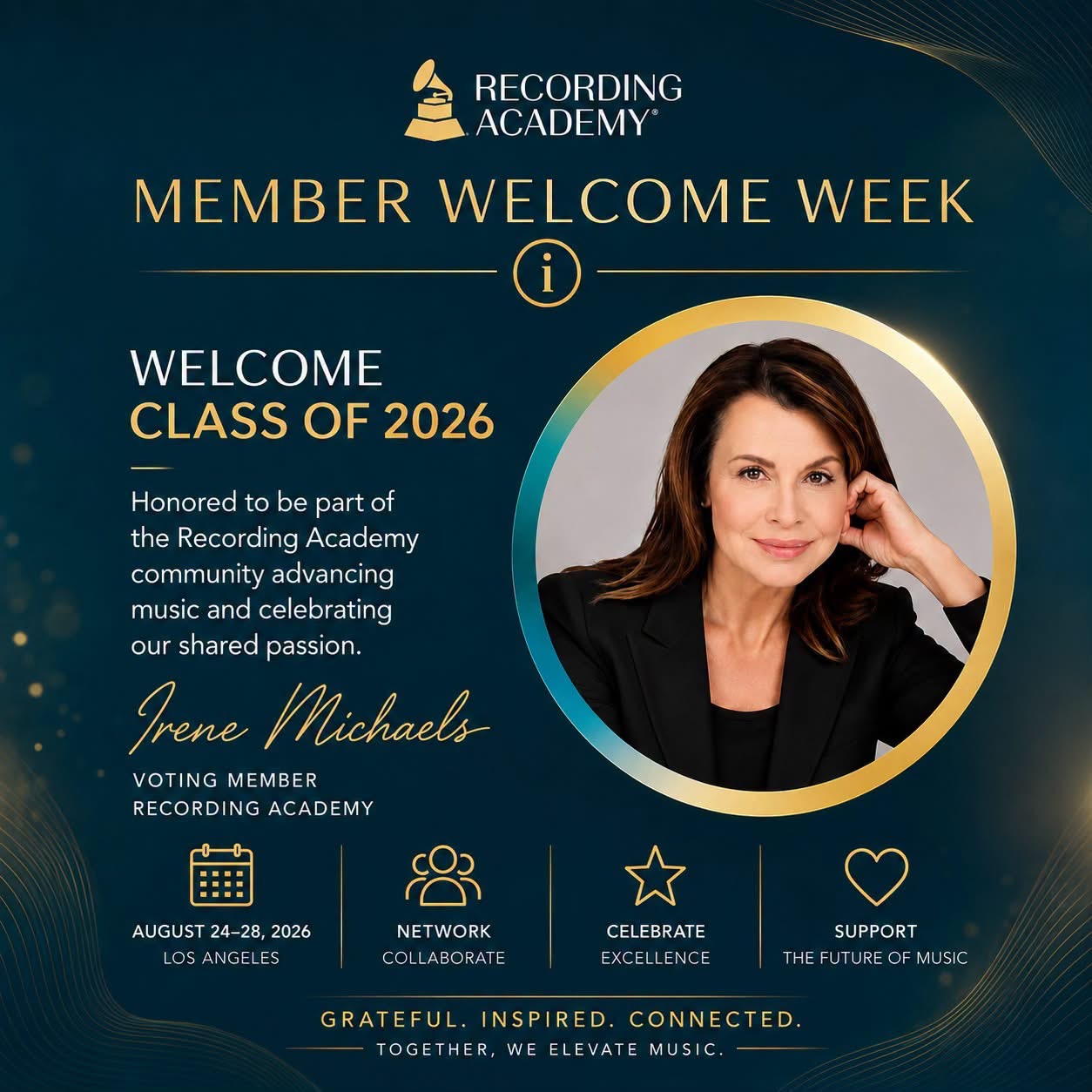
Awards nominations tell an audience an artist’s work has been noticed. Recording Academy Voting Membership tells a different story: that the artist has been recognized as a peer within the industry itself. Irene Michaels was recently named a Voting Member of the Recording Academy — the organization behind the Grammy Awards — and the distinction carries weight well beyond a title on a bio page.
Voting Membership isn’t handed out casually. It’s reserved for performers, songwriters, producers, engineers, and other creators actively working in the recording industry, and it comes with real influence: Voting Members are the people who ultimately determine Grammy nominees and winners each year. For an artist to be recognized at that level is, in effect, the industry saying her work belongs in the same conversation as the artists and professionals shaping the awards themselves.

That’s a meaningful marker for Michaels’ ongoing music career, which has moved from EPs and singles to Josie Music Award recognition and now into this kind of institutional standing. It reframes her not just as an artist building a catalog, but as a working member of the community that evaluates and honors that catalog industry-wide — someone whose judgment on music now carries an official vote.
It also adds context to everything else happening in her 2026: a triple nomination at the 12th Annual Josie Music Awards, an EP in Golden that’s earning recognition on its own merits, and a career that has spent the last several years steadily building credibility as a serious recording artist rather than a novelty comeback story. Recording Academy membership doesn’t arrive for artists still proving themselves — it arrives for artists the industry has already decided are part of it.
For Irene Michaels, whose career has spanned modeling, acting, publishing, and now music across multiple decades, the Recording Academy recognition is less a single headline than another data point in a larger pattern: an artist whose reinvention keeps being met, at every stage, with the industry taking her seriously.
-

 We Speak Events6 days ago
HOT ROD Power Fest Brings Two Days Of Horsepower To Atlanta
-

 We Speak Music5 days ago
Reggie Benjamin Reimagines The Classics On Harmony In Blue: The Duets
-

 We Speak Actors1 week ago
Actress Amber Lily Butterworth on Her Growing Career in Film
-

 We Speak Music6 days ago
TIM WOLF RELEASES BLUES-INFUSED NEW SINGLE “BORN IN A HURRICANE”