We Speak Music
Album Review:Rich the Kid “The World Is Yours”

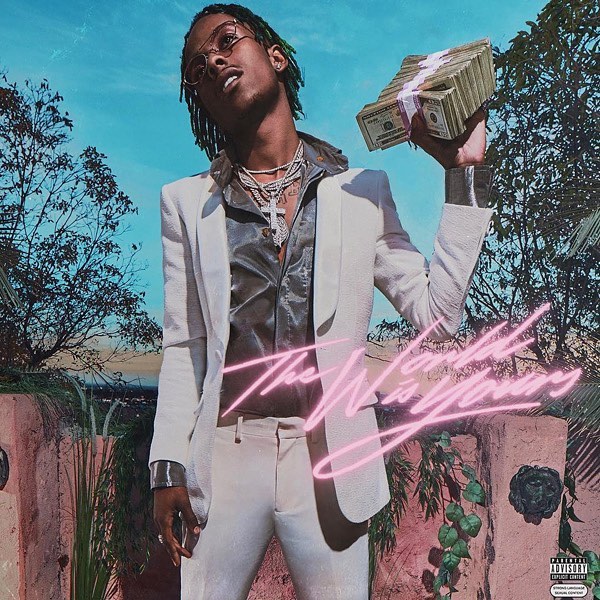
The current generation of rappers, particularly those coming out of the trap music bull market that’s housed in Atlanta, typically arrive onto the scene atop viral hits. Rich the Kid, a demonstrable talent with his own imprint (Rich Forever) rode into the mainstream on a wave of critical enthusiasm and industry interest atop “New Freezer.” That it includes the holy grail of features from Kendrick Lamar suggested that, yeah, Rich’s made it, but the album that came with the explosive single rarely shifts out of a default rap scheme.
While the Rich the Kid we meet on The World Is Yours clearly considers himself a big-leaguer, the album is short on the deftness and polish that was promised on “New Freezer.” He ably deploys the standard stop-and-go triplet flow across its 14 tracks, but does so without ever shifting from a self-limiting rap model, leaning heavily on concussive, bass-heavy beats and lyrical contributions from a bounty of veteran and trend-setting artists.
The title track is a comparatively honest introduction, lacking in the “yuhs” and “ayys” that soon begin to overwhelm and distract. “World Is Yours” lays out the devil-may-care posturing and slight bits of humor (“No Biggie but I used to trap in the Coogi”) that listeners should expect for the next 40-plus minutes. The clarity of the leadoff bleeds into the glut of trap motifs that is “New Freezer,” wherein Rich gladly ingratiates himself with the album’s talking points: money, women, cars, and big jewelry.
Rich shows off his lyrical styling, but even that remains far from revelatory. While his voice suffuses the album, it exhibits only a handful of emotional states. For Rich, who has noted that he does not write his bars down, but rather, “I just go in there and—boom,” his enthusiasm doesn’t make up for his lack of styles and flows. His insistence on rapping about “money, hoes, and clothes” as Biggie waxed 23 years ago puts Rich in a position to get consistently outshone by the many co-signs scattered across the album.
This is pointedly clear on “End of Discussion,”a dismissal of perceived haters that is piqued by a curious beeping sound and the noise of a money-counting machine at work. Lil Wayne does the heavy lifting here with a bodied rollout of well-paced, self-referential rhymes: “Pull of fast like a loose cheetah/One diamond ring on two fingers/Cheating on these hoes, call me Tune-cheater.” He sounds as if he were running a clinic on the song; a rap alum at homecoming mingling with the popular freshman. Meanwhile, Rich is somewhat adrift in his unremarkable feints. It makes the notable absence of female voices significant as woman contribute little to the album save as unnamed dalliances, anonymous tricks, and forget-me-nots.
The exception is “Too Gone,” a track with a metronomic xylophone trill produced by the Canadian beatmaker WondaGurl. Khalid levitates the song with his crooning, modest refrain about being too faded to connect with someone who wants your affection. Rich, though, continues to assail his doubters while suggesting just a bit of openness: “Really not used to you calling me/I’m in love with a coupe.” It’s the greatest concession to romance as we’ll get on the LP.
However, Rich appears in peak form on “Dead Friends,” widely regarded to be a Lil Uzi Vert diss track. The album’s finale has Rich channeling Meek Mill in the drill rap cadence familiar from his mixtape days. The caustic clap backs, even if muddled, are best in the chorus: “All them dead friends (dead), you a middleman (what)/You a little man (little, huh)/Your money getting shorter (shorter).” Given some direction, Rich’s best when he’s got a real target in his sights to slight.
In an album that touts a reputable lineup of producers and contributors, it smarts as Rap Caviar bait rather than as a collective trap triumph. Algorithms are the new inroads to platinum after all. Still, braggadocio is a trap rapper’s default setting, and the kid may be rich now, but The World Is Yours wants for all of its wealth-inspired imagery and allusions to amassed clout.



We Speak Music
SCARECROW’s John Blaze Delivers a Career Milestone With “Twisted” and Earns Josie Music Awards Song of the Year Nomination

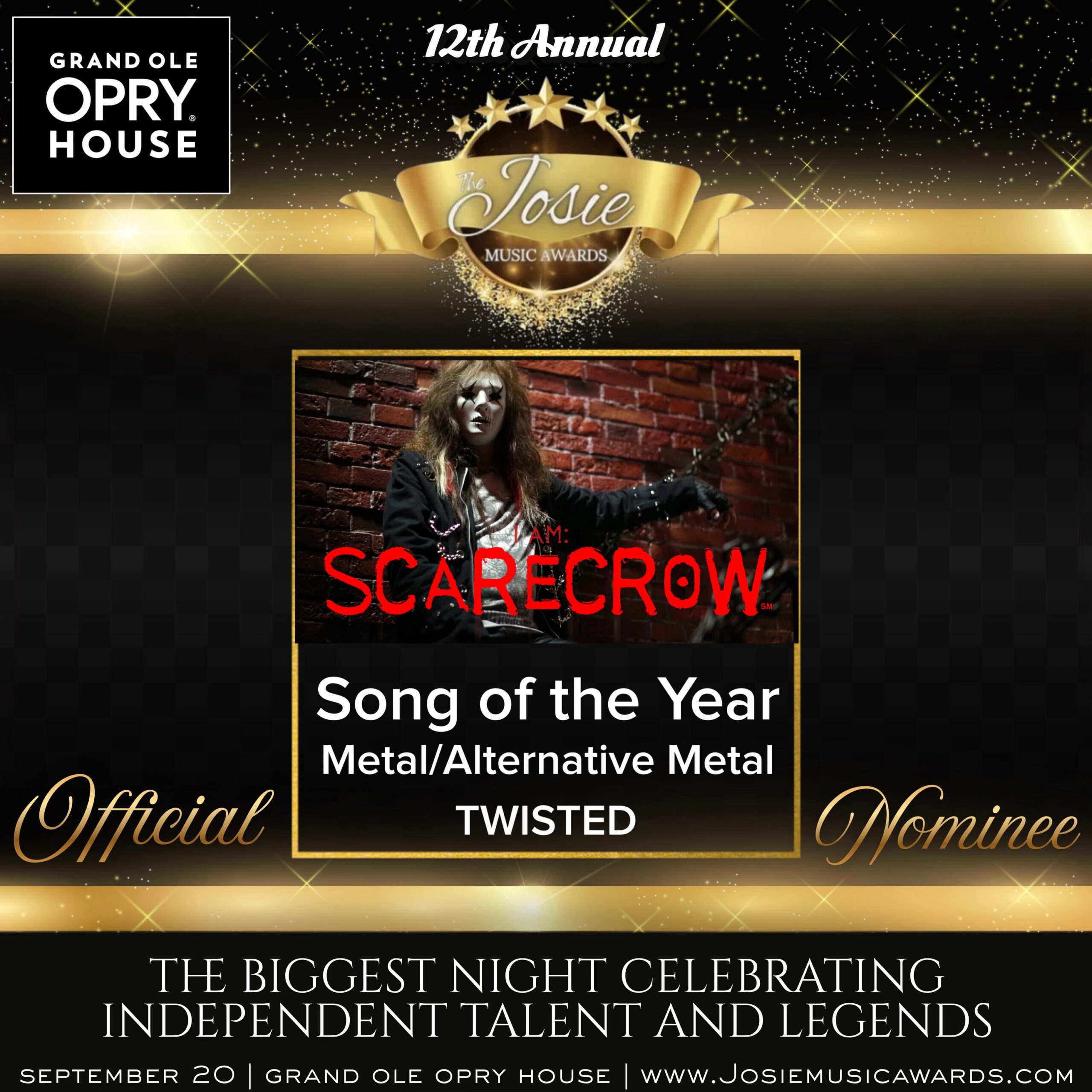
John Blaze has spent nearly four decades fronting SCARECROW, the New York hard-rock outfit he founded in 1989, and in 2026 he delivered one of the most ambitious releases of his career with “Twisted.” Now, the song has reached another major milestone: “Twisted” has been nominated for Song of the Year in the Metal/Alternative category at the Josie Music Awards.
The nomination places Blaze and SCARECROW among this year’s recognized independent artists and songwriters at the Josie Music Awards, with the awards ceremony set to take place at Nashville’s legendary Grand Ole Opry. For an artist whose career has been built on persistence, independence and decades of hard-rock storytelling, the recognition gives “Twisted” an entirely new chapter.

Written by John Blaze and Chaffin, “Twisted” pulls together a lineup of guest players that reads like a rock family reunion, built around Blaze’s long-standing friendship with Dee Snider and the legacy of Twisted Sister, a band woven into SCARECROW’s story from its earliest days.
That connection goes all the way back to the beginning. SCARECROW’s original lineup featured guitarist Eddie Ojeda, best known for his work in Twisted Sister, and the two camps have remained connected ever since. “Twisted” makes that history explicit: Dee Snider appears on the record with guest vocals during the track’s climactic second verse and chorus, lending the song an instantly recognizable jolt of arena-rock power.
Snider isn’t the only marquee name in the credits. Mark Wood, founding violinist of Trans-Siberian Orchestra, contributes electrifying violin work that gives “Twisted” a cinematic sweep uncommon in modern hard rock. Rounding out the track are TJ Jordan on lead guitar and Bobby Marks on drums, creating a powerful, road-tested foundation behind Blaze’s signature gritty vocal delivery.
The Josie Music Awards nomination feels particularly fitting because “Twisted” isn’t simply another SCARECROW release. It brings together different eras of Blaze’s musical life while pushing the band’s sound forward. There’s history in the recording, but there’s also urgency. It doesn’t sound like a band looking backward. It sounds like one with unfinished business.

For Blaze, the nomination also represents recognition of a career that has largely been built outside the traditional machinery of the mainstream music business. Independent rock artists rarely survive for decades without a fierce commitment to what they do, and SCARECROW’s longevity speaks for itself. From the band’s early years and its 1991 debut, through the Blood, Sweat and 20 Years retrospective and the theatrical production I Am SCARECROW, Blaze has continued developing a world around the music rather than simply releasing songs.
That makes the Song of the Year nomination especially meaningful. After nearly four decades of building SCARECROW, Blaze now heads to the Josie Music Awards at the Grand Ole Opry with one of his most ambitious songs recognized in the Metal/Alternative category.
And there’s something wonderfully appropriate about the song that got him there.
“Twisted” connects SCARECROW’s beginnings to its present, reunites Blaze musically with figures tied to the band’s history, and demonstrates just how much fire remains in the project. With Snider and Wood contributing to the record and Blaze still driving the band he created from the ground up, the track feels less like a nostalgic reunion than a statement of survival.
Now it’s also an award-nominated song.
For John Blaze and SCARECROW, nearly four decades into the journey, “Twisted” has become more than another entry in the catalog. It’s a career milestone — and this September, that milestone is taking SCARECROW all the way to the Grand Ole Opry.
-

 We Speak Events6 days ago
HOT ROD Power Fest Brings Two Days Of Horsepower To Atlanta
-

 We Speak Music5 days ago
Reggie Benjamin Reimagines The Classics On Harmony In Blue: The Duets
-

 We Speak Actors1 week ago
Actress Amber Lily Butterworth on Her Growing Career in Film
-

 We Speak Music1 week ago
Dysmusia Keeps “In your eyes” Honest, Warm And Straight To The Point