
We Speak Entertainment
Beyonce’s Dad and Quincy Jones Highlight America’s Colorism Problem

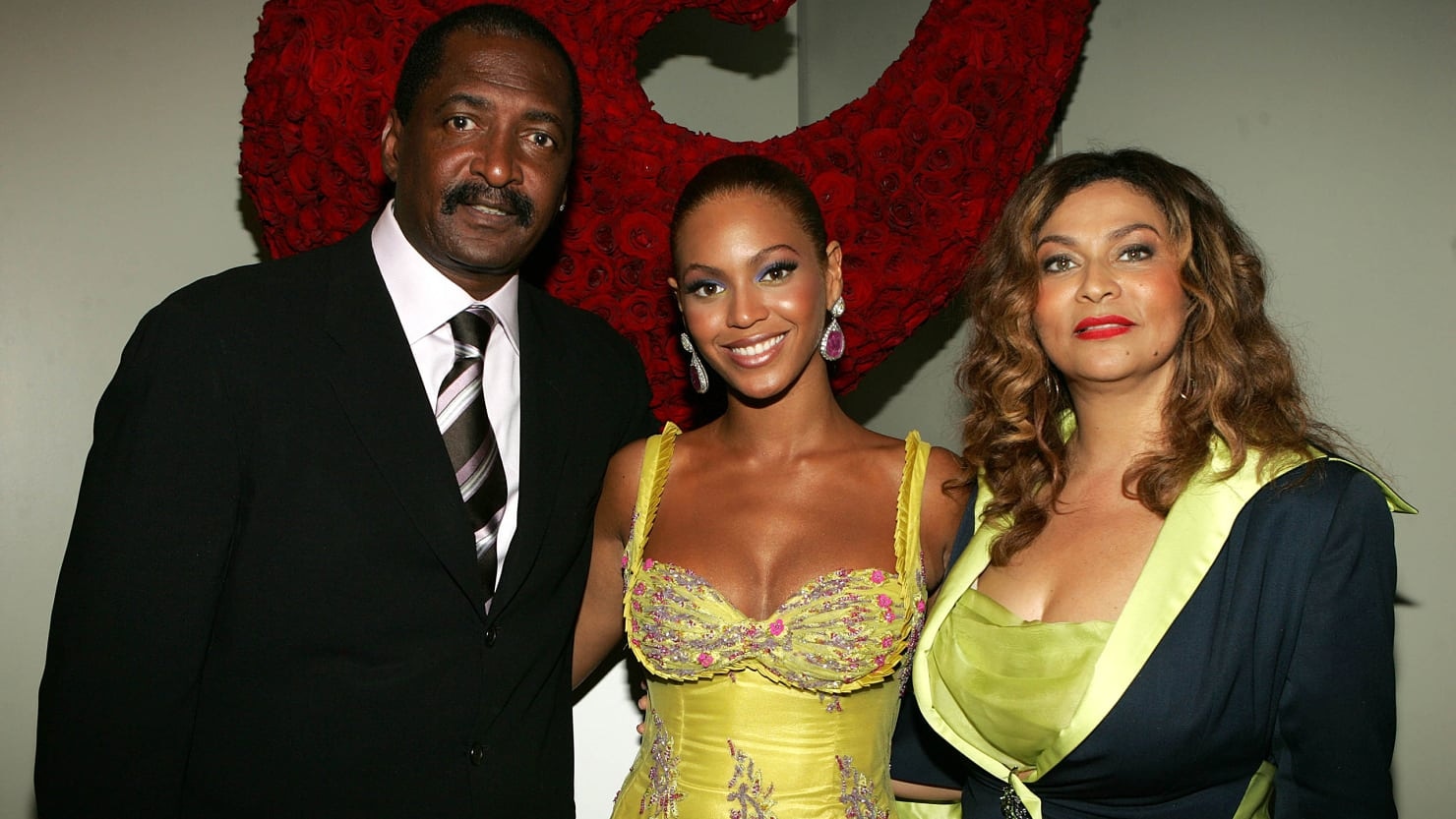
On Feb. 12, 1988, Spike Lee released his second feature film. The acclaimed director from Brooklyn had become one of the most buzzed-about new filmmakers of the ’80s after his 1986 debut, She’s Gotta Have It, and he was following that indie hit with an ambitious musical depicting life on a historically black college campus.
School Daze was, like She’s Gotta Have It, a uniquely black perspective on the nuances of the black experience. In this case, Lee examined the varying degrees of classism and colorism in the world of middle-class black social circles and academia. One of the more memorable elements of School Daze is a rivalry between two female factions on campus: the light-skinned sorority girls The Gamma Rays, aka the “Wannabes,” who are dismissive and derogatory to the darker-skinned non-sorority-affiliated women, who they call the “Jiggaboos.”
Lee’s film was controversial—it was famously skewered by activist/scholar Amiri Baraka as depicting HBCUs as “brown-skinned Animal House”—but it was one of the first mainstream films to directly address colorism within the black community and how it shapes our perceptions of ourselves, how it determines who and what we value. Colorism was once again a topic of conversation this week after an excerpt from a Mathew Knowles interview with Ebony magazine hit the web.
“When I was growing up, my mother used to say, ‘Don’t ever bring no nappy-head black girl to my house,’” Knowles explains. “In the Deep South in the ’50s, ’60s and ’70s, the shade of your blackness was considered important. So I, unfortunately, grew up hearing that message.
“I have a chapter in the book that talks about eroticized rage. I talk about going to therapy and sharing—one day I had a breakthrough—that I used to date mainly white women or very high-complexion black women that looked white. I actually thought when I met Tina, my former wife, that she was white. Later I found out that she wasn’t, and she was actually very much in-tune with her blackness.
“I had been conditioned from childhood. With eroticized rage, there was actual rage in me as a black man, and I saw the white female as a way, subconsciously, of getting even or getting back. There are a lot of black men of my era that are not aware of this thing.”




We Speak Entertainment
Rocky Kramer’s Rock & Roll Tuesdays Presents “The Black Parade” On Tuesday, October 13th, 2026 7 PM PT on Twitch

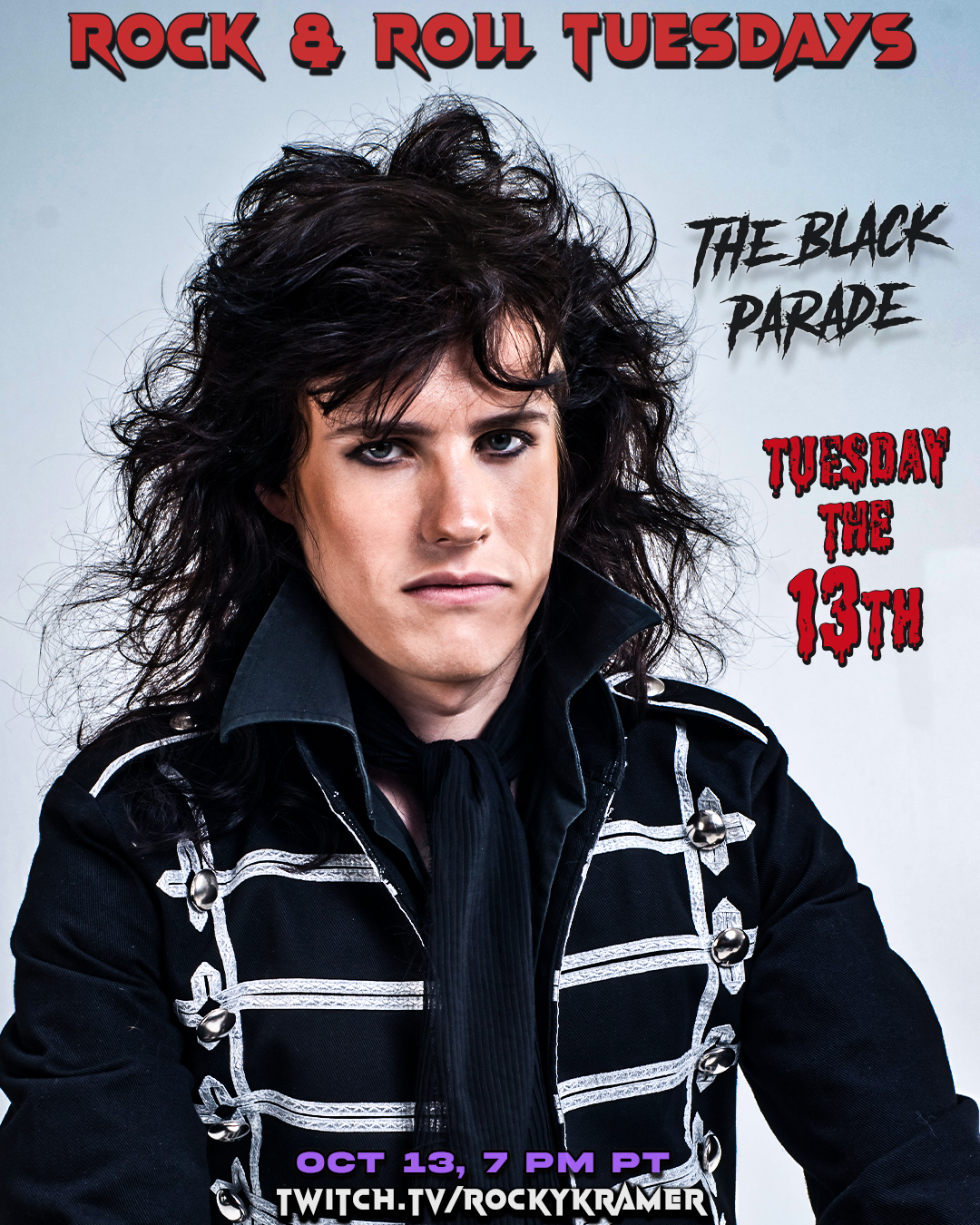
Rocky Kramer will be hosting “The Black Parade” on this week’s episode of Rocky Kramer’s Rock & Roll Tuesdays on Twitch. Tune into Twitch on Tuesday, October 13th, 2026 at 7 PM PT for this amazing show.
Rocky Kramer is a guitar virtuoso, often being compared to the greatest guitar players in the world. Rocky has performed on shows with some of the greatest musicians on the planet including Ozzy Osbourne, John Lodge, Steve Vai, Leland Sklar, Kenny Aronoff, Tommy James, Verdeen White, Ten Years After, BuckCherry, Rick Wakeman and more.
Rocky’s first studio album, “Firestorm” is now available worldwide through Allied Artists Music Group, together with an epic music video of his #1 Global DRT Chart topper single, “Rock Star”, that also picked up a Best Rock Performance nod at the 2019 Hollywood Music In Media Awards (“HMMA”).
Rocky Kramer recently returned to the studio to record his sophomore album “Alone In The Rain” which will be released soon!!!

Rocky Kramer was recently cast in The Mutt Productions/ Allied Artists rock n’ roll time travel comedy adventure “Rockin’ In Time” where he will play the film’s lead character, Lars Olsen. The film is being directed by Aaron Lee Lopez (of the “Teenage Girl” franchise) and is being produced by multi-platinum and six-time Grammy Award winning musician turned motion picture producer, Kurt Wipfli.
Rocky Kramer is now the new lead guitarist in Prescott Niles’ new revival of the legendary band The Knack. Known worldwide for their smash hit “My Sharona,” The Knack helped define the sound of late-1970s power pop and rock. Decades later, the band’s influence continues to resonate with fans and musicians across generations. With Rocky Kramer now joining the lineup, the band is poised to introduce that legacy to a new era of audiences while honoring the spirit that made them legendary.
Watch Rocky Kramer’s “Rock Star” Music Video here:
Watch Rocky Kramer’s Rock & Roll Tuesdays “The Black Parade” on October 13th, 2026, at 7 PM PT on Twitch here:
http://www.twitch.tv/rockykramer
The official website for Rocky Kramer may be found at http://www.RockyKramer.com
Visit Rock & Roll Tuesdays with Rocky Kramer on IMDB here:
-
We Speak Music1 week ago
Mel D makes bittersweetness glow with magnetic new single ‘ORANGE’
-

 We Speak Music1 week ago
Kazimi Shines In New Single ‘Errant Nodes’
-
We Speak Music1 week ago
The Falling Doves release ‘Blinded By Your Love’ ahead of UK, Europe & US tour
-

 We Speak Music1 week ago
Karabo Unleashes New Single ‘Only 4 U’