
We Speak Electronic
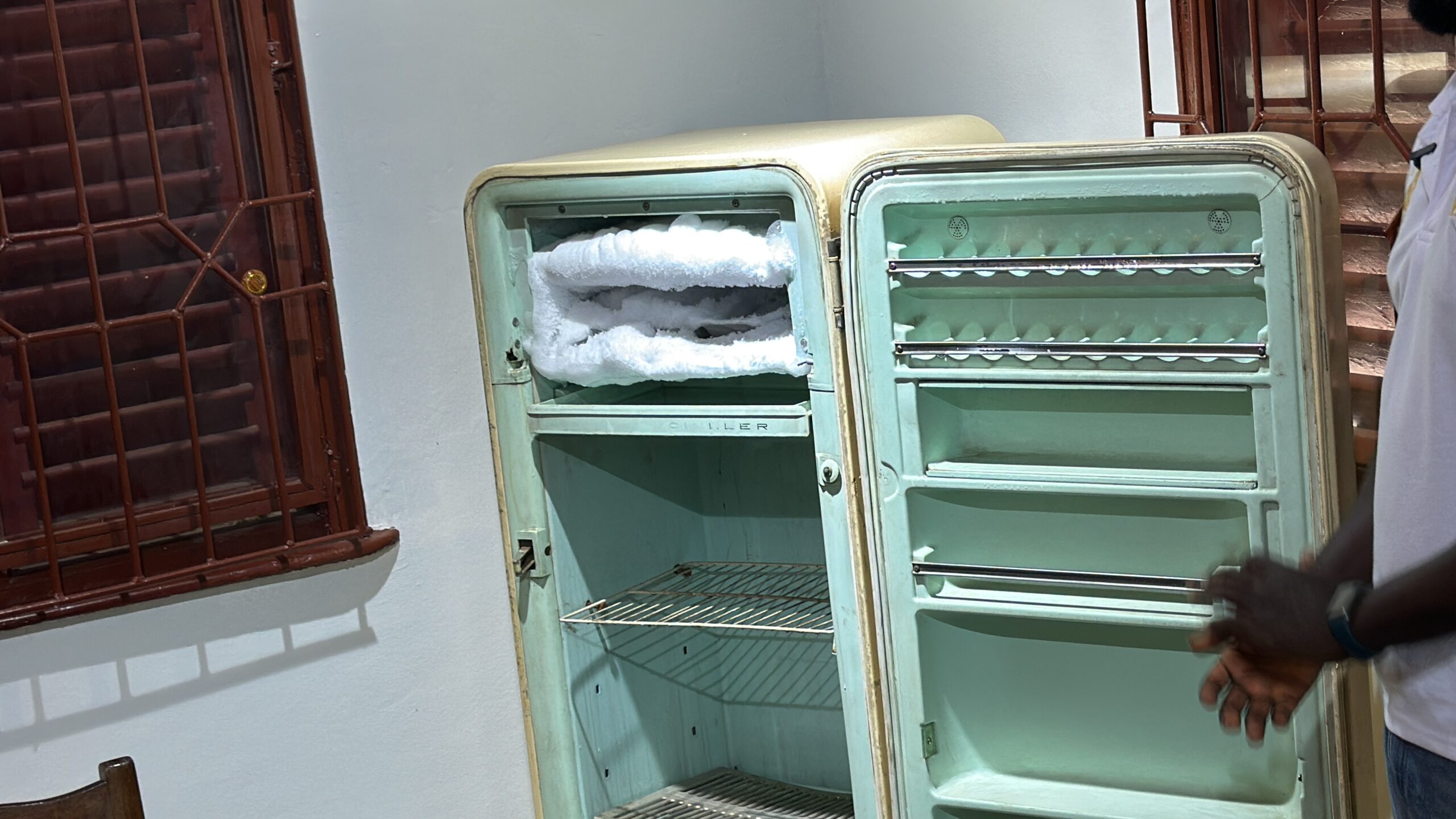
First Fridge in Kumasi in 1950 still works perfectly

The tale of the Manhyia Palace in Kumasi, Ghana, is truly captivating. The moniker “Manhyia,” signifying “gathering of the people,” perfectly encapsulates its role as the official abode of the Asantehene. The palace complex, housing both the old and new structures, embodies a harmonious blend of tradition and modernity. The conversion of the old palace into a museum in 1995 marked a significant milestone in preserving the heritage of the Ashanti Kingdom. Today, the Manhyia Palace Museum not only serves as the dwelling of the current Asantehene but also showcases a diverse array of artifacts and historical treasures that narrate the rich history of the Ashanti Kingdom.
In a video by blogger SkBeatz Records, the first refrigerator in Kumasi, now 74 years old, is showcased. The AMCOR 10 fridge from Israel, originally powered by kerosene, was converted to run on electricity and still works effectively. It was used by Nana Osei Agyeman Prempeh II in 1950. “The only maintenance so far was, it was using a kerosene power and we have converted it to electricity.” The tour guide revealed in his conversations with Blogger Skbeatz Records and his colleagues.
The museum also displays teacups, plates, and bowls used by the king for 39 years, as well as his teapot from the Seychelles Islands.
This video has sparked conversations online, with some people expressing doubt about the claims. The Manhyia Palace Museum is a place one needs to visit.
More from We Speak Media:
- Lee Mendelson Film Production’s 12” Limited Edition Heart-Shaped “Be My Valentine, Charlie Brown” LP Now Available
- Rocky Kramer’s Rock & Roll Tuesdays Presents “American Rock” – Streaming Live July 1st on Twitch!
 Akaba Explore The Space Between Guitars And Synthesisers On Wither Without
 WHO.IS.VITOR Announces New Single ‘Where I Wanna Be Now’
 Scarper Opens the Vault With ‘Off-Cuts (2014–2021)’
 Dnvy Launches a New Era Where EDM Meets Futuristic Reggaeton With ‘Hoy No Contesto’
 Smith-Njigba, Wilson Lead Seahawks Past Chiefs 20-3 on Sunday Night, Handing Kansas City Its First Loss
 Six Straight: No. 12 Kentucky Erases Early Hole to Beat Vanderbilt 34-17
 Texas Holds On This Time: Longhorns Survive Ole Miss Comeback 34-27
 Orsan at the Buzzer: South Carolina Shocks No. 11 Tennessee 27-24 in Columbia





What happens when guitar-led songwriting meets programmed rhythms and layers of synthesisers? On Wither Without, out now via Now Listen, Akaba make that combination central to their second album, building a sound that reaches further into electronic music than their debut, The Rust Within.
The Stockholm trio bring together three distinct contributions. Åsa Carild supplies the vocals and lyrics, Tobias Ljungkvist plays guitar, and Mattias Olsson produces the record. All three share the music credits, giving the nine tracks a collaborative foundation beneath Carild’s personal writing.
The production is particularly important to the album’s character. Synthesised layers and programmed beats sit alongside the guitars rather than simply filling out the arrangements. This gives the songs a different sense of movement, with room for close vocal passages as well as busier, more unsettled sections.
“Go North” offers a clear introduction to the record’s concerns. Its focus on taking another route in life brings questions of departure and belonging into the foreground, without reducing the song to one fixed interpretation.
Across the tracklist, titles such as “Two Rights”, “Mistake” and “Grieve” sit within a wider sequence about a relationship reaching its end. The subject gives the album continuity, while the changing arrangements provide its musical variation.
For Akaba, the shift towards electronic production is more than a change in surface texture. On Wither Without, it becomes an essential part of how the songs communicate, placing the details of the arrangement alongside the writing itself.
More from We Speak Media:
- Kiey Reveals New Album “METROMIRAGE”
- Cut The Cord. Release Debut EP ‘blush.’ And Share The Title-Track Video
WHO.IS.VITOR Announces New Single ‘Where I Wanna Be Now’Scarper Opens the Vault With ‘Off-Cuts (2014–2021)’Dnvy Launches a New Era Where EDM Meets Futuristic Reggaeton With ‘Hoy No Contesto’ Masked London Producer Denimee Chases “Just The Thrill”Smith-Njigba, Wilson Lead Seahawks Past Chiefs 20-3 on Sunday Night, Handing Kansas City Its First LossSix Straight: No. 12 Kentucky Erases Early Hole to Beat Vanderbilt 34-17Texas Holds On This Time: Longhorns Survive Ole Miss Comeback 34-27Orsan at the Buzzer: South Carolina Shocks No. 11 Tennessee 27-24 in Columbia
-

 We Speak Jazz3 days ago
Toronto Jazz Singer Ori Dagan Announces First Live Album ‘Live in the Market’ for October 23 Release
-

 We Speak Comedy4 days ago
Nate Bargatze Plays Rexburg Tomorrow, Then Settles Into Las Vegas on the Record-Breaking Big Dumb Eyes Tour
-

 WE Speak MMA4 days ago
UFC 334: Gane vs. Hokit, Harrison vs. Nunes Title Fights Set for November 14 at Madison Square Garden
-

 We Speak Movies2 days ago
AFI Fest 2026 Opens in Hollywood: Laika’s ‘Wildwood’ Kicks Off the Festival’s 40th Edition