
We Speak Tennis
From First Serve to Final Set: Alvin Nicholas Tudorica’s Pursuit of Purpose and Perfection in Tennis

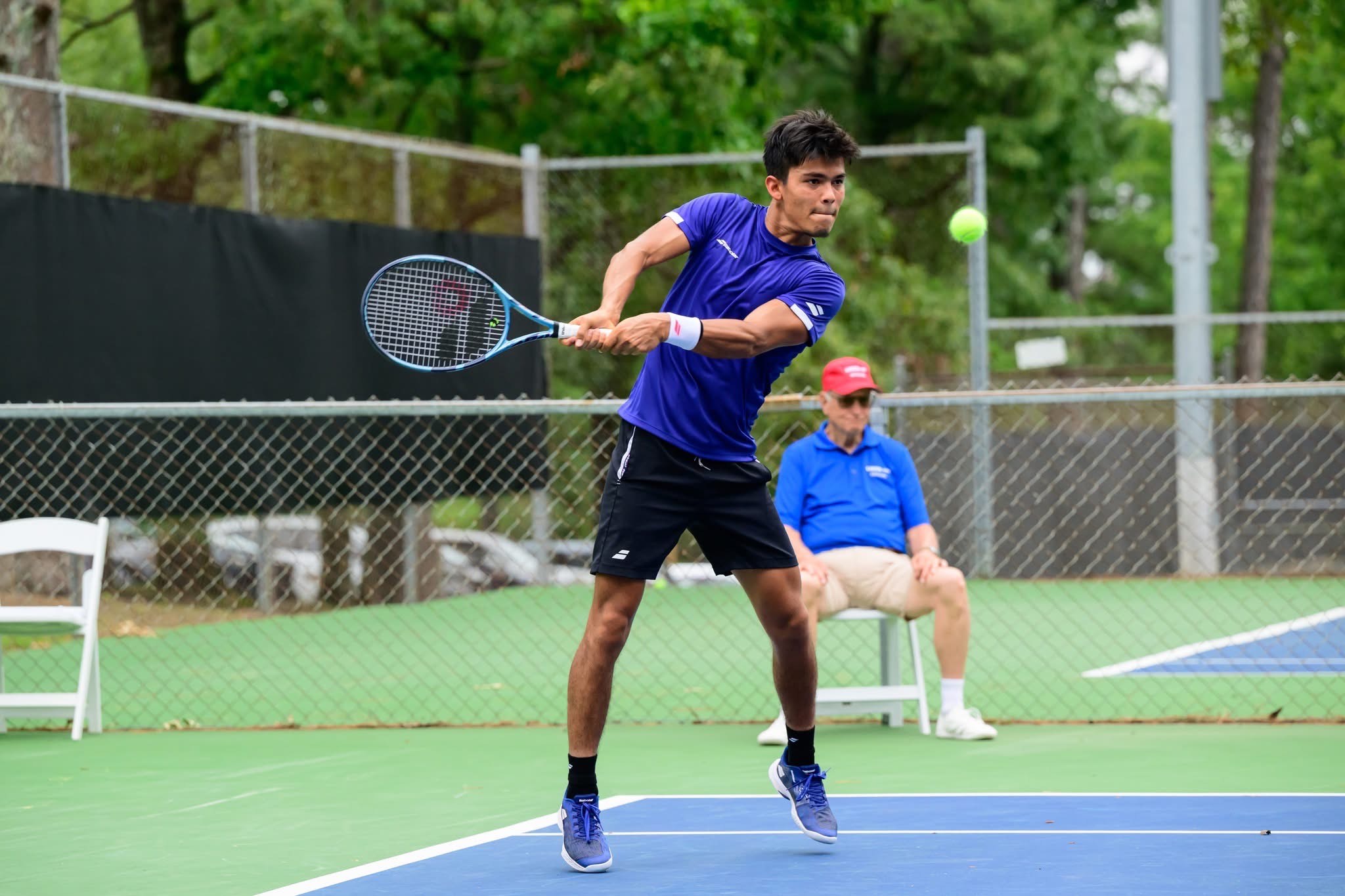
Alvin Nicholas Tudorica is more than just a rising force in the world of tennis he’s a testament to resilience, self-belief, and the power of persistence. From picking up a racket at age five alongside his sister, to battling through moments of doubt, anxiety, and even thoughts of walking away from the sport, Alvin’s journey is fueled by passion and a mindset transformation that redefined his approach to the game. With no full-time coach or training base, he has carved his own path, leaning on grit, self-discipline, and a deep love for the sport to earn his place among professionals. His story is a powerful reminder that success isn’t always about having the perfect setup, it’s about heart, courage, and committing fully to the process.
What age did you start playing tennis and what got you into the sport?
I started playing tennis at the age of 5. My dad got me into the sport. I have a sister who’s two years older, and we both started around the same time. My dad would bring us to the courts and that’s how it all began.
Who was your biggest influence or role model when you started playing tennis?
I’ve never really idolized anyone, but if I had to choose someone, I’d say Rafael Nadal. He’s also a lefty and is known for his incredible work ethic and mental toughness.
What’s your current training routine like during the season?
This past year, I’ve been training quite a bit at the University of South Florida, where I played college tennis. I join team practices or train on my own with guys from the team. I don’t have a set base or a personal tennis or fitness coach right now, so I figure things out as I go.
How do you prepare mentally before a big match?
Recently, I’ve taken a much more relaxed approach. I used to get really stressed and didn’t talk to anyone before matches, but I got tired of feeling that way. Now, I try not to care too much about the result and just commit to playing my game. That shift has helped me enjoy the game more and led to some of my best wins of the year.
What’s your favorite shot to hit on the court and why?
My favorite shot is the backhand down the line. I’ve always loved my backhand, and there’s nothing more satisfying than finishing a point with a clean winner down the line.

Which surface do you prefer playing on—hard, clay, or grass?
I grew up playing on hard courts, so that’s definitely my preferred surface. All my best results have come on hard. I’ve never played on grass, but maybe I’d like it even more—though I doubt it.
What’s the most memorable match you’ve ever played in?
I have a few, my first is probably when I came back from 1-6,1-4 down to win 1-6,7-6,6-4 against the number 1 from USC at the time to make the quarter finals of fall nationals my senior year. Another one is of course when I won my first pro title, I played very good that week and had a convincing win in the finals 6-2,6-3. My last one is say is when I won my second pro title, this one is meaningful because I had a heartbreaking loss the week before having a match point so to win the very next week without dropping a set and 7-6,6-4 in finals was an unreal feeling and definitely one I’ll never forget.
How do you handle losses and bounce back from tough matches?
I used to take losses really hard and let them affect me mentally. But with my new mindset of caring less and focusing more on my process, I’ve become better at moving on. In tennis, unless you win the whole tournament, you’re going to lose. So I just take the lessons and move on.
What do you consider your biggest strength on the court?
Shot-wise, definitely my backhand. Outside of that, my speed and movement are big strengths, along with my mental toughness and ability to fight back in tough moments.
What part of your game are you currently working on the most?
I’m really focused on developing a bigger serve, both first and second. I need to get more free points on serve to elevate my game.
Who is your favorite professional tennis player and why?
Right now, I’d say Jannik Sinner. The way he strikes the ball and plays so close to the baseline is incredible. He just powers through opponents.

What’s the best piece of advice a coach or teammate has ever given you?
To enjoy the journey, not just the final destination. It’s easier said than done, but embracing that mindset has made the pro life more enjoyable.
Do you follow a specific nutrition plan or routine during tournaments?
Not really. I try to avoid obviously unhealthy food or drinks, but I’m not super strict. I eat what I like while trying to stay somewhat healthy.
What off-court workouts or activities help you stay in shape?
I enjoy playing other sports—soccer with friends, shooting hoops, snowboarding in winter, even skateboarding. I like staying active in fun ways.
How do you balance academics or work with your tennis commitments?
In school, I managed my time well and always worked ahead so I wasn’t stressed out last-minute. Now that I’ve graduated, tennis is my full-time job.
What’s the biggest challenge you’ve had to overcome in your tennis journey?
The mental lows. I’ve had times when I seriously considered quitting. I’d get anxiety attacks before matches just thinking about how I couldn’t continue if tennis felt that way forever. I’ve been lucky to avoid major injuries, but the mental battles have been tough.
How do you stay motivated during long training sessions or tough periods?
It helps to focus on enjoying the process. I also keep things fresh—I don’t train for crazy hours. I prefer shorter, high-quality sessions, maybe followed by some fitness, and then I’m done for the day.
What are your short-term and long-term goals in tennis?
I don’t set specific ranking goals. Instead, I focus on improving certain areas of my game, like my serve and forehand. If I improve those, the results will follow. My main goal is to continue enjoying life as a professional tennis player.

Do you prefer singles or doubles? What do you enjoy about each?
I definitely prefer singles—it’s what I grew up playing and dreaming about. But I do enjoy doubles too, especially because it’s more relaxed and I get to play with friends.
What’s one pre-match ritual or superstition you always follow?
I’m not very superstitious, but I always listen to music before matches.
How important is team support or having a strong community in your tennis journey?
While I’ve done most things alone especially in this past year—traveling, training, dealing with challenges, and making adjustments— I still stay in touch quite a bit with my old coaches from the school I played for (USF). They help me at times when with some parts of my game or with the overall tour life. I’m also very lucky to have supportive parents who help me financially and emotionally. Their support means a lot.

If you could play a match against any player, past or present, who would it be?
Most people would want to play their idol, but I don’t like losing—and realistically, I’d get destroyed by someone like Nadal or Sinner. So maybe I’ll answer this one once I get better.
What’s the one tournament you dream of competing in one day?
Roland Garros. My family in Europe has always said they want to watch me play there. Really, any Grand Slam would be surreal.
Outside of tennis, what are your hobbies or interests?
Like I mentioned, I enjoy playing pretty much any sport—soccer, basketball, snowboarding. I just love being active.
What advice would you give to younger players just starting out?
Do it because you love it. Find your “why” early. If you genuinely enjoy the sport and the day-to-day grind, handling the tough moments and losses becomes much easier.
Whether you’re a coach, athlete, parent, or sports fan, I’d love to hear from you. Have a story idea? Want to collaborate on coverage? Looking to feature your team or athlete? Use the form below to get in touch.


We Speak Tennis
Katsiaryna Starastsenka: From Court to Community, A Tennis Journey of Passion and Resilience

Katsiaryna Starastsenka started playing tennis when she was five years old. Her parents introduced her to the sport, and her mom, who used to play when she was younger, especially encouraged her to try it. From the very first moments on the court, Katsiaryna fell in love with tennis. She loved the feeling of moving, competing, and pushing herself to improve every day, even as a child. Tennis quickly became much more than just a sport for her; it became a way of life. It has opened so many doors, from competing internationally to studying and playing at the NCAA Division I level, and it has helped her meet people from all over the world. The friendships, lessons, and experiences tennis has given her are things she will carry with her forever.
What age did you start playing tennis and what got you into the sport?
I started playing tennis when I was five years old. My parents introduced me to the sport, and my mom, who used to play when she was younger, especially encouraged me to try it. From the very first moments on the court, I fell in love with tennis. I loved the feeling of moving, competing, and pushing myself to improve every day, even as a child. Tennis quickly became much more than just a sport for me; it became a way of life. It has opened so many doors, from competing internationally to studying and playing at the NCAA Division I level, and it has helped me meet people from all over the world. The friendships, lessons, and experiences tennis has given me are things I will carry with me forever.

What’s your current training routine like during the season?
I graduated last year from Sacred Heart University, where I played NCAA Division I tennis. Back then, our coaches would plan everything for us—from our training blocks to our gym sessions and match preparation. It was a structured environment that helped me grow as a player. Since graduating, I’ve been creating and managing my own training routine, which has been both challenging and rewarding. During the season, I usually start my day with a morning training session and match play from 9 to 11. After that, I go to the gym for strength work or do conditioning to keep up my fitness. In the afternoons, I practice again from 3 to 5, focusing on drills or match play to keep my game sharp. I also like to add a pool session when I can for recovery. It’s been a new experience to take full ownership of my training, and I enjoy the process of balancing hard work with listening to what my body needs.
How do you prepare mentally before a big match?
Mental preparation has always been a big part of my approach before a match. I like to take time to visualize how I want to play, going through different scenarios in my mind so I feel prepared for whatever comes. I also use breathing techniques to calm my mind and keep my focus on the present moment rather than the outcome.
During my tennis career, I realized how much mindset impacts performance, which led me to author two research papers: ‘How Techniques That Help Develop Mental Strength in Individual Sports Such as Tennis Can Be Applied to Dealing With Everyday Stresses and Challenges That Require Resilience’ and ‘Psychological Mechanisms of Reproduction of Intensity and Freedom of Movement in Tennis Matches: Transfer of Training Effectiveness to Competitive Conditions.’ Writing these works deepened my understanding of how mental strength developed through sport can be applied to life challenges, and how training intensity and freedom of movement can be transferred to competitive environments.
Before a big match, I remind myself to trust the work I’ve put in, to focus on one point at a time, and to stay grateful for the opportunity to compete. This mindset helps me stay composed and adaptable under pressure, both on and off the court.

Which surface do you prefer playing on—hard, clay, or grass?
I’ve had the chance to play on all three surfaces, but I definitely prefer hard courts. I love the balance it offers between speed and consistency, and it suits my game style well, allowing me to be aggressive while also constructing points patiently when I need to. I grew up training mostly on hard courts, so it feels the most natural to me, and I enjoy the clean bounce and the rhythm I can find on this surface. At the same time, I appreciate the unique challenges that clay and grass bring, and I always see playing on different surfaces as an opportunity to grow and develop different parts of my game.
What’s the most memorable match you’ve ever played in?
One of the most memorable matches I’ve ever played was the semifinals of the NEC Conference in 2023, when our team at Sacred Heart University made it to the finals for the first time in program history. It was such a special moment for us. It had been raining, so the match was moved indoors, and because indoor courts were limited, as the No. 1 singles player, I was the first to go on court. It meant I was setting the tone and energy for the entire team, and I could feel the responsibility and excitement of that moment. I remember focusing on staying composed and bringing positive energy, knowing that how I approached the match would impact everyone. We fought hard that day, and making it to the finals was a testament to the hard work and belief we had in each other as a team. It’s a memory I will always carry with me, not just for the result, but for the unity and pride we felt together.
What do you consider your biggest strength on the court?
I would say my biggest strength on the court is my fighting spirit. I always fight for every point and run for every ball, no matter what the score is. I take pride in never giving up and making my opponent earn every point. Another strength is my ability to stay calm in any moment, whether I’m leading or facing challenges in a match. I’ve learned to manage my emotions, focus on the present, and keep a clear mind, which helps me make good decisions under pressure. I believe these qualities have been key to my success and allow me to compete with resilience and consistency.

What’s the best piece of advice a coach or teammate has ever given you?
One of the best pieces of advice a coach gave me was to smile even after losing a point. It sounds simple, but it helps me regroup quickly and keeps me from getting stuck in frustration. It allows me to reset mentally, think clearly about what I can adjust in that situation, and stay positive while looking for solutions. My coach also encouraged me to keep being aggressive with my shots and to look for openings in my opponent’s game, even when things aren’t going perfectly. That combination of staying calm, maintaining a positive mindset, and continuing to play proactively has made a big difference in how I handle challenges on the court.
What off-court workouts or activities help you stay in shape?
To stay in shape off the court, I like to mix up my workouts to keep things interesting and cover all aspects of fitness. I spend a lot of time in the gym focusing on strength training, and I include plyometrics and sprint drills to build explosiveness and speed. Because I live almost right on the beach, I also love using the ocean for recovery and cross-training—swimming in the pool and ocean helps with my endurance and keeps my body fresh. The variety in my routine keeps me motivated and balanced physically.
How do you balance academics or work with your tennis commitments?
Balancing academics with tennis was never a challenge for me—it’s something I’ve been used to since a very young age. At Sacred Heart University, I maintained a perfect 4.0 GPA while competing at the NCAA Division I level, which required strong discipline and effective time management. I was honored to be nominated for the NCAA Woman of the Year award, recognizing not only my athletic achievements—like NEC Player of the Year, Rookie of the Year, and leading our team to its first-ever conference championship final—but also my academic excellence and community involvement.
Volunteering with organizations like First Serve Bridgeport and mentoring young athletes were important parts of my college experience. Juggling these commitments felt natural because I had built these habits early on, and my passion for both learning and tennis motivated me every day. That balance has shaped me into a resilient and disciplined person who is ready to take on any challenge.
How do you stay motivated during long training sessions or tough periods?
During long training sessions or tough periods, I stay motivated by focusing on small improvements in each session. I remind myself that every practice is an opportunity to learn and get better, which keeps me engaged and invested even when things get challenging.
My research on how mental strength develops in individual sports has helped me understand the importance of breaking down big goals into manageable steps and staying present during practice. This mindset helps me maintain focus and resilience. Instead of getting overwhelmed, I try to approach every drill or workout with curiosity and a desire to improve, which makes the process more rewarding and sustainable.

What are your short-term and long-term goals in tennis?
Right now, my short-term goal is to keep building my ITF points by playing in as many tournaments as I can and getting better with every match. It’s all about gaining experience and staying consistent, both physically and mentally.
Long-term, I really want to make it to big events like the Miami Open. Since I currently live here, Miami feels like home, and playing in such a huge tournament in my own city would mean so much to me. It would be amazing to compete on that stage against some of the best players in the world and show what I’m capable of.
I know it takes a lot of patience and persistence, but I’m ready to put in the work and keep moving forward one step at a time.
Do you prefer singles or doubles? What do you enjoy about each?
I prefer singles, but I definitely enjoyed playing doubles, especially during my college tennis experience at Sacred Heart University. I competed and earned awards in both singles and doubles, including NEC Player of the Year, Rookie of the Year, Scholar-Athlete of the Year, and consistent ITA Division I Scholar-Athlete honors, while helping lead our team to its first-ever conference championship final and an undefeated regular season.
Singles allows me to rely completely on myself, using my strategy and resilience to build points, which I love. At the same time, doubles brought me a lot of joy in college, especially since my doubles partner was also my best friend. We had such a strong connection on court that we always knew what each other was doing without saying much, making doubles a fun and energizing part of match days. It was also the perfect pump-up before singles, helping me get into the right mindset while enjoying the teamwork and quick reactions that doubles requires.
How important is team support or having a strong community in your tennis journey?
Team support and having a strong community have been absolutely crucial throughout my tennis journey. Even though tennis is often seen as an individual sport, the encouragement, advice, and energy from coaches, teammates, and mentors make all the difference.
During college, being part of a team that believed in each other helped me push through tough moments and celebrate successes together. Our bond gave me confidence and motivation to keep improving. Beyond the court, the support network also helped me balance academics and personal life.
One of the most rewarding experiences was volunteering with First Serve Bridgeport, where I helped create a welcoming and supportive environment for underprivileged kids. I worked to build their confidence and foster teamwork, showing them how tennis can be a tool for personal growth and community connection. Helping those kids feel part of a team and encouraging their passion reinforced for me just how important community is—not only for athletes but for everyone.
Having that sense of community creates a positive environment where everyone lifts each other up, which is essential not only for performance but also for long-term passion and growth in the sport.
What’s the one tournament you dream of competing in one day?
The one tournament I’ve always dreamed of competing in is the US Open. Growing up, I watched it every year and was inspired by the energy of the crowd, the atmosphere, and the level of competition on those courts. Since moving to the U.S. and competing in college tennis, that dream has only grown stronger.
One of the most special experiences I’ve had was when our college coach arranged for our team to spend a day training on Arthur Ashe Stadium, the central court of the US Open. It was incredible to stand on that court, feel its energy, and imagine competing there one day. We also had the opportunity to play some of our college matches on the US Open courts, which made the dream feel even closer and more real. It would mean so much to me to compete in the US Open in front of a home crowd and test myself against the best players in the world on that stage.
What advice would you give to younger players just starting out?
My advice to younger players just starting out is to focus on loving the game above all else. Tennis can be tough, with ups and downs, but if you truly enjoy playing and competing, it will keep you motivated through challenges. Always work on building good habits early—whether it’s practicing consistently, staying disciplined with your training, or learning to manage your emotions on court.
Don’t be afraid to make mistakes; they’re part of the learning process. Listen to your coaches and surround yourself with supportive people who want to see you grow. Finally, remember that tennis is not just about winning matches—it’s about developing resilience, patience, and confidence that will help you on and off the court. Enjoy every moment and trust the journey.
Whether you’re a coach, athlete, parent, or sports fan, I’d love to hear from you. Have a story idea? Want to collaborate on coverage? Looking to feature your team or athlete? Use the form below to get in touch.
-

 We Speak Music1 week ago
National Gospel Recording Artist Ellen Hayes Announces the Release of Her Farewell Album, Behind My Eyes
-
We Speak Music1 week ago
Mel D makes bittersweetness glow with magnetic new single ‘ORANGE’
-

 We Speak Music1 week ago
Kazimi Shines In New Single ‘Errant Nodes’
-

 We Speak Music1 week ago
Karabo Unleashes New Single ‘Only 4 U’