
We Speak Music
Kety Fusco restores a forgotten name with ‘FÜR THERESE’, her harp reinterpretation of Beethoven’s ‘FÜR ELISE’


“Both evocative and frightening, triggering brand new emotions that have never been explored before with harp music.”- Wonderland Magazine
“Most compelling is the steampunk techno she creates by treating her wooden harp with hairpins, wax and sticky tape, like a prepared piano, to create percussive effects”- The Guardian
With her second studio album, ‘BOHÈME’, Kety Fusco transforms the harp into an entirely new voice, redefining what this instrument can represent in the contemporary music landscape. This is not just music: it’s a vision. It’s an invitation to explore a sound world that has never existed before.
Every sound in ‘BOHÈME’, which follows acclaim for Kety’s music from BBC 6 Music, The Guardian, Wonderland and more in the UK, originates from the harp, yet nothing is as it seems. Sound manipulations, underwater recordings, and unconventional techniques create a unique musical language, far from traditional boundaries. Among the boldest experiments, Kety literally submerged herself in a pool to record the sounds of the harp underwater, turning the instrument into a medium for narrating the unexpected. This daring approach shines in the opening track, ‘Hi, this is Harp’, a manifesto of sonic avant-garde.
Following her recent single ‘SHE’ ft. Iggy Pop which gained heavy rotation on BBC 6 Music, Kety’s next single is a powerful non-album track that is a reinterpretation of a Beethoven’s ‘Für Elise’, which restores the forgotten title ‘Für Therese’ to the work. Beethoven composed ‘Für Therese’ in 1810, as his deafness worsened. He could no longer hear well and knew he would soon lose his hearing completely. Yet, he continued to compose. Music was no longer what he could hear, but what he imagined. Therese Malfatti was the woman to whom he dedicated the piece. He loved her, but she did not love him back. No love story, no happy ending. And to make matters worse, years later, her name was erased by mistake. A copyist miswrote the title, and ‘Für Therese’ became ‘Für Elise’. Therese vanished from history, replaced by a name that had nothing to do with her. Beethoven, deaf and forgotten, could not even defend his own music.
Kety Fusco did not want to simply play ‘Für Elise’. She wanted to restore Therese to her rightful place. But she did not do it with a sweet and delicate piano. No. She did it her way. Her ‘Für Therese’ is not nostalgia, not perfection. It is a broken, distorted, living sound. The harp does not accompany, it shouts. It is not background music; it is a punch to the stomach. Because this is not a love story. It is a story of error, of loss, of a man who composed beyond his deafness and of a woman whom history erased.
The story fascinated Kety Fusco as it is the story of a mistake that became destiny, just as in music, when a sound escapes the score and transforms into something new. Kety Fusco comes from the classical world. She studied sheet music with precision, followed the rules of orchestral tradition. But she also learned that music is not just what is written, it is what remains between the notes, the sound that escapes conventions. ‘Für Therese’ is exactly that: a piece born in a specific era, with a clear identity, but one that was later misinterpreted, transformed, and distorted. Beethoven wrote it while already struggling with his hearing, relying on the sonic memory he had inside, fighting against an inevitable physical limit. Therese Malfatti, his muse, disappeared due to a simple transcription error, replaced by a name that was never hers. Now, Für Therese has its name back.
Kety Fusco has experienced the same tension between tradition and revolution. After years of academic training, she felt the need to push the harp beyond its predetermined fate, to transform it into a rebellious voice, capable of scratching, breaking expectations, and becoming the protagonist of a new sonic universe. That is why her ‘Für Therese’ is not just a reinterpretation but a restoration. A journey into the fragility and strength of a forgotten story. It is tradition breaking apart and recomposing itself into something new. It is the past returning, but with a sound that has never been heard before.
Discovering the harp at just 6 years old, Kety Fusco’s magnetic talent has now taken her to iconic stages such as the Royal Albert Hall, the Montreux Jazz Festival, the Swiss Federal Parliament, and the prestigious Euro Jazz Festival in Mexico. With over 200 concerts worldwide, Kety has redefined the role of the harp, bringing it to the most unexpected contexts: from the Notte della Taranta to the United Nations, and even on a tour of South America for the Swiss Embassies.
An unstoppable composer and creator, Kety has written soundtracks for a film and a documentary set to be released in 2025, as well as composed the theme music for the Rai Radio3 program Voci in Barcaccia. Her original works are a manifesto of artistic freedom, captivating audiences with their fusion of tradition and avant-garde. In 2024, she served as the Swiss juror for the Eurovision Song Contest, adding another milestone to her path of international excellence. The year 2025 promises to be a year of great achievements: in September, ‘BOHÈME’ will be released, solidifying Kety Fusco as a revolutionary figure in the global music scene.



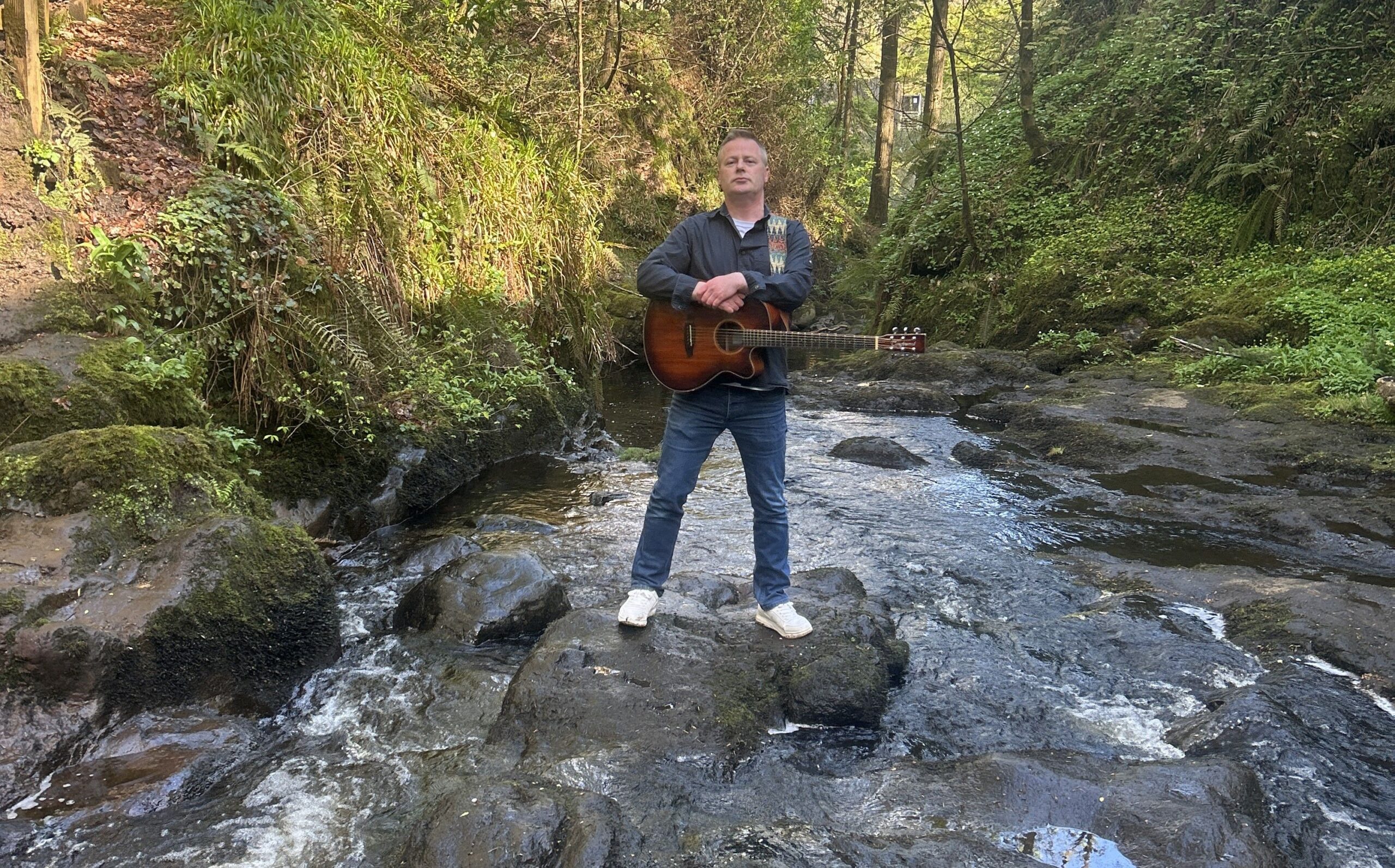
It is easy to see why a songwriter might be drawn to a story like this. Relationships rarely finish as neatly as people would like, and the space between “it is over” and “maybe we should try again” can produce plenty of material. For Dysmusia, that space becomes the setting for latest single “In your eyes”, out now through Now Listen.
The Irish singer-songwriter has a knack for keeping his writing close to everyday life, and this track benefits from that approach. He looks at an old relationship that has already gone through several attempts at making things work, then focuses on what happens when those feelings start creeping back in.
What makes the song appealing is the balance between sincerity and a lighter touch. Dysmusia is clearly invested in the situation, but he does not turn every moment into a grand declaration. There is room for a bit of humour and hesitation along the way, which keeps the song feeling natural.
The arrangement gives the song a pleasing lift. Acoustic guitar sits at the heart of it, with the dropped tuning adding some richness and a second guitar bringing extra colour. The result has folk at its core but carries enough indie-rock influence to give it a little extra punch.
Dysmusia’s Irish background is another part of the picture. Based between Antrim and Dublin and coming from a musical family, he has developed a style that puts storytelling alongside contemporary guitar sounds.
“In your eyes” brings those influences together without making a fuss about them. It is a personable, melodic track about feelings that refuse to follow a neat timetable, delivered with enough warmth to make the story easy to get behind.
-
We Speak Music1 week ago
NP York releases powerful new indie single ‘As bold as a heart’!
-

 We Speak Hip-Hop1 week ago
Omen44’s “Land of Plenty” Delivers Substance in a World Full of Noise (Video)
-
We Speak Music1 week ago
Wes Banderson celebrate the music of Wes Anderson films with four special UK shows this September!
-

 We Speak Hip-Hop1 week ago
Chuck Platinum Continues Building His Legacy With Beats in the Attic Volume 4