
We Speak Music
An Interview with Camari Knox

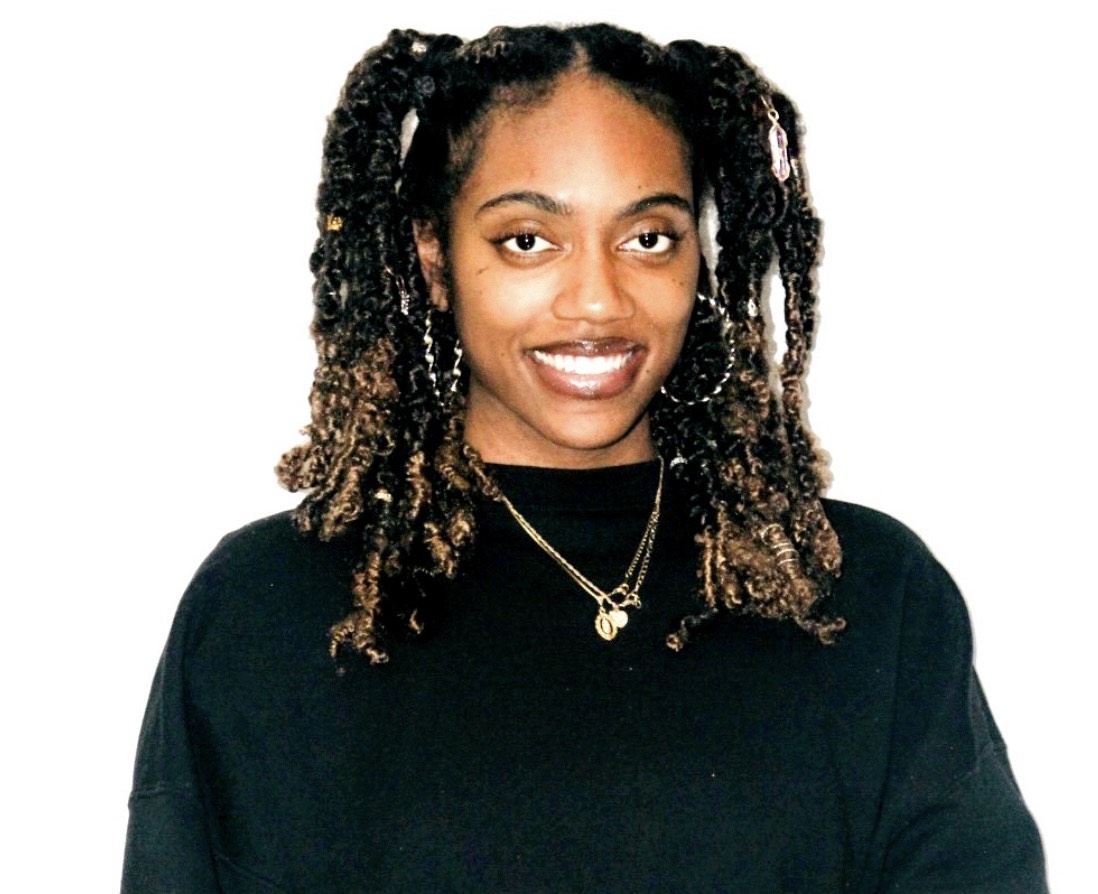
Your book’s title is striking—The Silence of Snow Is So Loudly Deafening. Can you share the meaning behind it and how it frames the emotional landscape of the collection?
To me, snow acts as a blanket over such a chaotic and busy world. It quiets the environment and makes it soft. That is what writing the contents of this book felt like for my world. At the time of writing, I was an extremely emotionally reserved person—and therefore silent—yet my thoughts were still there and frenzied. Collectively, each poem brings together this motif. The concept of my book title acts as a definition for my style of poetry.
You mention that the book was crafted over two decades of self-examination. What prompted you to finally publish these poems now?
By two decades worth, I’m hinting at how my book mirrors my life thus far. The themes carried throughout my poems implicate how I have untangled all of the reality I have experienced as well as brushes on moving forward from the point I was at mentally.
Many of your poems deal with trauma, introspection, and identity. Was writing this collection a therapeutic process for you, or did it serve a different purpose?
Writing this book was absolutely a therapeutic experience! As mentioned in the book, releasing it felt like a healthy sever between who I was in my late teens to who I am now in my early 20s. The contrast in such a relatively short difference in time is a profound turning point. Between writing and editing the book, I was able to feel that mental transformation that can be so easily overlooked and under appreciated.
You describe your work as a mirror rather than a map. What do you hope readers will see in that mirror?
I wanted my book to be less individualized and absolute. I wanted my writing to have a more unlocked perspective so my readers could engage with themselves through the words. This is very intentional. I also wanted the audience to go through a self-realization journey—which is precisely the way I have my chapters set up.
You write for readers who “tough love never really worked for.” How does your poetic voice challenge or redefine traditional ideas of healing and support?
My writing, in this book, is directly illustrative of the most effective help I’ve ever received and for me, that’s the art of receiving a dual-natured love. I appreciate the fact that there are nuances to people in how they digest outside involvement in their lives as well as getting support. In my writing, I found a balance of being blunt and sympathetic which is both a happy and practical medium!
Which poem in the collection do you feel most vulnerable sharing—and why?
Hmm, good question. I’d say the poem I named “For The First Time Ever”; the emotion I wrote about here was a projection of how I thought I would feel in the future. Then, the time came where the future became present and it’s exactly what I experienced. Rereading it was such a profound moment that I will always contemplate. It remains such a stirring piece for me, both then and now. To me, it’s one that transcends time.
As a self-published author, what were some of the challenges you faced in bringing this project to life, and what did the process teach you about yourself as a writer?
I was self-published as it gets and that meant doing every step by myself. From doing research to finding the time to market my book, I felt engulfed in trying to make it as perfect as possible. I believe there’s a weight that comes with being an independent writer by trying to overcompensate for the fact that I didn’t have a full team or even the time to put as much effort in my art as I wanted. There were some aspects of the process that I had to be okay with being average—especially while juggling college work as well. With that being said, my number one challenge was surprisingly formatting the poems. It took a lot of tweaking and even calculating to get my poems in the standard layout that they are in. Trust me, I learned the importance of practicing patience and gained the spirit of perseverance.
You draw inspiration from poets, novelists, and philosophers. Are there specific writers or thinkers who shaped your perspective while writing this book?
Considering I wrote this when I was 18 and in a very vulnerable position, I was impressionable to most literary works. My top inspiration at the time was Robert Wright, he wrote an intriguing book on the evolutionary psychology of humans named The Moral Animal; this changed my outlook on life and jump started my love for philosophical reading. I find myself referring to plenty of concepts I found in that book.
Your work walks the line between silence and noise, repression and truth. How do you approach balancing emotional restraint with emotional release in your writing?
I’d say the restraint comes in the form of not explicitly stating what exactly I have healed from. I simply was not in a place where I would feel comfortable widely sharing the exact details of my trauma, per se. For this book, I wanted to communicate my truth through how I perceived my experiences and the type of person I saw in myself.
Now that The Silence of Snow Is So Loudly Deafening is out in the world, what conversations are you hoping it will spark—either in readers or in the wider literary community?
I’d love to see matters of morality, introspection, and empathy being discussed across all levels—whether that’s internally or externally. I genuinely hope people digest the message of self forgiveness that I conveyed through my writing. I want my readers to know how irreplaceable they are regardless of their past, present, and any future personal conflicts. If one reader can say, “Oh, I’ve experienced this feeling before but hey she got through it—so I can too”, I would undeniably feel immense fulfillment.
More from We Speak Media:





Kiey is ready to take his sound beyond borders with METROMIRAGE, an ambitious third album that finds the Vietnamese independent artist bringing together alternative pop, R&B and electronic music in a polished yet deeply personal package. Across five distinct sonic and emotional dimensions of his wider artistic vision, Kiey leans into atmospheric production, intimate vocals and melodic songwriting that feels built for late-night listening. There is an appealing balance between the record’s sleek contemporary finish and its willingness to explore the messier corners of human connection. Rather than relying on explosive choruses alone, Kiey creates momentum through layered textures, subtle rhythmic shifts and melodies that gradually settle into the listener’s consciousness. His English-language approach gives the project a global pop sensibility, but the emotional core remains personal, drawing listeners into moments of romantic uncertainty, fleeting attraction and introspection. METROMIRAGE feels like the work of an artist who understands the importance of sonic identity, delivering a cohesive collection that pairs modern production with songwriting grounded in genuine feeling.
At the centre of the album’s wider appeal is ‘fun fiction’, featuring Cece Trương, a breezy, city-pop-inflected collaboration that captures the excitement of an unexpected connection. Acoustic instrumentation blends effortlessly with R&B rhythms and electro-pop details, creating a relaxed groove that feels both contemporary and nostalgic. Kie’s understated vocals provide a reflective counterpoint to Trương’s charismatic delivery, with their interplay giving the track the feeling of an intimate conversation unfolding against the lights of a bustling city. Its references to late nights in Shinjuku add a cinematic quality, transporting the listener into a world where romance feels spontaneous and full of possibility. What makes the collaboration particularly effective is its balance of distinct personalities, with neither artist overwhelming the other. Instead, their voices complement one another, allowing the song’s easygoing production and infectious melody to carry the narrative. It is a standout moment that demonstrates Kie’s knack for accessible songwriting while revealing how naturally his sound can accommodate another artist’s perspective.
Elsewhere, Kiey turns towards more introspective territory, exploring the emotional residue of encounters that linger long after the moment has passed. ‘white boy i sat next to on a plane’ pairs subdued vocals with piano-pop textures, sultry R&B influences and carefully layered harmonies, creating a song that feels intimate without becoming overly sentimental. Its unusual title invites curiosity, while the production gives the track a dreamlike quality that mirrors the fleeting nature of its subject. ‘plan thiet’ continues this more delicate approach, placing Kie’s voice at the forefront of a piano-led arrangement that allows every melodic inflection to register. These quieter moments provide an important counterbalance to the album’s more expansive pop instincts, demonstrating that Kiey does not need maximal production to make an emotional impact. Meanwhile, ‘unloveable’ leans into a fuller alt-pop sound, building its emotional tension through a broader sonic palette. Together, these tracks create a compelling portrait of an artist navigating the contradictions of intimacy, from the thrill of possibility to the uncertainty of feeling worthy of love.
One of the album’s biggest strengths is the consistency of its creative direction. Kiey’s involvement in the production process and visual development gives METROMIRAGE a unified identity, with its cool-toned aesthetic reflecting the music’s blend of melancholy, romanticism and modern electronic sheen. Each track occupies its own emotional space, yet the production maintains a clear thread throughout, allowing the album to feel cohesive without becoming repetitive. The melodies remain approachable, but there is enough detail in the arrangements to reward listeners who return for another spin. That balance is particularly important for an artist working across several genres, where the temptation to chase different sounds can sometimes dilute a project’s personality. Kiey avoids that pitfall by keeping the focus on mood and songwriting, using electronic elements to enhance the emotional atmosphere rather than overshadow it. The result is a record that feels deliberately crafted, with a clear understanding of how individual songs can contribute to a larger artistic statement.
Ultimately, METROMIRAGE establishes Kiey as a compelling independent voice within a global pop landscape that increasingly welcomes artists working beyond traditional industry centres. Its greatest strength lies in the way it brings together polished production and vulnerable songwriting, creating music that can function as both an easy melodic escape and a more intimate listening experience. ‘fun fiction’ offers an immediate entry point, but the album’s quieter moments reveal the depth of Kie’s creative instincts, particularly his ability to capture the emotional significance of encounters that might otherwise seem insignificant. There are moments when the restrained delivery leaves the listener wanting a more dramatic payoff, yet that understatement is also central to the project’s identity. Kiey is interested in atmosphere, nuance and the lingering feelings that exist between life’s defining moments, and the music reflects that perspective with clarity. With METROMIRAGE, he delivers a confident, internationally minded body of work that expands his sonic horizons while keeping his own voice firmly in focus. It is an encouraging step forward for an artist whose ambition is matched by a clear sense of creative purpose.
More from We Speak Media:
-

 We Speak Jazz18 hours ago
Toronto Jazz Singer Ori Dagan Announces First Live Album ‘Live in the Market’ for October 23 Release
-

 We Speak Boxing2 days ago
Most Valuable Promotions Announces MVPW-07: Four World Title Fights Headlined by Baumgardner vs. Turhan in Arlington
-

 We Speak Dining & Drinks3 days ago
Off The Rails Opens in Boston, Bringing Nashville-Inspired Dining, Live Music and High-Energy Entertainment Downtown
-

 We Speak Comedy2 days ago
Nate Bargatze Plays Rexburg Tomorrow, Then Settles Into Las Vegas on the Record-Breaking Big Dumb Eyes Tour