
We Speak Music
Hannah Schneider teases new album with vibrant new single ‘Lighthouse’


At a time when AI is taking over the music industry, Hannah Schneider takes a different path on her new album ‘In This Room’ which is scheduled for release in Spring 2026. In a desire for human presence in the recording process, Hannah invited musicians she admired into her residency at the historical Thorvaldsens Museum in Copenhagen to create music.
’If these walls could talk, what would they say?’ was the inspiration behind the process. There, in the Thorvaldsens Museum, the composition and recording phase was turned on its head to investigate what happens when acoustic orchestral instruments are the very starting point. The new music is based on string effects, organic sounds, breathing and overtones, and is a distinctive mix of electronic beats, catchy melodies and modern compositions.
Produced with longtime collaborator Christian Balvig (When Saints Go Machine, and arranger for BBC Proms) and featuring Efterklang frontman Caspar Clausen, and drummer and vocalist Øyunn, amongst others, Hannah Schneider’s new record see’s her in a new lane to her previous critically acclaimed solo albums, but with the same brilliance that has established her as as one of the strongest voices in Denmark throughout her career. Her music has been used extensively in film, television and on some of the largest theater stages in Scandinavia and in 2023 and 2024 she won the Danish composers prize ‘Carl Prisen’ together with the contemporary jazz duo Kaleiido, for her work on the albums “Elements” and “Places”.
As a composer, Hannah has made a strong mark in recent years, where she has created commissioned pieces for several of the essential museums and cultural institutions across Denmark. From 2016-2021, Hannah was one half of the electronic duo AyOwA, which combine noise pop with vapor wave and melodies with improvisation in an atmospheric and playful mix with a dreamy approach. The duo has received international attention with their remarkable sound and songs, and has received airplay from BBC Radio 1 and BBC 6 Music and press acclaim from The Huffington Post, Wonderland Magazine and Clash to name a few. Hannah is also part of the performance duo Philip | Schneider, who create seductive spatial compositions and installations that engage the body, ears and mind. Starting from the voice, they explore the boundaries between the worlds of music and art.
All of these recent developments and experiences have fed wonderfully into ’In This Room’, the first taster of which is Hannah’s vibrant new single ‘Lighthouse’,which she’s now ready to unveil. Bursting with anticipation, ’Lighthouse’ describes the dizzying state of waking up in the middle of a troubling dream. With swirling strings and electronic beats, the track captures the listener in a chilling embrace.



We Speak Music
SCARECROW’s John Blaze Delivers a Career Milestone With “Twisted” and Earns Josie Music Awards Song of the Year Nomination

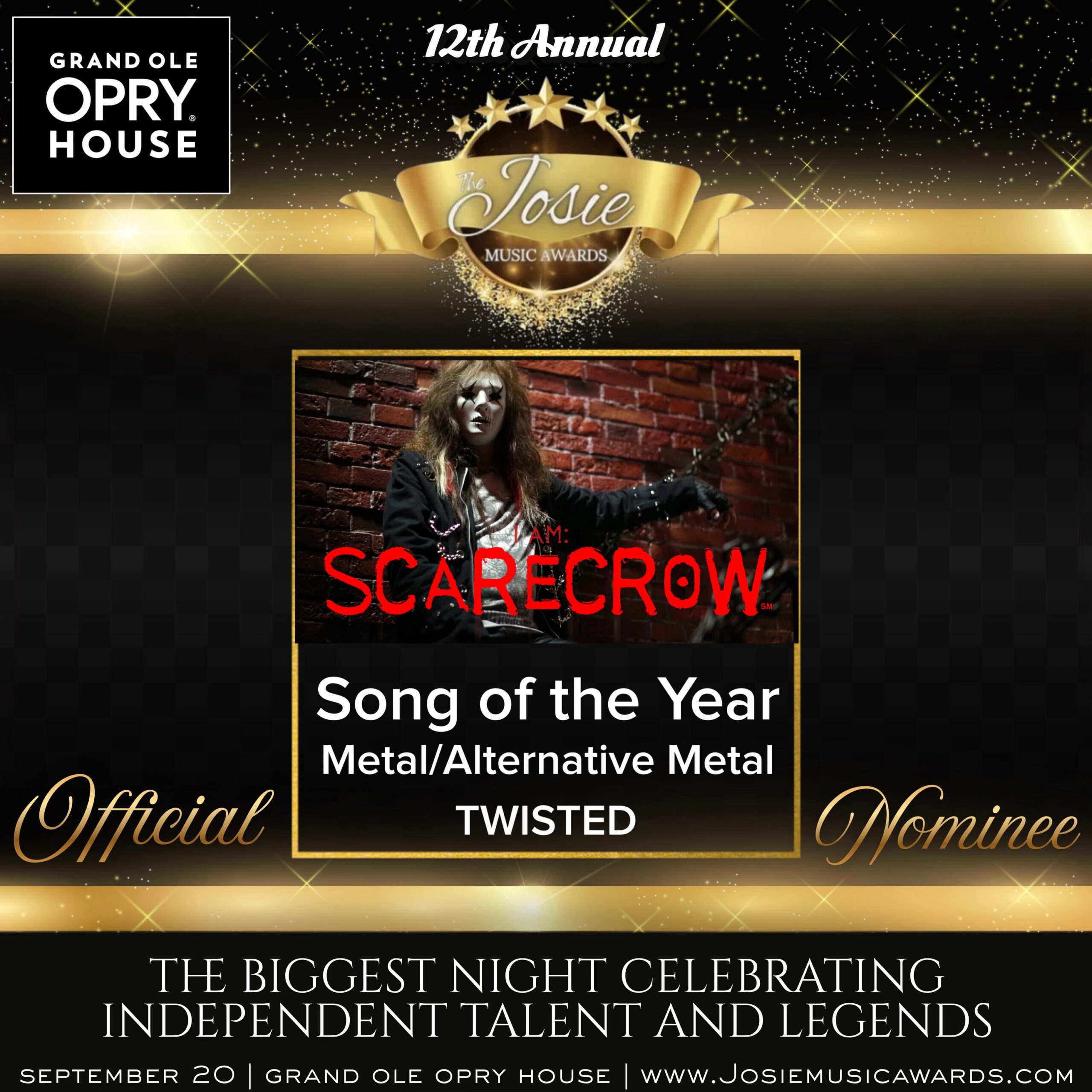
John Blaze has spent nearly four decades fronting SCARECROW, the New York hard-rock outfit he founded in 1989, and in 2026 he delivered one of the most ambitious releases of his career with “Twisted.” Now, the song has reached another major milestone: “Twisted” has been nominated for Song of the Year in the Metal/Alternative category at the Josie Music Awards.
The nomination places Blaze and SCARECROW among this year’s recognized independent artists and songwriters at the Josie Music Awards, with the awards ceremony set to take place at Nashville’s legendary Grand Ole Opry. For an artist whose career has been built on persistence, independence and decades of hard-rock storytelling, the recognition gives “Twisted” an entirely new chapter.

Written by John Blaze and Chaffin, “Twisted” pulls together a lineup of guest players that reads like a rock family reunion, built around Blaze’s long-standing friendship with Dee Snider and the legacy of Twisted Sister, a band woven into SCARECROW’s story from its earliest days.
That connection goes all the way back to the beginning. SCARECROW’s original lineup featured guitarist Eddie Ojeda, best known for his work in Twisted Sister, and the two camps have remained connected ever since. “Twisted” makes that history explicit: Dee Snider appears on the record with guest vocals during the track’s climactic second verse and chorus, lending the song an instantly recognizable jolt of arena-rock power.
Snider isn’t the only marquee name in the credits. Mark Wood, founding violinist of Trans-Siberian Orchestra, contributes electrifying violin work that gives “Twisted” a cinematic sweep uncommon in modern hard rock. Rounding out the track are TJ Jordan on lead guitar and Bobby Marks on drums, creating a powerful, road-tested foundation behind Blaze’s signature gritty vocal delivery.
The Josie Music Awards nomination feels particularly fitting because “Twisted” isn’t simply another SCARECROW release. It brings together different eras of Blaze’s musical life while pushing the band’s sound forward. There’s history in the recording, but there’s also urgency. It doesn’t sound like a band looking backward. It sounds like one with unfinished business.

For Blaze, the nomination also represents recognition of a career that has largely been built outside the traditional machinery of the mainstream music business. Independent rock artists rarely survive for decades without a fierce commitment to what they do, and SCARECROW’s longevity speaks for itself. From the band’s early years and its 1991 debut, through the Blood, Sweat and 20 Years retrospective and the theatrical production I Am SCARECROW, Blaze has continued developing a world around the music rather than simply releasing songs.
That makes the Song of the Year nomination especially meaningful. After nearly four decades of building SCARECROW, Blaze now heads to the Josie Music Awards at the Grand Ole Opry with one of his most ambitious songs recognized in the Metal/Alternative category.
And there’s something wonderfully appropriate about the song that got him there.
“Twisted” connects SCARECROW’s beginnings to its present, reunites Blaze musically with figures tied to the band’s history, and demonstrates just how much fire remains in the project. With Snider and Wood contributing to the record and Blaze still driving the band he created from the ground up, the track feels less like a nostalgic reunion than a statement of survival.
Now it’s also an award-nominated song.
For John Blaze and SCARECROW, nearly four decades into the journey, “Twisted” has become more than another entry in the catalog. It’s a career milestone — and this September, that milestone is taking SCARECROW all the way to the Grand Ole Opry.
-

 We Speak Events7 days ago
HOT ROD Power Fest Brings Two Days Of Horsepower To Atlanta
-

 We Speak Music5 days ago
Reggie Benjamin Reimagines The Classics On Harmony In Blue: The Duets
-

 We Speak Actors1 week ago
Actress Amber Lily Butterworth on Her Growing Career in Film
-

 We Speak Music6 days ago
TIM WOLF RELEASES BLUES-INFUSED NEW SINGLE “BORN IN A HURRICANE”