
We Speak Financials
Ohtani’s $700 Million Deal, Explained: Why He Takes $2 Million a Year for Now

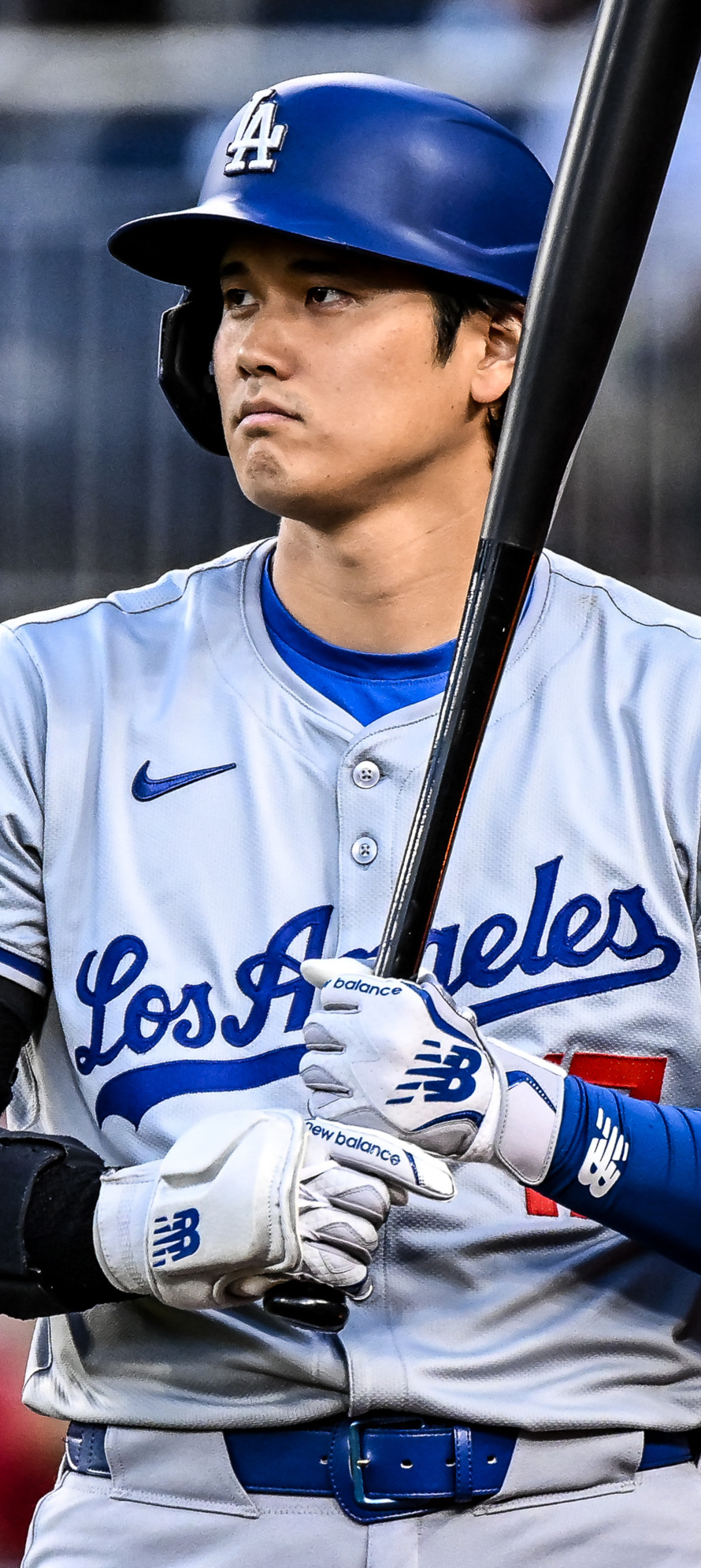
Shohei Ohtani’s contract with the Los Angeles Dodgers is easy to read wrong. The headline says one number. His paycheck, for now, says a very different one. Both are true, and the gap between them is the whole story.
In December 2023, Ohtani agreed to a 10-year contract worth $700 million with the Dodgers, according to details obtained by The Associated Press. On paper, that works out to annual salaries of $70 million, according to The Associated Press.
Most of the money comes later
Here is the part that makes the deal unusual. Of each year’s $70 million salary, $68 million is deferred, with no interest, according to The Associated Press. Deferred is a plain word for a simple idea: the money is earned now and paid later.
So Ohtani receives $2 million a year during the playing years of the contract. The Associated Press reported he will receive just $20 million of the $700 million over the first 10 years, with $680 million payable from 2034 to 2043. When those later payments start, they come in equal installments each July 1, at $68 million a year, according to The Associated Press.
In plain terms: $2 million a year for 10 years, then $68 million a year for 10 years. That is the full $700 million, paid over 20 years instead of 10.
Why a player would agree to wait
A contract is not only about the total. It is also about timing. By taking most of his pay after the playing years end, Ohtani left the Dodgers with more room to pay other players while he is on the team. A stronger roster around him helps the team compete now, which is the period Ohtani can affect on the field.
There is also a cost to waiting. Because the deferred money carries no interest, according to The Associated Press, a dollar paid in 2038 does not buy what a dollar paid today buys. That is why the same contract can have two honest values: the $700 million promised, and a lower value in today’s terms.
Baseball’s own accounting shows that difference. For purposes of the luxury tax, the contract is valued as a yearly addition to the Dodgers’ payroll of about $46 million, according to The Associated Press — not the full $70 million a year, because so much of the money arrives so far in the future.
Not the only deferred deal in Los Angeles
The Dodgers have used the same tool with other stars. The Associated Press reported that Ohtani’s contract, combined with those of Mookie Betts and Freddie Freeman, raises the Dodgers’ total deferred money owed to the three players to $857 million from 2033 to 2044, and noted there is no limit, under the collective bargaining agreement, on how much a contract can defer.
That is the lesson in this deal for every fan who sees a headline number. Ask two questions. How much is promised in total? And when is it actually paid? With Ohtani, the answers are $700 million in total, according to The Associated Press, and most of it long after the last game covered by the contract has been played.
 Paramount Posts Its First Numbers After the $110 Billion Warner Bros. Deal
 The Lakers Sale Closes In on a Record $12.5 Billion Valuation
 Miami’s Malachi Toney Turns a Scam Scare Into a Deal With JPMorgan Chase
 Trent Williams Cashes In Again With a $50 Million Extension in San Francisco
 Molly Curnow Talks ‘Klara and the Sun’, Working with Jenna Ortega and Finding Her Confidence on Set
 Ovrkast Brings the Still Striking Tour to The Echo in Los Angeles on December 1
 Ragin’ Cajuns Basketball Takes Over the Cajundome With Nine Men’s Home Dates and Eleven Women’s Home Dates
 Coastal Carolina Comes to Our Lady of Lourdes Stadium for the Ragin’ Cajuns Home Finale on November 21


Paramount has given Wall Street its first look at life after the biggest merger in entertainment. In its third quarter earnings report on Monday, November 9, the first since closing the $110 billion combination with Warner Bros. Discovery, Paramount reported a profit of $73 million on revenue of $7 billion, as growth in streaming and the studio business offset continued declines in traditional television.
The streaming numbers carry the report. Paramount+ revenue grew 21 percent to $2.13 billion, and the service added 600,000 subscribers in the quarter to reach 82.2 million. Counted together, Paramount+, HBO and HBO Max now reach 203 million subscribers worldwide. The direct to consumer business as a whole posted a profit of $225 million, with revenue up 11 percent to $2.5 billion. The studio segment was the other bright spot, with profit of $129 million and revenue up 23 percent to $1.5 billion, helped by licensing and content produced for third parties.
The merger math is where the pressure sits. Skydance shared plans to generate at least $6 billion in cost savings across areas including real estate, labor, technology, marketing and procurement. Because the Warner Bros. Discovery deal did not close until the fourth quarter, its results were not consolidated into this report, so the combined company’s real baseline arrives next quarter.
The product roadmap is already set. HBO Max and Paramount+ will launch as a bundle in early 2027 and will be merged onto the same technology backend within the first year after closing. Starting in the fourth quarter, the company will also stop disclosing subscriber numbers on a quarterly basis, a change that shifts attention from subscriber counts to revenue and profit per user.
Paramount said it remains on track for the high end of its 2026 profitability forecast of $3.9 billion. The next report, with Warner Bros. Discovery fully inside the numbers, is the one that shows whether the merger math works.
Read Next
The Lakers Sale Closes In on a Record $12.5 Billion Valuation
Miami’s Malachi Toney Turns a Scam Scare Into a Deal With JPMorgan Chase
The Lakers Sale Closes In on a Record $12.5 Billion ValuationMiami’s Malachi Toney Turns a Scam Scare Into a Deal With JPMorgan ChaseTrent Williams Cashes In Again With a $50 Million Extension in San Francisco The Playoff Doubles, and ESPN Pays for Every Extra GameMolly Curnow Talks ‘Klara and the Sun’, Working with Jenna Ortega and Finding Her Confidence on SetOvrkast Brings the Still Striking Tour to The Echo in Los Angeles on December 1Ragin’ Cajuns Basketball Takes Over the Cajundome With Nine Men’s Home Dates and Eleven Women’s Home DatesCoastal Carolina Comes to Our Lady of Lourdes Stadium for the Ragin’ Cajuns Home Finale on November 21
-

 We Speak Golf2 days ago
Smotherman Chases A Third Straight Win And Teen Winner Blades Brown Headlines The Inaugural Austin Championship
-

 We Speak NBA1 day ago
NBA Roundup: Flagg Scores 43 as Mavericks Edge Pacers, Wembanyama Posts 40 and 8 Blocks in Spurs Rout
-

 We Speak Wellness & Self-Care13 hours ago
About 4,000 Steps a Day Linked to Better Thinking Scores in Older Adults
-

 We Speak Wellness & Self-Care13 hours ago
Walking More Is Linked to Lower Health Care Costs for Older Adults in Osaka Study