
We Speak Financials
The NBA Salary Cap and the Second Apron, in Plain Words

Every summer, NBA headlines fill up with strange new vocabulary: the cap, the tax, the aprons. Fans nod along, but many quietly wonder what any of it means. This is the plain-words version, because once you understand these four lines on a spreadsheet, you understand why your team makes the trades it makes.
Start with the salary cap itself. For the 2025-26 season, the NBA set the cap at $154.647 million, according to the league’s official announcement. The cap is the amount of player salary a team can carry before special rules and exceptions take over. The NBA uses a “soft” cap, meaning teams can legally spend past it using exceptions — mid-level deals, Bird rights and trades — but the number still anchors every contract and every maximum salary in the league.
Spend far enough past the cap and a team reaches the luxury tax line, set at $187.895 million for 2025-26. Cross it and the team pays a tax on every dollar above the line, with the bill growing steeply for repeat offenders. The tax is a wallet penalty: painful, but wealthy owners have historically been willing to pay it to keep a contender together.
The aprons are the newer invention, added in the league’s 2023 collective bargaining agreement, and they changed everything. The first apron sits at $195.945 million. Teams above it lose flexibility: among other limits, they cannot take back more salary in a trade than they send out, and certain signings trigger a hard ceiling at that line. The second apron, at $207.824 million, is stricter still. Cross it and a team cannot combine players’ salaries in trades, cannot send cash in deals, faces limits on draft picks years into the future, and can even see a first-round pick pushed to the end of the round if it stays there.
Here is the key idea: the tax punishes spending with money, while the aprons punish spending with handcuffs. A rich owner can write a tax check. Nobody can write a check that restores a frozen draft pick or un-blocks a trade.
That is why front offices now talk about “apron season” the way they once talked about free agency. The cap for 2025-26 is $154.6 million, the tax line is $187.9 million, and the two aprons stand at $195.9 million and $207.8 million. Four numbers — and nearly every roster decision in the modern NBA is made in their shadow.
 Formula 1’s Money Boom in America
 Bad Bunny’s Residency Math: Why Staying in One Place Paid
 Mahomes’ $450 Million Contract, Explained: Why the Headline Is Not the Paycheck
 Rihanna Built a Business, Not Just a Catalog: The Fenty Ownership Play
 Misha Fair Drops New Single ‘South of Seattle’
 Firestone Grand Prix of St. Petersburg Returns March 5-7, 2027 to Open the INDYCAR Season
 Championship Weekend Comes Home: After Seven Years Away, NASCAR’s Titles Return to Homestead
 Lita Ford Signs With Frontiers Music Srl and Unleashes New Single “Dracula”



A generation ago, Formula 1 treated the United States as a nice place to visit. Today it treats America as the engine room. Three U.S. races, a Las Vegas event the sport promotes itself, and team values that now rival the biggest franchises in American sports tell a story that is less about lap times than about money — and the money is moving fast.
Start with the valuations. In Forbes’ November 2025 ranking of Formula 1’s most valuable teams, Ferrari led the grid at an estimated $6.5 billion, with Mercedes second at $6 billion and McLaren third at $4.4 billion. Across all ten teams, the average valuation reached $3.6 billion — up 89 percent since 2023, according to Forbes — and every single team on the grid was valued at $1.5 billion or more. A cost cap introduced in 2021 turned teams from spending contests into controlled businesses, and investors have priced them accordingly.
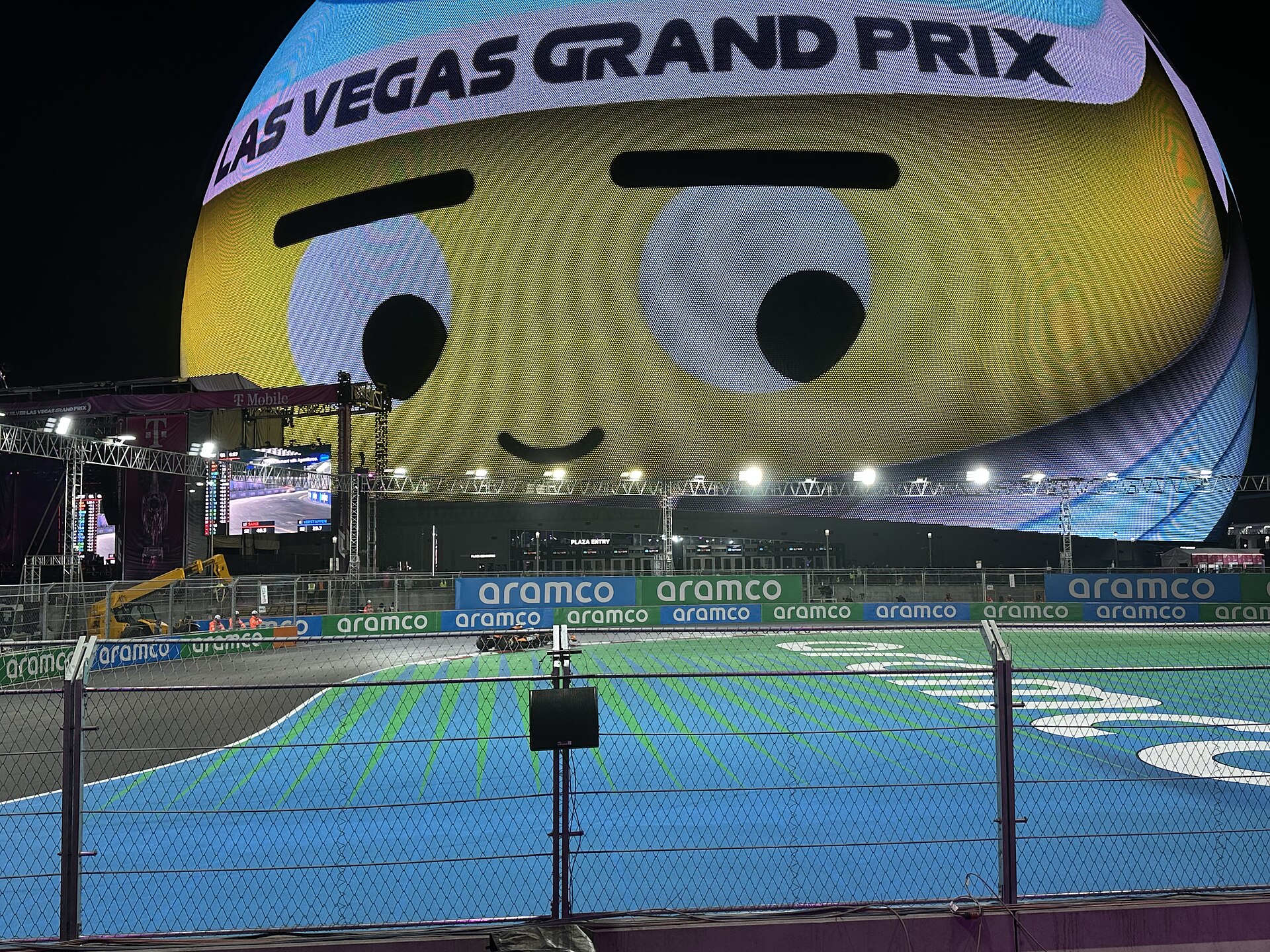
Then there is Las Vegas. Formula 1 did something in Vegas it does almost nowhere else: it promoted the race itself, buying land, building a permanent pit facility and collecting the ticket and hospitality revenue directly. The inaugural 2023 race generated an estimated $1.5 billion in total economic impact for the city, according to analysis by Applied Analysis reported by the Las Vegas Convention and Visitors Authority, including $884 million in visitor spending — with attendees spending about 3.6 times more than the average Las Vegas visitor. The race drew a global television audience reported at 59.3 million.
The audience story backs up the asset story. The inaugural Las Vegas race pulled 1.3 million U.S. viewers on ESPN despite a 1 a.m. Eastern start, and the sport’s American calendar — Austin, Miami and Las Vegas — now gives sponsors three premium weekends on U.S. soil instead of one novelty stop.
Austin’s long-running race and Miami’s event, added in 2022, round out the American trio, giving teams, sponsors and broadcasters a season-long presence in the sport’s largest commercial market rather than a single annual visit.
Put it together and the boom explains itself: capped costs, soaring team values, a self-promoted American flagship race, and sponsors paying record rates to stand next to all of it. Formula 1 did not just find America. It found America’s wallet — and America’s investors found it right back.
Bad Bunny’s Residency Math: Why Staying in One Place PaidMahomes’ $450 Million Contract, Explained: Why the Headline Is Not the PaycheckRihanna Built a Business, Not Just a Catalog: The Fenty Ownership Play How a Movie’s Money Actually Splits: Box Office in Plain WordsMisha Fair Drops New Single ‘South of Seattle’Firestone Grand Prix of St. Petersburg Returns March 5-7, 2027 to Open the INDYCAR SeasonChampionship Weekend Comes Home: After Seven Years Away, NASCAR’s Titles Return to HomesteadLita Ford Signs With Frontiers Music Srl and Unleashes New Single “Dracula”
-

 We Speak Jazz5 days ago
Toronto Jazz Singer Ori Dagan Announces First Live Album ‘Live in the Market’ for October 23 Release
-

 WE Speak MMA6 days ago
UFC 334: Gane vs. Hokit, Harrison vs. Nunes Title Fights Set for November 14 at Madison Square Garden
-

 We Speak Comedy6 days ago
Nate Bargatze Plays Rexburg Tomorrow, Then Settles Into Las Vegas on the Record-Breaking Big Dumb Eyes Tour
-

 We Speak Celebrity News5 days ago
Jennifer Lawrence Steps Into Beauty With Biodesigned Haircare Brand mes°