
We Speak Financials
Inflation, Explained: Why Prices Rise and What It Does to Your Money


Inflation is the rise in prices over time. When inflation runs at 3 percent, something that costs $100 today will cost about $103 a year from now, and the same dollars in your pocket buy a little less than they did before. Inflation is not one price going up. A single item can get more expensive for its own reasons. Inflation is the general rise across the whole basket of things people buy: food, rent, fuel, clothing, insurance and everything else.
What Causes It
Several forces push prices up. When people have money to spend and want more goods and services than businesses can supply, sellers raise prices. When the cost of making things rises, through higher wages, pricier raw materials or more expensive energy, those costs are passed on to customers. And when the amount of money in the economy grows faster than the goods and services available to buy, each dollar tends to be worth a little less. Usually it is a mix of all three, in different proportions at different times.
How It Is Measured
In the United States, the figure most people hear is the Consumer Price Index, published every month by the Bureau of Labor Statistics. Government workers track the prices of a fixed basket of goods and services, from groceries and gasoline to rent and haircuts, and report how much that basket costs compared with a year earlier. If the index is up 3 percent over the year, that is the inflation rate you will hear on the news. It is an average. Your own experience will differ depending on what you buy, which is why inflation can feel higher or lower than the headline number.
What It Does to Your Money
This is the part that matters for ordinary savers, and a small example shows it. Take a basket of groceries that costs $100 today. At 3 percent inflation, that same basket costs about $134 in ten years. Now look at cash. If you keep $10,000 under the mattress for ten years while inflation runs at 3 percent, you still have $10,000, but it buys only what about $7,441 buys today. You lost no dollars and still lost more than a quarter of your purchasing power. Money in a savings account does a little better. At 1 percent interest, $10,000 grows to about $11,046 in ten years, but after inflation that is worth roughly $8,219 in today’s terms. The account went up and the money still fell behind. That gap between the interest rate and the inflation rate is the number that quietly decides whether savings grow or shrink in real terms.
Why Some Inflation Is Considered Normal
It surprises people, but economists and central banks generally aim for a small amount of inflation rather than none. The Federal Reserve targets 2 percent a year. The reasoning is practical. When prices are gently rising, people and businesses spend and invest rather than waiting for things to get cheaper. Falling prices, called deflation, sound pleasant but can freeze an economy, because everyone delays buying and debts become harder to repay. The problem is not inflation itself. The problem is inflation that runs too hot, as it did in 2021 and 2022, when it rose above 9 percent in the United States, or inflation that swings unpredictably, which makes it impossible for families and businesses to plan.
The Rule of 72 Works Here Too
There is a simple shortcut for feeling inflation’s pace. Divide 72 by the inflation rate and you get roughly how many years it takes for prices to double. At 3 percent inflation, prices double in about 24 years. At 6 percent, they double in about 12. That is the whole story of inflation in one line: it is a slow force, easy to ignore in any single year, that steadily reprices everything and steadily shrinks what idle cash can buy. None of this is advice about what any one person should do with their money. It is the mechanics: prices rise, cash standing still falls behind, and the race between what your money earns and what inflation takes is the race that matters.
Read Next
Interest Rates, Explained: What They Do to Ordinary Borrowers
Money and Banking Basics: How Banks Work and Where Money Comes From
How a Budget Actually Works: A Plain-Language Guide to Planning Your Money
 Compound Interest, Explained: How Small Money Grows Over Time
 Index Funds and ETFs, Explained: How Most People Actually Invest
 What Is a 401(k)? Retirement Accounts, Explained in Plain Words
 How Howard Schultz Built Starbucks From One Seattle Coffee Shop
 Toronto North Make Their Home Debut Against New York Empire as World Team Tennis Returns
 Generals Host the Greyhounds in a Friday Night Faceoff at Tribute Communities Centre
 Maple Leafs Host the Panthers at Scotiabank Arena on December 3
 Steele Stays Perfect With 68-61 Win at Brandeis
Are you an artist or a business with a story to tell?
Get Featured on We Speak Media
Are you an athlete ready for your moment?
Get your Athlete Spotlight



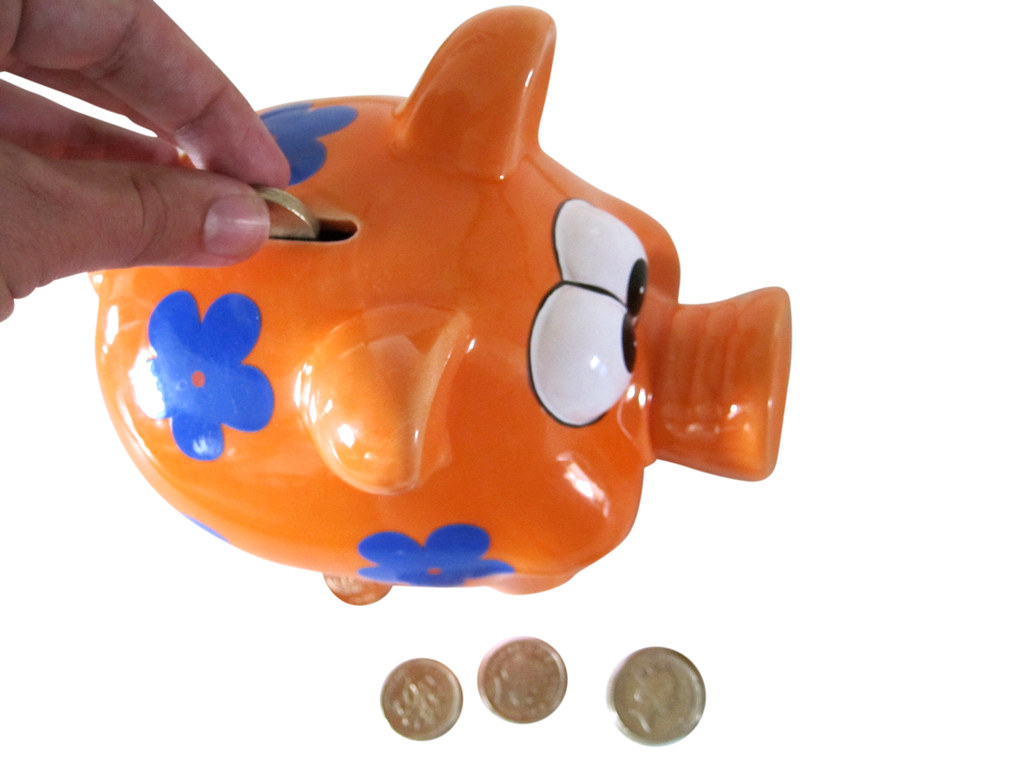
Compound interest is interest earned on interest. When your money earns interest and that interest stays in the account, the next round of interest is calculated on a bigger pile: your original money plus everything it has already earned. The pile starts growing on itself. It is the single most important piece of arithmetic in personal finance, and it explains both how ordinary savers build wealth slowly and how debts can spiral.
Simple Interest Versus Compound Interest
Simple interest is calculated only on the original amount. Put $1,000 somewhere paying 5 percent simple interest and you earn $50 every year, forever, because the base never changes. After 30 years you have $2,500: your $1,000 plus $1,500 of interest. Compound interest changes the base. At 5 percent compounded yearly, $1,000 becomes about $1,629 after ten years, about $2,653 after twenty, and about $4,322 after thirty. Same starting money, same 5 percent rate, but the compounded pile ends nearly twice the size of the simple one. Look at the pattern in those numbers. The growth is not steady. It speeds up. Most of the gain arrives in the later years, because by then the pile earning interest is much larger than the one you started with.
The Rule of 72
There is a shortcut for working out how fast money doubles. Divide 72 by the interest rate. At 5 percent, money doubles roughly every 14 years. At 7 percent, it doubles about every 10 years. At 10 percent, about every 7 years. The rule works in both directions, which matters for the example that follows: it measures any pile growing at a steady rate, including money you are building month by month.
Time Is the Main Ingredient
Compounding rewards time more than it rewards amount. Save $100 a month at an average return of 7 percent a year. After ten years you have put in $12,000 and the account holds about $17,300. Respectable, not dramatic. Keep the same habit going for forty years and you have put in $48,000, but the account holds roughly $262,500. You contributed about five and a half times more money in the second picture, yet the account is fifteen times bigger. The extra thirty years did that. Growth in the early years is mostly your own deposits. Growth in the later years is mostly the pile earning on itself, which is why people who explain compounding always end up saying the same thing: the best day to start was years ago, and the second-best day is now.
The Same Force, Working Against You
Compounding does not care which side of it you stand on. A credit card balance charges interest the same way, on the original amount plus the interest already added, which is why a balance that is only ever met with minimum payments can grow even while you pay. The mathematics is identical. On savings it is a slow tailwind. On debt it is a slow headwind, and the difference between the two is simply whether the pile belongs to you or you belong to it.
Why It Feels Like Nothing, Then Everything
The honest catch is that compounding is boring for a long time. A few hundred dollars earning 5 or 7 percent produces a few dollars of growth, and it is easy to conclude that nothing is happening. Something is happening. It is just small, the way the first doublings of anything are small. The curve bends upward with time, and the bend is the whole phenomenon: growth that feeds on itself, given enough years, turns modest habits into substantial money. None of this is advice about what any one person should save or where. It is the mechanics: interest on interest, a doubling rule you can do in your head, and time as the ingredient no amount of cleverness can replace.
Read Next
Interest Rates, Explained: What They Do to Ordinary Borrowers
Debt, Explained: How Interest Works and How Borrowers Get Ahead of It
How a Budget Actually Works: A Plain-Language Guide to Planning Your Money
Index Funds and ETFs, Explained: How Most People Actually Invest Inflation, Explained: Why Prices Rise and What It Does to Your MoneyWhat Is a 401(k)? Retirement Accounts, Explained in Plain WordsHow Howard Schultz Built Starbucks From One Seattle Coffee ShopToronto North Make Their Home Debut Against New York Empire as World Team Tennis ReturnsGenerals Host the Greyhounds in a Friday Night Faceoff at Tribute Communities CentreMaple Leafs Host the Panthers at Scotiabank Arena on December 3Steele Stays Perfect With 68-61 Win at Brandeis
-

 We Speak Latin3 days ago
Anthony Ramos Releases New Holiday Single ‘En Las Alturas / In The Highest’
-

 We Speak Rock2 days ago
State Champs Bring the Around the World and Back Again Tour to Starland Ballroom on November 27
-

 We Speak Soul3 days ago
The D’Angelo Estate Releases ‘Kamikazi,’ the First Official D’Angelo Single Since His Passing
-

 We Speak Rock3 days ago
Quicksand Announce Bring On The Psychics Spring 2027 UK/EU Tour