
We Speak Financials
Compound Interest, Explained: How Small Money Grows Over Time

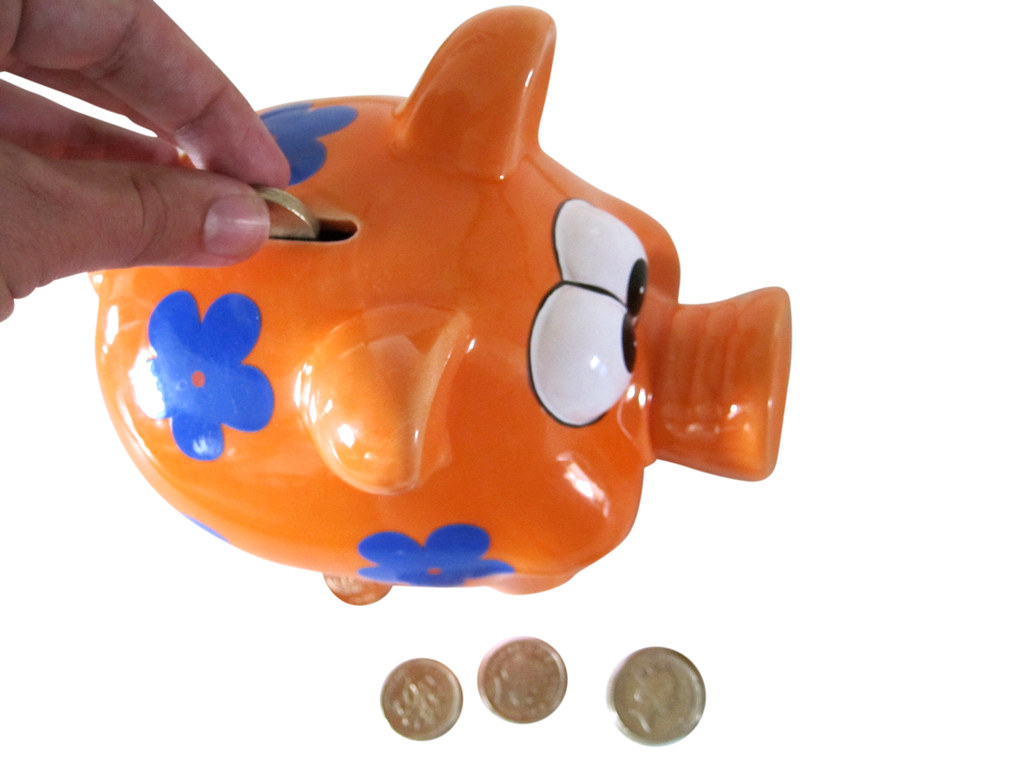
Compound interest is interest earned on interest. When your money earns interest and that interest stays in the account, the next round of interest is calculated on a bigger pile: your original money plus everything it has already earned. The pile starts growing on itself. It is the single most important piece of arithmetic in personal finance, and it explains both how ordinary savers build wealth slowly and how debts can spiral.
Simple Interest Versus Compound Interest
Simple interest is calculated only on the original amount. Put $1,000 somewhere paying 5 percent simple interest and you earn $50 every year, forever, because the base never changes. After 30 years you have $2,500: your $1,000 plus $1,500 of interest. Compound interest changes the base. At 5 percent compounded yearly, $1,000 becomes about $1,629 after ten years, about $2,653 after twenty, and about $4,322 after thirty. Same starting money, same 5 percent rate, but the compounded pile ends nearly twice the size of the simple one. Look at the pattern in those numbers. The growth is not steady. It speeds up. Most of the gain arrives in the later years, because by then the pile earning interest is much larger than the one you started with.
The Rule of 72
There is a shortcut for working out how fast money doubles. Divide 72 by the interest rate. At 5 percent, money doubles roughly every 14 years. At 7 percent, it doubles about every 10 years. At 10 percent, about every 7 years. The rule works in both directions, which matters for the example that follows: it measures any pile growing at a steady rate, including money you are building month by month.
Time Is the Main Ingredient
Compounding rewards time more than it rewards amount. Save $100 a month at an average return of 7 percent a year. After ten years you have put in $12,000 and the account holds about $17,300. Respectable, not dramatic. Keep the same habit going for forty years and you have put in $48,000, but the account holds roughly $262,500. You contributed about five and a half times more money in the second picture, yet the account is fifteen times bigger. The extra thirty years did that. Growth in the early years is mostly your own deposits. Growth in the later years is mostly the pile earning on itself, which is why people who explain compounding always end up saying the same thing: the best day to start was years ago, and the second-best day is now.
The Same Force, Working Against You
Compounding does not care which side of it you stand on. A credit card balance charges interest the same way, on the original amount plus the interest already added, which is why a balance that is only ever met with minimum payments can grow even while you pay. The mathematics is identical. On savings it is a slow tailwind. On debt it is a slow headwind, and the difference between the two is simply whether the pile belongs to you or you belong to it.
Why It Feels Like Nothing, Then Everything
The honest catch is that compounding is boring for a long time. A few hundred dollars earning 5 or 7 percent produces a few dollars of growth, and it is easy to conclude that nothing is happening. Something is happening. It is just small, the way the first doublings of anything are small. The curve bends upward with time, and the bend is the whole phenomenon: growth that feeds on itself, given enough years, turns modest habits into substantial money. None of this is advice about what any one person should save or where. It is the mechanics: interest on interest, a doubling rule you can do in your head, and time as the ingredient no amount of cleverness can replace.
Read Next
Interest Rates, Explained: What They Do to Ordinary Borrowers
Debt, Explained: How Interest Works and How Borrowers Get Ahead of It
How a Budget Actually Works: A Plain-Language Guide to Planning Your Money
 Index Funds and ETFs, Explained: How Most People Actually Invest
 Inflation, Explained: Why Prices Rise and What It Does to Your Money
 What Is a 401(k)? Retirement Accounts, Explained in Plain Words
 How Howard Schultz Built Starbucks From One Seattle Coffee Shop
 Toronto North Make Their Home Debut Against New York Empire as World Team Tennis Returns
 Generals Host the Greyhounds in a Friday Night Faceoff at Tribute Communities Centre
 Maple Leafs Host the Panthers at Scotiabank Arena on December 3
 Steele Stays Perfect With 68-61 Win at Brandeis
Are you an artist or a business with a story to tell?
Get Featured on We Speak Media
Are you an athlete ready for your moment?
Get your Athlete Spotlight




Most people who invest do not pick individual stocks. They buy index funds, and there is a good chance your retirement account is full of them whether you chose them or not. An index fund is a fund that owns everything on a list. The list is an index, such as the S&P 500, which tracks 500 of the largest companies in the United States. Buy one share of an S&P 500 index fund and you own a small slice of all 500 companies at once: the phone makers, the banks, the retailers, the drug companies, all of them, in proportion to their size.
What the Fund Does
The fund’s job is not to be clever. It simply copies the index. When a company joins the list, the fund buys it. When a company leaves, the fund sells it. There is no manager trying to guess next year’s winners, no team of analysts placing bets. That simplicity is the point, and it is also why these funds are cheap to run. A traditional managed fund pays for research, trading and judgment. An index fund mostly pays for arithmetic.
Index Funds and ETFs Are the Same Idea in Two Wrappers
You will meet this idea in two forms. A mutual fund is bought and sold once a day, at a price set after the market closes. An ETF, short for exchange-traded fund, trades on a stock exchange throughout the day, like a share of a company, with a price that moves minute by minute. The wrapper differs. The contents are often identical: the same index, the same companies, the same approach. Many workplace retirement plans offer the mutual fund version. People investing on their own often use the ETF version. Neither form is magic. Both are baskets holding the same kind of eggs.
Why Fees Are the Whole Story
Every fund charges a yearly fee called an expense ratio, taken quietly out of the fund’s returns. Because index funds do so little, their fees are tiny, often around 0.03 percent a year on the largest funds: three dollars a year on a $10,000 investment. Managed funds commonly charge 0.5 percent or more. Small numbers, big consequences. Put $10,000 to work for 30 years at a 7 percent average return and it grows to about $76,000. In a fund charging 1 percent a year, the same market return leaves you with about $57,000, because the fee takes a slice of the growth every single year. In an index fund charging 0.03 percent, you end with roughly $75,500. The market did the same work in all three cases. The fee decided how much of it you kept.
Why So Many People End Up Here
The deeper reason is performance. Year after year, industry scorecards find that most professionally managed funds fail to beat the simple index they are compared against over periods of ten to fifteen years. The managers are not foolish. Beating the market is just very hard once fees and trading costs are counted. An index fund gives up on beating the market entirely. It settles for the market’s return, minus a sliver of a fee, and that settlement turns out to beat most of the people who tried to do better.
The Trade-Off, Stated Plainly
An index fund will never make you rich quickly, and it will never protect you when the whole market falls. If the index drops 20 percent, your fund drops about 20 percent. What it offers is breadth and cheapness: hundreds of companies in a single purchase, so no one company’s failure can sink you, and a fee so small it barely touches your returns. None of this is advice about what any one person should buy. It is the mechanics: own the whole list, pay almost nothing for the privilege, and let the market’s long rise do whatever it is going to do.
Read Next
What Is a Stock Market? A Plain-Language Guide for Beginners
Stocks vs. Bonds, Explained in Plain Words
Money and Banking Basics: How Banks Work and Where Money Comes From
 Compound Interest, Explained: How Small Money Grows Over TimeInflation, Explained: Why Prices Rise and What It Does to Your MoneyWhat Is a 401(k)? Retirement Accounts, Explained in Plain WordsHow Howard Schultz Built Starbucks From One Seattle Coffee ShopToronto North Make Their Home Debut Against New York Empire as World Team Tennis ReturnsGenerals Host the Greyhounds in a Friday Night Faceoff at Tribute Communities CentreMaple Leafs Host the Panthers at Scotiabank Arena on December 3Steele Stays Perfect With 68-61 Win at Brandeis
-

 We Speak Latin3 days ago
Anthony Ramos Releases New Holiday Single ‘En Las Alturas / In The Highest’
-

 We Speak Rock2 days ago
State Champs Bring the Around the World and Back Again Tour to Starland Ballroom on November 27
-

 We Speak Soul3 days ago
The D’Angelo Estate Releases ‘Kamikazi,’ the First Official D’Angelo Single Since His Passing
-

 We Speak Rock3 days ago
Quicksand Announce Bring On The Psychics Spring 2027 UK/EU Tour