
We Speak Financials
What Is a 401(k)? Retirement Accounts, Explained in Plain Words


A 401(k) is a retirement savings plan offered through a job. Its odd name comes from the section of the tax code that created it. The idea is simple: money comes out of your paycheck before you ever see it, goes into an investment account in your name, and gets special tax treatment in exchange for being left alone until retirement. It is the main way most Americans who work for a company save for old age.
How the Money Goes In
You choose a percentage of your pay, and your employer sends that amount from each paycheck into your 401(k). In a traditional 401(k), the money goes in before income tax is taken out, which lowers your taxable pay today. The money is taxed later, when you take it out in retirement. Many plans also offer a Roth version: the money goes in after tax, so there is no tax break now, but withdrawals in retirement come out tax-free. Either way, inside the account the money is invested, usually in a menu of mutual funds chosen by the employer, and it grows without being taxed year by year.
The Employer Match
Many employers add money of their own, and this is the feature that matters most. A common arrangement is for the company to match part of what you put in, for example adding 50 cents or a dollar for every dollar you contribute up to a set percentage of your pay. Say you earn $60,000 and your employer matches your contributions up to 5 percent of pay. You put in $3,000 over the year, and the company adds $3,000. That is $6,000 a year going into the account, half of it from your employer. Invested at an average return of 7 percent a year, $6,000 a year for 30 years grows to about $567,000. A match is effectively extra pay that only exists if you contribute enough to collect it.
How Much You Can Put In
The government sets a yearly limit. For 2026, an employee can contribute up to $24,500. Workers aged 50 and over can add a catch-up contribution of $8,000, for a total of $32,500, and workers aged 60 to 63 have a higher catch-up of $11,250, for a total of $35,750. These limits cover your own contributions; employer money goes on top. The limits rise from time to time with inflation, which is why the figures change every year or two.
Starting Early Versus Starting Late
Because the money is invested, time does a large part of the work. Imagine saving $200 a month at an average return of 7 percent a year. Start at 25 and keep going to 65, and you put in $96,000 of your own money, which grows to roughly $525,000. Start the same habit at 35 instead, and you put in $72,000, which grows to roughly $244,000. The late starter saved only $24,000 less but ended with less than half as much. The difference is the extra decade of growth, which is why these accounts reward starting early more than they reward saving big.
When You Can Take It Out
The tax breaks come with a condition: the money is meant for retirement. Withdrawals from a traditional 401(k) are taxed as income, and taking money out before age 59 and a half usually adds a 10 percent penalty on top, with some exceptions for hardship and other specific cases. When you leave a job, the account does not vanish. You can usually leave it where it is, move it to your new employer’s plan, or roll it into an individual retirement account, an IRA, without tax if it is done properly. None of this is advice about what any one person should contribute or choose. It is the mechanics: a payroll habit, a possible employer match, a tax break with strings attached, and time doing the heavy lifting.
Read Next
Stocks vs. Bonds, Explained in Plain Words
What Is a Stock Market? A Plain-Language Guide for Beginners
Debt, Explained: How Interest Works and How Borrowers Get Ahead of It
 Compound Interest, Explained: How Small Money Grows Over Time
 Index Funds and ETFs, Explained: How Most People Actually Invest
 Inflation, Explained: Why Prices Rise and What It Does to Your Money
 How Howard Schultz Built Starbucks From One Seattle Coffee Shop
 Toronto North Make Their Home Debut Against New York Empire as World Team Tennis Returns
 Generals Host the Greyhounds in a Friday Night Faceoff at Tribute Communities Centre
 Maple Leafs Host the Panthers at Scotiabank Arena on December 3
 Steele Stays Perfect With 68-61 Win at Brandeis
Are you an artist or a business with a story to tell?
Get Featured on We Speak Media
Are you an athlete ready for your moment?
Get your Athlete Spotlight



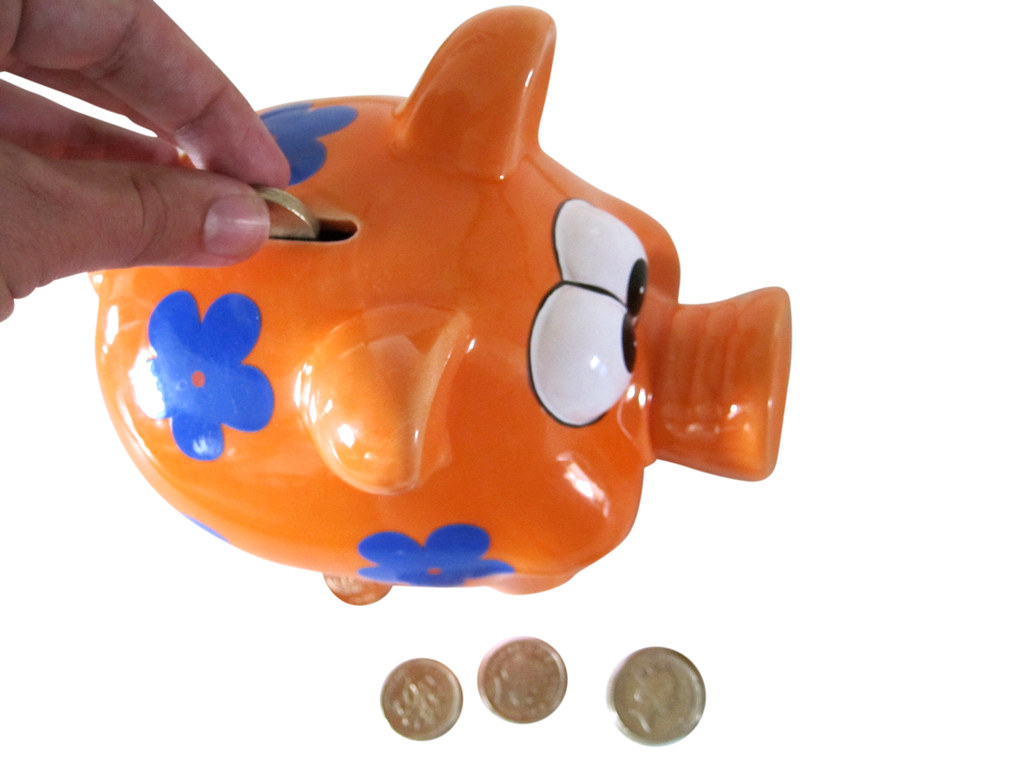
Compound interest is interest earned on interest. When your money earns interest and that interest stays in the account, the next round of interest is calculated on a bigger pile: your original money plus everything it has already earned. The pile starts growing on itself. It is the single most important piece of arithmetic in personal finance, and it explains both how ordinary savers build wealth slowly and how debts can spiral.
Simple Interest Versus Compound Interest
Simple interest is calculated only on the original amount. Put $1,000 somewhere paying 5 percent simple interest and you earn $50 every year, forever, because the base never changes. After 30 years you have $2,500: your $1,000 plus $1,500 of interest. Compound interest changes the base. At 5 percent compounded yearly, $1,000 becomes about $1,629 after ten years, about $2,653 after twenty, and about $4,322 after thirty. Same starting money, same 5 percent rate, but the compounded pile ends nearly twice the size of the simple one. Look at the pattern in those numbers. The growth is not steady. It speeds up. Most of the gain arrives in the later years, because by then the pile earning interest is much larger than the one you started with.
The Rule of 72
There is a shortcut for working out how fast money doubles. Divide 72 by the interest rate. At 5 percent, money doubles roughly every 14 years. At 7 percent, it doubles about every 10 years. At 10 percent, about every 7 years. The rule works in both directions, which matters for the example that follows: it measures any pile growing at a steady rate, including money you are building month by month.
Time Is the Main Ingredient
Compounding rewards time more than it rewards amount. Save $100 a month at an average return of 7 percent a year. After ten years you have put in $12,000 and the account holds about $17,300. Respectable, not dramatic. Keep the same habit going for forty years and you have put in $48,000, but the account holds roughly $262,500. You contributed about five and a half times more money in the second picture, yet the account is fifteen times bigger. The extra thirty years did that. Growth in the early years is mostly your own deposits. Growth in the later years is mostly the pile earning on itself, which is why people who explain compounding always end up saying the same thing: the best day to start was years ago, and the second-best day is now.
The Same Force, Working Against You
Compounding does not care which side of it you stand on. A credit card balance charges interest the same way, on the original amount plus the interest already added, which is why a balance that is only ever met with minimum payments can grow even while you pay. The mathematics is identical. On savings it is a slow tailwind. On debt it is a slow headwind, and the difference between the two is simply whether the pile belongs to you or you belong to it.
Why It Feels Like Nothing, Then Everything
The honest catch is that compounding is boring for a long time. A few hundred dollars earning 5 or 7 percent produces a few dollars of growth, and it is easy to conclude that nothing is happening. Something is happening. It is just small, the way the first doublings of anything are small. The curve bends upward with time, and the bend is the whole phenomenon: growth that feeds on itself, given enough years, turns modest habits into substantial money. None of this is advice about what any one person should save or where. It is the mechanics: interest on interest, a doubling rule you can do in your head, and time as the ingredient no amount of cleverness can replace.
Read Next
Interest Rates, Explained: What They Do to Ordinary Borrowers
Debt, Explained: How Interest Works and How Borrowers Get Ahead of It
How a Budget Actually Works: A Plain-Language Guide to Planning Your Money
Index Funds and ETFs, Explained: How Most People Actually InvestInflation, Explained: Why Prices Rise and What It Does to Your Money What Is a 401(k)? Retirement Accounts, Explained in Plain WordsHow Howard Schultz Built Starbucks From One Seattle Coffee ShopToronto North Make Their Home Debut Against New York Empire as World Team Tennis ReturnsGenerals Host the Greyhounds in a Friday Night Faceoff at Tribute Communities CentreMaple Leafs Host the Panthers at Scotiabank Arena on December 3Steele Stays Perfect With 68-61 Win at Brandeis
-

 We Speak Latin3 days ago
Anthony Ramos Releases New Holiday Single ‘En Las Alturas / In The Highest’
-

 We Speak Rock2 days ago
State Champs Bring the Around the World and Back Again Tour to Starland Ballroom on November 27
-

 We Speak Soul3 days ago
The D’Angelo Estate Releases ‘Kamikazi,’ the First Official D’Angelo Single Since His Passing
-

 We Speak Rock3 days ago
Quicksand Announce Bring On The Psychics Spring 2027 UK/EU Tour