
We Speak Entertainment
Jekalyn Carr, One Nation Under God Ablum, And First Book, “You Will Win” Is Available For Pre-Order


20 Year-Old GRAMMY®, Two-Time Billboard Music Award and GMA Dove Award-nominated and Stellar Award-winning independent recording artist, Jekalyn Carr, has just announced the release dates for her forthcoming live album ONE NATION UNDER GOD and first book You Will Win. Pre-Orders for both the album and book are available Friday, December 22nd.
“I believe that people should not live defeated or beneath who God says they are,” states Carr. “Through this book and album my inspiration is to reassure to the people that they are champions. I want to help people by releasing the winning message and pushing them to unleash the champion that’s on the inside of them.”
ONE NATION UNDER GOD, the highly anticipated, forthcoming 4th album is set to release on Friday, February 23, 2018 on her Lunjeal Music Group imprint and distributed by New Day Christian Distributors. This new release is a call for all of God’s people to unite, removing the limitations of race, religion, denomination, organization, location, gender, or class. Carr addresses how God desires to see His people, and how we should see ourselves – as one united body of believers.
ONE NATION UNDER GOD, is already shaping up to pick up right where the successes of its predecessor left off. Released on September 15th on all digital outlets, the album’s lead single, “You Will Win,” debuted at No. 1 on Billboard’s Gospel Digital Song Sales chart and is currently No. 4 on Billboard’s Gospel Airplay chart and is in the Top 10 on its Hot Gospel Songs chart this week.




We Speak Entertainment
IRENE MICHAELS JOINS THE RECORDING ACADEMY — AND WHAT THAT VOTE ACTUALLY MEANS

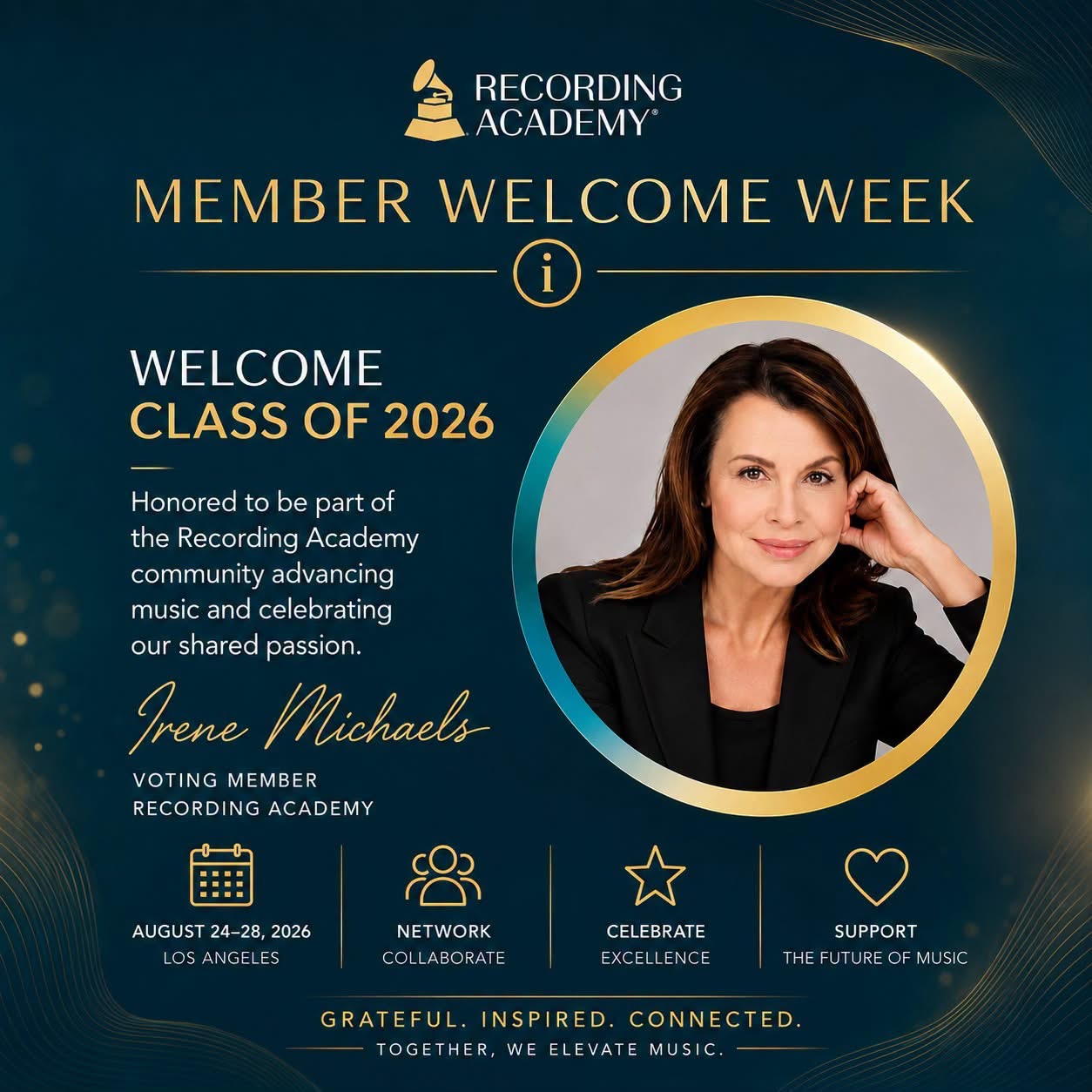
Awards nominations tell an audience an artist’s work has been noticed. Recording Academy Voting Membership tells a different story: that the artist has been recognized as a peer within the industry itself. Irene Michaels was recently named a Voting Member of the Recording Academy — the organization behind the Grammy Awards — and the distinction carries weight well beyond a title on a bio page.
Voting Membership isn’t handed out casually. It’s reserved for performers, songwriters, producers, engineers, and other creators actively working in the recording industry, and it comes with real influence: Voting Members are the people who ultimately determine Grammy nominees and winners each year. For an artist to be recognized at that level is, in effect, the industry saying her work belongs in the same conversation as the artists and professionals shaping the awards themselves.

That’s a meaningful marker for Michaels’ ongoing music career, which has moved from EPs and singles to Josie Music Award recognition and now into this kind of institutional standing. It reframes her not just as an artist building a catalog, but as a working member of the community that evaluates and honors that catalog industry-wide — someone whose judgment on music now carries an official vote.
It also adds context to everything else happening in her 2026: a triple nomination at the 12th Annual Josie Music Awards, an EP in Golden that’s earning recognition on its own merits, and a career that has spent the last several years steadily building credibility as a serious recording artist rather than a novelty comeback story. Recording Academy membership doesn’t arrive for artists still proving themselves — it arrives for artists the industry has already decided are part of it.
For Irene Michaels, whose career has spanned modeling, acting, publishing, and now music across multiple decades, the Recording Academy recognition is less a single headline than another data point in a larger pattern: an artist whose reinvention keeps being met, at every stage, with the industry taking her seriously.
-

 We Speak Music1 week ago
Benicio Bridges Ghanaian Heritage and UK Rap on New Single ‘EVE’
-

 We Speak Music1 week ago
Slay Raché Shines In New Single “You Make Me Wanna Dance”
-

 We Speak Music1 week ago
Phoebe June Traces Love, Distance and Heartbreak on New EP ‘Kiss Me Over The Garden Gate’
-

 We Speak Music1 week ago
More Than Nostalgia: The Overtones Enter Their Next Chapter