
Connect with us

We Speak Entertainment

Edwin Hawkins – The Man Behind ‘Oh Happy Day’ – Has Died

Published

on

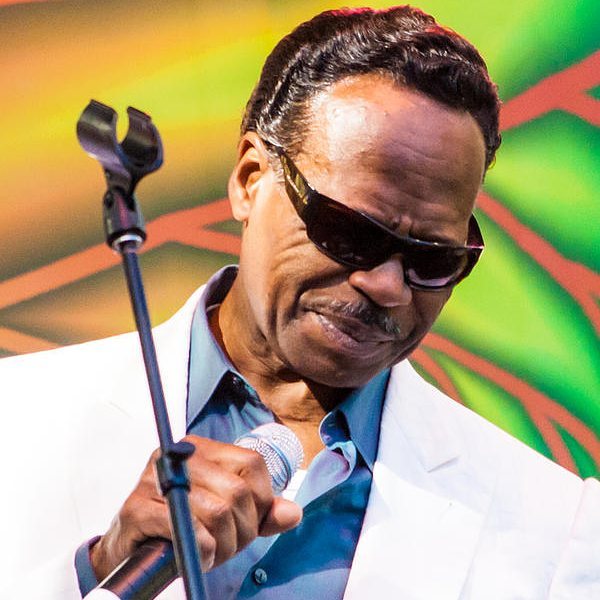
edwin hawkins1
*Pleasanton, CA – Edwin Hawkins, the four-time Grammy® Award-winning leader of The Edwin Hawkins Singers’ 1969 million-seller, “Oh Happy Day,” died January 15 at his home in the Bay area, after a bout with pancreatic cancer. He was 74 years old.

“It is with deep sadness that we announce the passing of Dr. Edwin Hawkins –– a celebrated artist, innovator, and music icon. Though he will be greatly missed the world over, the message of love, life, and encouragement that he incorporated into his music gives us all the same hope that we’ll join him in heaven and sing `Oh Happy Day.’” the Hawkins Family said.


edwin hawkins2


“My mother had an old hymnal and I had a knack for rearranging hymns,” Hawkins once said. “`Oh Happy Day’ was an old hymn and I rearranged it. It was actually one of the least likely songs to become a hit. There were some much stronger songs on there.” Record executive Neil Bogart picked up the song and distributed it through Buddha Records. “Oh Happy Day” reached No. 2 on the Billboard R&B Singles chart and No. 4 on the Pop Singles chart in 1969. Their rendition won them a Grammy in 1970 for Best Soul Gospel Performance. The tune has sold over 7 million copies to date and it established Hawkins’ career. I wasn’t planning to go into the music business and I wasn’t looking for a record deal,” he said in the book, Uncloudy Days: The Gospel Music Encyclpedia. “The record’s success decided my fate.”

edwin hawkins3

Hawkins often toured with his younger and equally successful singing brother, Walter, and Walter’s then wife, Tramaine, as The Hawkins Family in the 1970s.  Their energetic stage show filled civic centers and concert halls across the world, including D.A.R. Constitution Hall in Washington, D.C.  Edwin Hawkins, with his group and as a soloist, continued to make gospel radio hits throughout the next two decades including, “Worship The Lord,” “God Will Take Care of You,” “Give Me A Star” and “To My Father’s House.” In recent years, Hawkins recorded occasionally and toured largely in Europe. He also sponsored the Edwin Hawkins Music & Arts Seminar to teach the next generation of musicians the business of music. “This is a sad day in music,” says Liz Black, midday radio host for WLIB, a gospel radio station in New York City. “I knew and loved Edwin Hawkins’ music even before I was in the church and I know that I’m not alone in that.”

In 2001, The Recording Industry Association of America (R.I.A.A.) ranked  “Oh Happy Day” No. 63 on its Top 365 Songs of the 20th Century listing. The song has been covered by dozens of artists, including Quincy Jones, Johnny Mathis, Glen Campbell, Aretha Franklin, Jason Mraz, Susan Boyle, The Oak Ridge Boys and Elvis Presley.

Hawkins is survived by his siblings Carol, Feddie, Daniel, and Lynette.  Funeral arrangements are pending.


We Speak Entertainment

‘How Fragile Are Our Systems?’ Author Luise Noring on the Political Thriller ‘Hidden’

Published

on

Danish author and academic Luise Noring brings an unusually analytical perspective to dystopian storytelling with her political thriller ‘Hidden’, a speculative survival narrative set in a near-future New York where institutions begin to fracture and the social contract is under strain.

Trained as a researcher with a Ph.D. from Copenhagen Business School, Noring spent years studying urban governance, economic systems, and the structures shaping modern societies. Her academic work examined city finance, public institutions, and the evolving role of cities in the global economy, while her advisory work has taken her across multiple international institutions and cities addressing governance and development challenges.

In recent years, Noring has expanded her work into fiction, using speculative storytelling as a lens to explore the fragility of political and social systems. Her novels — ‘Hidden’, ‘Unsettled’, and ‘Abandoned’ — examine the tensions shaping contemporary democracies and the ways power and information influence human lives. Her nonfiction book ‘Rotten’ explores the erosion of the Danish legislative system.

With its character-driven narrative and strong political themes, ‘Hidden’ is currently positioned as intellectual property available for feature film adaptation.

Your dystopian thriller ‘Hidden’ presents a survival story set in a near-future New York. What initially inspired the story?

We often assume that our legal, financial, and social systems rest on a coherent and rational foundation. In reality, many of these structures are far more fragile than we like to believe. When those systems begin to fracture, the consequences shape how people live, survive, and exercise power.

“That tension became the starting point for ‘Hidden’. The story explores a world where institutions are eroding and power is increasingly maintained through secrecy and control of information.”

Saskia’s journey reflects that discovery. Her story is not only about survival but about awakening to the realization that the systems she once trusted do not function the way society claims they do.

Dystopian storytelling has seen a resurgence in film and television. Do you feel ‘Hidden’ reflects anxieties audiences are experiencing today?

Across many societies there is a growing uncertainty about the stability of the systems structuring everyday life. Rising living costs, economic insecurity, and widening inequality are making it harder for many people to maintain stability. As a result, more people are beginning to question whether the systems meant to provide opportunity and protection are still functioning as intended. At the same time, technological and economic transformations are reshaping the world. Artificial intelligence is changing the meaning of work, global financial systems are altering how wealth is concentrated, and political frameworks often struggle to keep pace with these changes. When institutions fail to adapt, the consequences are felt directly by citizens. Trust erodes and opportunities narrow. In that sense, the anxieties reflected in ‘Hidden’ emerge from a broader realization that many of the systems organizing society are struggling to keep pace with the forces reshaping the world.

Photo credit: Capture Photos

At the heart of ‘Hidden’ is Saskia, a mother protecting her children in an underground world. Why was it important to center the story around a maternal protagonist?

Centering the story around Saskia as a mother was essential because it brings the narrative back to one of the most fundamental human instincts: protecting one’s children. I wanted to juxtapose that deeply human instinct with the abstract structures of society and the demands those systems place on individuals. A mother’s love is immediate and human, while the institutions around her are often bureaucratic and indifferent. Through Saskia’s perspective, the reader experiences how quickly the moral framework of society can shift when survival becomes precarious. When institutions fail or turn against the people they are meant to protect, individuals are forced into impossible choices.

‘Hidden’ is positioned as an IP available for a feature film adaptation. How do you imagine the story translating to the screen?

I envision ‘Hidden’ as a character-driven political thriller set within a speculative but recognizable world.

Rather than presenting a distant dystopia, the film would portray a society that feels uncomfortably close to our own. The tension comes from the gradual erosion of trust in institutions and the widening gap between those protected by systems of power and those pushed outside them.Visually, the film would rely on grounded realism rather than spectacle. The world above ground would feel tense and politically charged, shaped by news broadcasts, social media, and public messaging where truth and propaganda blur.In contrast, the underground world would feel improvised and fragile, revealing a population pushed out of sight by the systems above.At its center remains Saskia’s journey as she learns to survive within a collapsing system in order to protect her children.

The project has been compared to dystopian works such as ‘Children of Men’ and ‘The Hunger Games’. What filmmakers might be a natural fit to bring ‘Hidden’ to the screen?

Bringing ‘Hidden’ to the screen would require filmmakers comfortable working at the intersection of speculative fiction, political storytelling, and psychological drama. The story is not simply a dystopian narrative. It is grounded in recognizable social realities and focused on the emotional experience of individuals caught within collapsing systems.

“For that reason, the best fit would be filmmakers who approach speculative fiction as a way of examining the present rather than escaping from it.”

At its core, ‘Hidden’ is about human choices — about how ordinary people navigate truth, power, and survival when the structures around them begin to collapse.

For more information please visit

www.luisenoring.net

Continue Reading

Trending