
We Speak Music
I Musici Gemelli Takes on Sacred Narrative

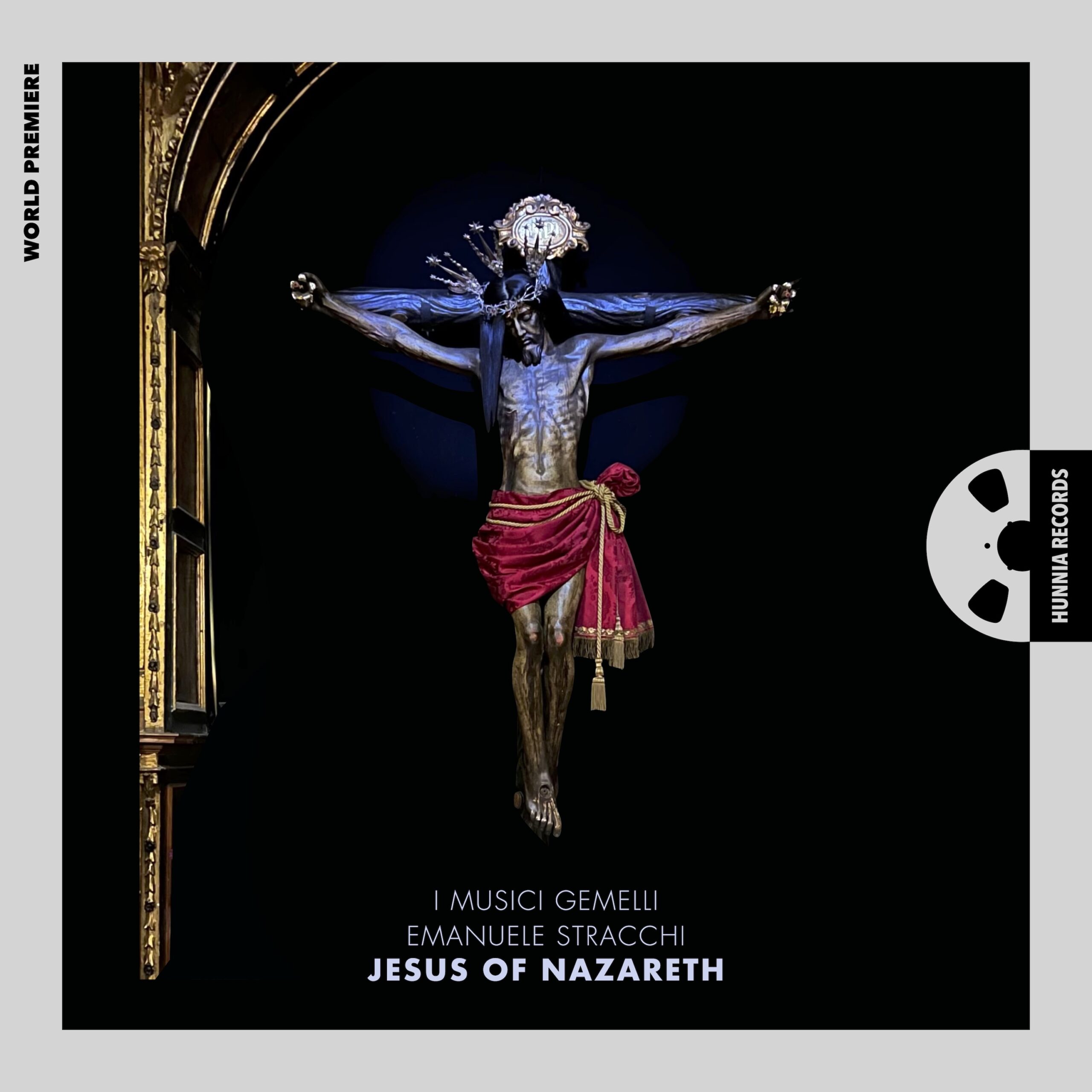
I Musici Gemelli’s “Jesus of Nazareth” arrives as an ambitious project that asks a lot of two violins and the listeners willing to follow along. Francesco Pio and Giuseppe Pio Bertozzi have taken on composer Emanuele Stracchi’s twelve movement work that traces the life of Christ from birth to resurrection, and the result is a recording that succeeds more often than it stumbles.
The concept itself is demanding. Condensing the entire Gospel narrative into roughly 50 minutes using only two violins means every note carries weight, and there’s nowhere to hide when the writing doesn’t quite land. Fortunately, Emanuele’s compositional approach provides enough variety to keep nearly an hour of violin duet from becoming monotonous. His references to Gregorian chant and Renaissance polyphony give the work a foundation that feels appropriate for the subject matter without becoming overly reverential.
The brothers handle the technical demands with obvious competence. Their training shows in how they balance their sound, particularly in moments where the score requires them to mirror or chase each other through complex canonic passages. The “canon per tonos” that accompanies Christ’s entry into Jerusalem works well on paper, with each voice rising a tone to suggest ascent, though whether listeners will catch that detail without the liner notes is questionable.
What’s most interesting about this recording is what it doesn’t try to do. There’s no attempt at grand drama or sweeping emotional manipulation. Instead, Francesco Pio and Giuseppe Pio have opted for something more contemplative, letting the intimate format create its own kind of space. That restraint serves some movements better than others. “Nativitas Christi” benefits from the quieter approach, while later sections dealing with the passion and crucifixion occasionally feel like they’re straining against the limitations of just two instruments.
At nearly 50 minutes, the album requires commitment. It’s not background music, and it’s not structured for casual listening. The movements flow into each other with a logic that makes more sense when experienced as a complete work rather than individual tracks, which is both a strength and a potential barrier.
Francesco Pio and Giuseppe Pio have accumulated impressive credentials and performance experience at major venues, and that preparation is evident in how cleanly they execute Emanuele’s score. What’s less clear is whether this particular project will find an audience beyond those already inclined toward sacred classical music. The recording quality is solid, the performances are assured, but the concept itself occupies a specific niche.
“Jesus of Nazareth” is a serious work that takes its subject seriously. It doesn’t pander or simplify, and it assumes listeners will bring their own patience and attention to the listening experience. For those willing to meet it on those terms, there’s genuine substance here. For others, it may feel more like an academic exercise than an emotional journey.
You can listen here.





Two years ago, Naomi Aguilera walked onto my radar with EGO, an infectious soulful pop debut that made it impossible not to move. Fast forward to her debut EP Mosaïques, and it was clear she wasn’t just passing through. Personal, colorful, rooted in her Spanish heritage & Brussels upbringing, it even earned her a spot as Apple Music Benelux’s Up Next artist!
Now she’s back with BB ILY, marking the start of a new era. The bilingual single — French and English — is built around one of the most universal human experiences: that special connection that doesn’t need translation. Where EGO invited you to forget your ex on the dancefloor, BB ILY pulls you somewhere more intimate: with sultry beats courtesy of Turana, it’s a dance where gestures, whispers, sighs and the sound of a voice matters more than the words that come out of it… It’s sensual, a little mystical, and entirely her own.
First taste of Naomi Aguilera’s upcoming project Ojalá, due in 2027, it feels effortlessly catchy. This is the kind of track that casts its spell quietly, with interesting and unexpected rhythmic shifts in the verses, and a delicious chorus that lodges itself in your head before you even notice. By the time you do, it’s too late. But you won’t find me complaining about it!
-

 We Speak Music1 week ago
National Gospel Recording Artist Ellen Hayes Announces the Release of Her Farewell Album, Behind My Eyes
-
We Speak Music1 week ago
Mel D makes bittersweetness glow with magnetic new single ‘ORANGE’
-

 We Speak Music1 week ago
Kazimi Shines In New Single ‘Errant Nodes’
-

 We Speak Music1 week ago
Karabo Unleashes New Single ‘Only 4 U’