
We Speak Track And Field
She Doesn’t Chase Medals, She Earns Them: Inside Aniyah Walker’s Drive And Dedication

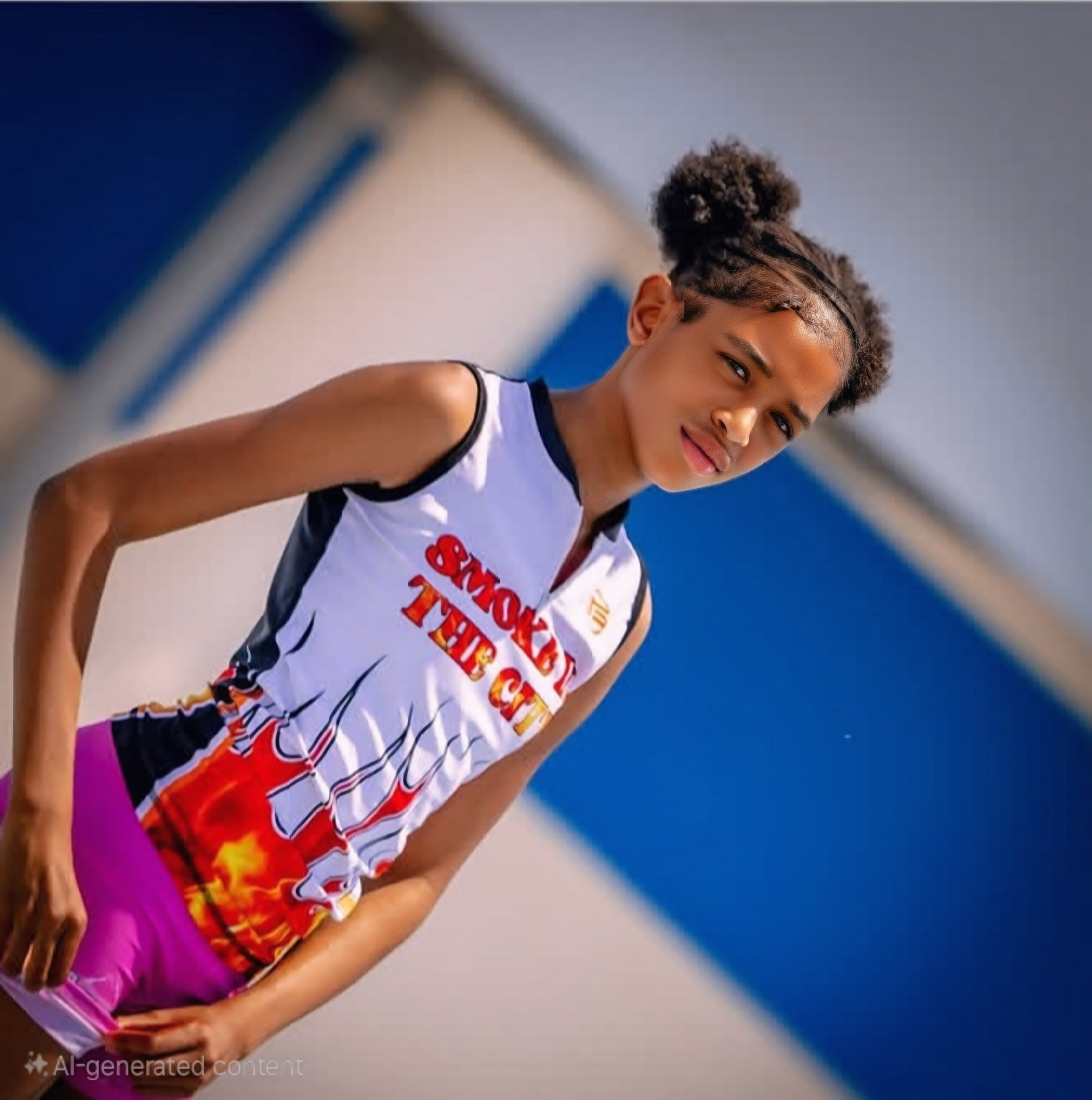
When it comes to speed, discipline, and determination, Aniyah Walker is setting the pace. A rising star in sprinting events specializing in the 60m, 100m, and 200m dashes, Aniyah brings an explosive power to the track. A mindset shaped by her parent’s legacy in the sport. With a training routine that balances intensity, and a drive to compete against the nation’s best. She’s proving that greatness is in her blood, and success is in her future. Focused, fearless, and fueled by belief in her preparation, Aniyah is carving out a name for herself with every stride.
Today we’d like to introduce you to Aniyah Walker.
Aniyah, what events do you specialize in, and which one do you enjoy the most?
I enjoy 60m, 100m, and the 200m. I enjoy the 100m the most because it allows me to show my top-end speed.
How did you get started in track and field, and what drew you to your specific events?
I got started in track and field because of my parents; they both competed at a high level in track and field, so I knew it was only a matter of time before I grew in the sport. Their success and passion inspired me to follow in their footsteps.
What’s a typical training week like for you in terms of sprint/hurdle/field event workouts?
Typically on Mondays we sprint in spikes, usually some sleds, bands, bullet belt, 20m, and 30m. Nothing more than 60m. On Tuesdays we have up-tempo workouts like 150s. Thursdays are our longer conditioning days, so we usually have field runs or sometimes I’ll work with the 400m group. It’s all about mixing speed and endurance throughout the week.

What’s the most challenging part of your event, and how do you train to overcome it?
Most challenging event is the 200m. When I’m in a bad lane, I have to catch the lanes ahead of me. I prefer to be in the middle of the track. However, I overcome it by never quitting in practice and staying consistent.
What’s your toughest workout or training session—and how do you mentally get through it?
My toughest workout is 15 minutes of hills straight. Mentally, I tell myself “I can do it, I’m not quitting.” That mindset helps me power through every time.
Describe your pre-race or pre-event routine. Any superstitions or must-haves?
So, I always have to have Starbucks and a good quality warm-up. It helps me feel prepared and locked in.
How do you handle nerves or pressure before a big meet?
I don’t really let pressure get to me. I believe in myself, I believe in my training, and I believe in my coach. That confidence keeps me calm.
What has been your most memorable performance so far and why?
Running 24.29 at the Middle School State Championship, and grabbing second place as a 6th grader. That race showed me what I was capable of at a young age.

Who do you look up to in your sport, whether locally or professionally?
Melissa Jefferson. She inspires me with how she carries herself, and competes at a high level.
What’s one technical aspect of your event you’re really focused on improving right now?
Keeping my hips in front of me. It helps with power and running efficiency.
How important is mental preparation in your events, and how do you work on it?
Very important. My dad constantly keeps me prepared throughout the weeks leading up to my races. He reminds me to stay focused and confident.
Do you approach your events more with strategy or instinct? Why?
Strategy, depends who I’m racing. My coach will put together a race plan of what I need to do to execute. It keeps me focused on the goal.
What’s your favorite track or field venue to compete at and why?
New Balance Nationals Outdoors. I like running the 100/200 for elite competition. The atmosphere there pushes me.
What kind of music or motivation gets you hyped before competing?
Rod Wave is my go-to. His music gets me in the zone.

How do your teammates or training group influence your performance?
We push each other in practice, every practice! We are one big family, and that energy motivates me.
What’s your go-to recovery routine after a meet or heavy practice?
Rest is the most important thing. I make sure to take care of my body and stay ready for the next session.
How do you balance school, life, and training? Any tips?
I always manage the schoolwork first. My grades are super important. Staying organized helps me stay on track.
Outside of track and field, what are your interests or hobbies?
I enjoy traveling and hanging out with my family and friends. It helps me unwind and recharge.
What advice would you give to someone just starting out in your event?
Stick to it. It’s not easy. Only the strong survive. Stay consistent, and believe in yourself.
Whether you’re a coach, athlete, parent, or sports fan, I’d love to hear from you. Have a story idea? Want to collaborate on coverage? Looking to feature your team or athlete? Use the form below to get in touch.




We Speak Track And Field
Beauty with Purpose, Strength in Style, Grace in Every Stride: The Rose Basu Story

Rose Basu is a sprinter on a mission. Specializing in the 60, 100, and 200 meters, she brings raw speed, fierce intensity, and a relentless mindset to every race. A late bloomer in the sport, Rose has quickly made up for lost time, sharpening her explosiveness out of the blocks and evolving into a threat across multiple sprint events. Known for her fiery determination, deep focus, and bold flair, right down to her race day red or gold nails, she is not just chasing personal bests. She is rewriting her own limits.

What events do you specialize in, and which one do you enjoy the most?
I specialize in the 60 meter, 100 meter, and 200 meter. I love the 60 the most since it’s allowed me the chance to hone my start and be aggressive. However, I’ve started to enjoy the 200 as of recently since it clicked in my mind how to properly race it.
How did you get started in track and field, and what drew you to your specific events?
I started late in high school. In elementary, I actually had a fear of gym class. However, in high school I felt running is something I could be good at since I grew up with endurance athlete parents. I consider March of 2023 the time when I really started to take track seriously. Being physically on the smaller side, the sprints seemed to be well suited for shorter athletes, like Shelly Ann Fraser Pryce. So for me, I felt that’s where I could excel the most. Not to mention the fact that the sprints are treated like glory events, so my prior knowledge of track mostly was sprinting.
What’s a typical training week like for you in terms of sprint workouts?
In a typical week I have a tempo-type workout Monday, lift Tuesday, speed workout Wednesday, lift Thursday, and a speed endurance workout Saturday plus lift. However, in race season it often gets adjusted.

What’s the most challenging part of your event, and how do you train to overcome it?
The most challenging part of short sprints is the fact every aspect of your race is very particular. Even the smallest mistake can throw off your entire race. You have such little time to take your chance at winning and it means you aren’t given much grace in terms of making mistakes within your race. This could be like slipping out of your blocks, stepping too far out, or popping up too early. In training, I try to focus on a couple of cues intentionally. I write them down before practices and think of key cue words before I run.
What’s your toughest workout or training session, and how do you mentally get through it?
My toughest workouts would be Saturday speed endurance sessions. After training so much for the 60m, my endurance has been a challenge. Hence, having to push my body to maintain such speed for longer than it’s used to can be tough. Yet, mentally I don’t give myself a choice. Completing the workout is something that I have to do to get better, so I don’t mentally give myself the choice to quit. In my head it’s a question of, why would I not do something that gives me the best chance at success? I’m very hard on myself, and I know if I quit when it’s hard, I don’t deserve glory. Also taking things one step at a time helps. If I know a hard workout is coming, I just try to take it rep by rep once the time comes and just keep moving forward.

Describe your pre-race or pre-event routine. Any superstitions or must-haves?
I’ll usually listen to certain songs that help me mentally lock in. I keep a playlist of some that have good memories attached to them. But if I race badly after listening to certain songs, I rarely listen to them again. I also always paint my nails red or gold before race day. It helps me feel like I’m bringing the flashy part of myself, even if it’s a small thing.
How do you handle nerves or pressure before a big meet?
I try to take things step by step. I used to get super nervous before racing but now it’s become routine so it’s easier to move piece by piece. I prepare myself as much as possible before racing as well. Planning warmup times and check-in times helps me relax, knowing it’s all planned and I can just focus on moving from one part of the plan to the next.
What has been your most memorable performance so far and why?
My PB race at provincial championships this year is definitely what people would think is most memorable since it was the first time I went sub 12. But last year’s provincial championship is most memorable because I had run a time I didn’t expect to run at all. I had consistently run 12.4 and I ran 12.1 that race and was caught off guard. I also had a videographer making an edit of my races so I had some excitement towards that as well.

Who do you look up to in your sport, whether locally or professionally?
I look up to Shelly Ann Fraser Pryce a lot since she isn’t afraid to have flair on the track. Allyson Felix is also a major idol to me since her battles with Nike pushed her to pursue even more success despite adversity.
What’s one technical aspect of your event you’re really focused on improving right now?
We’ve been focusing on improving the most challenging aspect of my race, while not ignoring the strongest part of my race. My start is my strongest aspect, so we’ve been working on aspects of that as well as staying relaxed through the finish, which is more challenging for me.
How important is mental preparation in your events, and how do you work on it?
I find I PB most often when my mind doesn’t expect it actually. Sometimes a change in the plan or even some minor chaos has been shown to work in my favor mentally. I’m an overthinker and having something throw me off can actually help me stop overthinking and turn my focus on getting excited to run. That being said, I try to give myself the best chance at success in any way possible. Small things like practicing my reaction to the starter gun with videos help me feel more confident before race day. I try to remember that all the work has been done in training and my only job now is to leave it all on the track.

Do you approach your events more with strategy or instinct? Why?
I used to approach my events with more strategy, but I found thinking too much while running was detrimental. Instead, now I focus on giving it my all, in whatever way that manifests. Focusing on all the strategies and cues I’ve developed in training on race day can be overwhelming and I don’t think you should try to fix issues right before your race.
What’s your favorite track or field venue to compete at and why?
We’ve had the chance to go to some prominent tracks such as the track at New Balance and Boston University during indoor season. But I find my favorite tracks are based on where I’ve had the best performances. Our home track (Terry Fox Athletic Facility) has grown on me this season. I used to perform better at travel meets, but now I find competing at home I’ve learned how to still bring the same energy as I would on a foreign track. In terms of atmosphere, however, Alumni Stadium in Windsor is gorgeous. It’s recently resurfaced and super clean.
What kind of music or motivation gets you hyped before competing?
I love any sort of aggressive rap, lots of early 2000s rap or Chicago drill. I also have gotten into Caribbean music as well like Vybz Kartel, Skeng, and Shabba Ranks. I find I listen to things that bring lots of energy. I relisten to a lot of these songs too since I value routine on race day.

How do your teammates or training group influence your performance?
I find I can get competitive even in practice, and I have to remind myself sometimes it’s better to stay on pace rather than try to beat my teammates. I’ve learned that I prefer to train in a smaller group with people who I can trust. When I started track, I was one of the slowest people at practice, but now that that’s become the opposite I find practice feels much more fun too. Being part of a competitive environment really helps me feel ready to race.
What’s your go-to recovery routine after a meet or heavy practice?
I always stretch and roll after practice for about 25 minutes. I also ice bath once a week after speedy sessions, and I Epsom salt bath when I feel I need it. Sleep is also something I’ve been working on improving since that’s a majorly underrated part of recovery. I also try to make sure I eat something protein-rich after.
How do you balance school, life, and training? Any tips?
I’m able to balance all aspects of my life well because I plan out everything in advance. I really enjoy having a solid routine and knowing what to expect, so I’ll take every Sunday to plan out my week. That includes training, recovery, classes, schoolwork, my part-time job, and everything in between.

Outside of track and field, what are your interests or hobbies?
I actually love one of the degrees I’m studying (religion). I’ve been interested in religion since I was young, so having the chance to study such a rich subject is interesting for me.
What advice would you give to someone just starting out in your event?
Just keep going, put in the work, and be grateful. Keep going and keep moving forward because a win will come and you can’t let the “when” worry you. There was a point in time where I was made fun of for being slow, but I just kept showing up to practice and eventually it paid off. It took a lot of persistence and believing in myself when others wouldn’t. That being said, you have to put in the work to see results. If you want more, work for more. You can’t just show up to practice and think you will perform at an elite level. What you do in lifting, eating, and other lifestyle habits will catch up to you. Lastly, finding gratitude in every little thing is how I’ve helped keep my head above water.
Whether you’re a coach, athlete, parent, or sports fan, I’d love to hear from you. Have a story idea? Want to collaborate on coverage? Looking to feature your team or athlete? Use the form below to get in touch.
-

 We Speak Music1 week ago
National Gospel Recording Artist Ellen Hayes Announces the Release of Her Farewell Album, Behind My Eyes
-
We Speak Music1 week ago
Mel D makes bittersweetness glow with magnetic new single ‘ORANGE’
-

 We Speak Music1 week ago
Kazimi Shines In New Single ‘Errant Nodes’
-

 We Speak Music1 week ago
Karabo Unleashes New Single ‘Only 4 U’